


Mountain Lake Canvas Painting
A mountain lake canvas painting brings the vast stillness of highland water and crag directly into a room.
Mountain Lake Canvas Painting
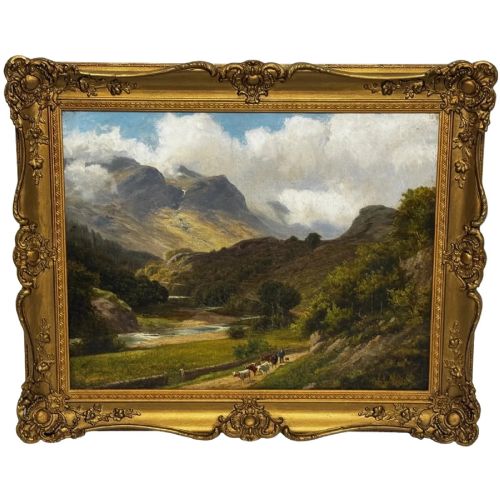
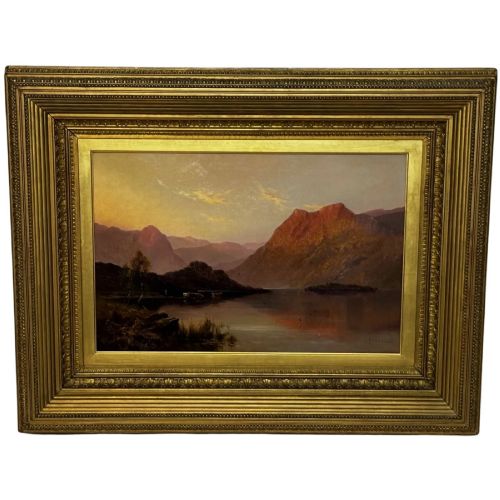
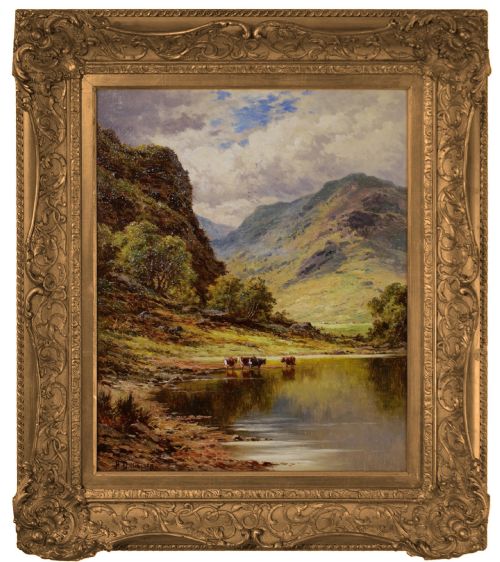
A mountain lake canvas painting captures scenic vistas featuring bodies of water nestled among elevated terrain, rendered in oils during the nineteenth and early twentieth centuries. These artworks emerge predominantly from periods such as the Victorian and Edwardian eras, encompassing British, European, and New Zealand topographies.
Buyers encounter landscape depictions ranging from Scottish Highland scenes and the English Lake District to the Austrian Alps and Italian settings. The primary forms on this page consist of framed oil paintings on canvas, often accompanied by original giltwood or gesso frames.
Artisans of the nineteenth century frequently painted specific locations like Windermere, Snowdon, and Borrowdale. These canvases present romanticised or realistic interpretations of pastoral lakesides, stormy peaks, and quiet waters under varied atmospheric conditions.
Distinctions in craftsmanship and survival
Quality rests in the precision of brushwork and the artist's command of light, atmosphere, and natural topography. Superior examples render the interplay of mountain mist and water reflections with confident, fluid strokes rather than rigid formulas.
The preservation of the original oil surface and its period giltwood frame elevates a piece significantly. Canvases that maintain their structural stability without excessive retouching or craquelure command greater attention from collectors.
Several alpine lakes hide beneath layers of vintage giltwood, quietly waiting for storms to clear over the canvas.
Alfred Fontville de Breanski Jr·Henry H. Parker·Frank Hider·Charles Leslie·Giulio Cecchini·John Douglas Perrett·Stephen Enoch Hogley·Alfred de Breanski·Alfred de Breanski Snr·Benjamin Williams Leader·Sidney Richard Percy·Gustave De Breanski·William Mellor·Samuel Hart Turpin·Percy Lancaster·Charles Pettitt
The Mountain Lake Canvas Painting Glossary
- Giltwood
- Wood carved and coated with gold leaf or a gold-coloured metallic finish. This material forms the ornate frames frequently found surrounding nineteenth-century oil paintings.
- Gesso
- A plaster-like mixture applied to wooden frames as a base for moulding and gilding. It provides a smooth surface for intricate decorative details.
- Romanticism
- An artistic movement emphasising emotion, individualism, and awe of untamed nature. Works in this style often highlight dramatic mountain weather and moody lake reflections.
- Oil on Canvas
- A traditional painting medium consisting of pigments suspended in drying oils applied to woven fabric. This combination allows for rich colour blending and lasting durability.
Mountain Lake Canvas Painting: Frequently Asked Questions
How do I hang a heavy framed oil painting safely?
Ensure the wall fixings anchor directly into solid masonry or wooden wall studs rather than relying solely on plasterboard. Utilise picture wire and sturdy brass D-rings rated for the combined weight of the canvas and its giltwood frame.
Position the centre of the canvas at approximately eye level to achieve optimal viewing balance within the room. Check that the hanging hardware on the back remains secure before mounting.
What lighting suits nineteenth-century landscape paintings best?
Display these canvases away from direct, harsh sunlight to prevent the oil pigments and gilt frames from fading over time. Warm, directional LED picture lights mounted above the frame highlight the brushwork without generating damaging heat.
Diffuse ambient room light also helps reduce glare on varnished oil surfaces, allowing the subtle tones of the water and mountains to remain visible from multiple angles.
Can I tell if a painting is Victorian by its frame?
Victorian frames often feature heavy, moulded gesso over wooden bases, finished with genuine gold leaf or gilt paint. The joinery at the corners usually displays hand-carved mitres and traditional construction methods distinct from modern mass production.
Examining the backing boards, nails, and labels can also provide clues to the age of the framing assembly, though frames were sometimes replaced later in a painting's history.