




Moulded Front Dresser
A moulded front dresser brings robust 17th and 18th century timberwork into a room, offering deep drawers and striking geometric relief.
Moulded Front Dresser
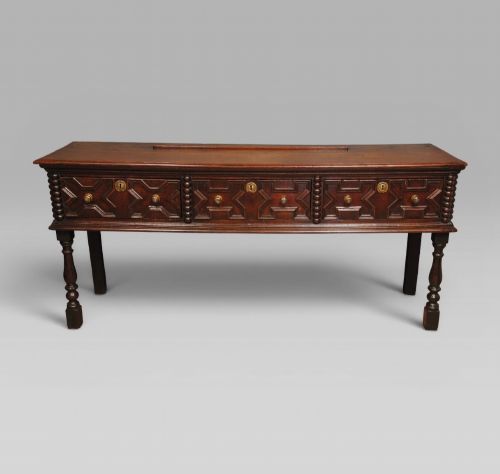
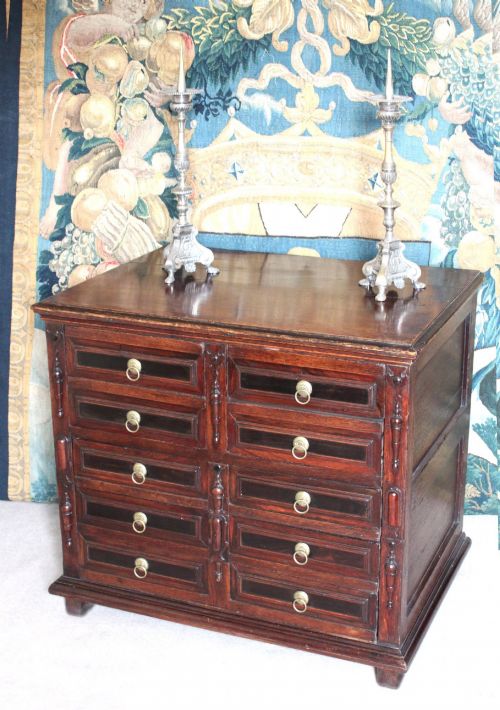
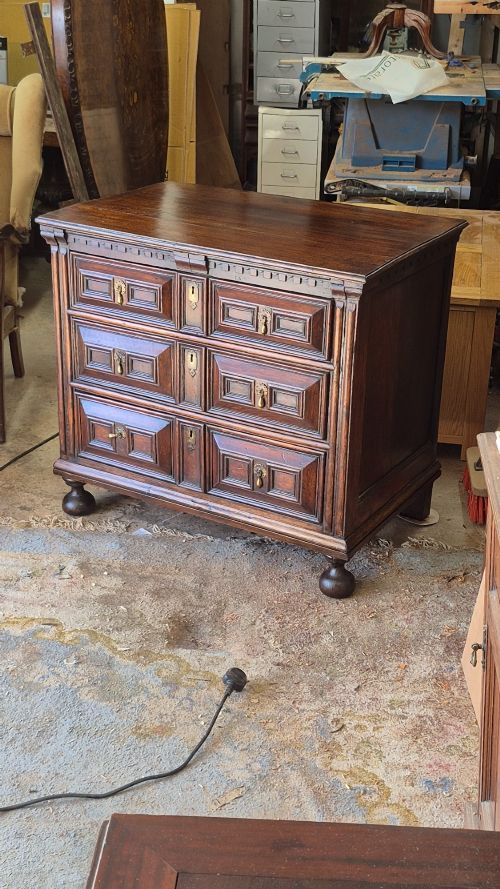
A moulded front dresser sits firmly within the 17th century and 18th century periods, appearing as low dresser bases, servers, and chests of drawers. These pieces provide heavy storage capacity while displaying the distinctive raised and sunken panel designs of their era.
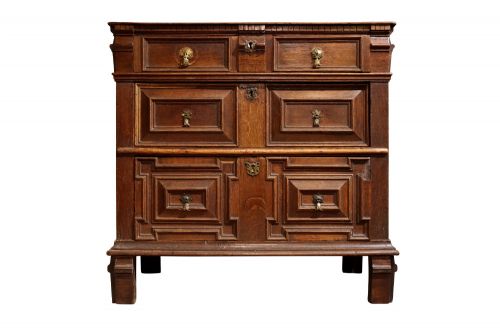
The version most commonly met on this page is an oak chest of drawers or low dresser base from the Stuart, Jacobean, or Georgian eras. Such examples often feature multi-tiered drawer arrangements with applied mouldings that create tactile geometric patterns.
Origins span English provincial workshops as well as French provincial regions. Buyers encounter items ranging from simple utilitarian boards to sophisticated designs enriched with contrasting timbers.
Materials and construction
Makers relied principally on solid oak for the primary carcase and structural members, ensuring heavy and durable furniture. This timber was frequently complemented by fruitwood and snakewood for decorative contrasting details.
Joinery methods combined pegged frame-and-panel construction with applied geometric mouldings glued and pinned to the drawer fronts. Iron and brass hardware, including drop handles and lock plates, secured the drawers and doors.
Listings span the 17th century and 18th century, taking in Jacobean, Charles II, Stuart, and Georgian styles alongside French provincial examples.
What separates the grades
The distinction between ordinary and superior pieces rests upon the complexity of the geometric moulding work and the selection of secondary timbers. Elaborate cross-banding and the inclusion of snakewood or fruitwood decoration elevate a piece beyond standard utilitarian oak.
Proportion and surface preservation define the higher tier of these items. Retaining original hardware, crisp edge profiles, and deep natural patination distinguishes a well-preserved survivor from heavily altered examples.
The Moulded Front Dresser Glossary
- Geometric moulding
- Applied strips of timber shaped in relief to form panels, mitred squares, or octagons on drawer fronts. This technique defined much of the ornamentation during the later 17th century.
- Dresser base
- A low sideboard or cabinet featuring drawers and sometimes cupboards beneath a solid top. These served both food preparation and household storage in early homes.
- Snakewood
- A dense, heavily figured exotic timber utilised for contrasting decorative inlay and mouldings. Its dark mottled grain mimics the skin of a snake.
- Fruitwood
- Dense domestic timber such as pear or apple used by period cabinetmakers for stringing and decorative elements. It offers a smooth, pale surface that takes polish well.
- Bolster turned legs
- Lathe-formed supports featuring a rounded, compressed swelling above the foot. They provide sturdy elevation for 17th century dresser bases.
Moulded Front Dresser: Frequently Asked Questions
What is a moulded front dresser?
A moulded front dresser is a heavy timber storage piece from the 17th or 18th century, characterised by raised geometric wooden patterns applied to the drawer faces.
These items were built to last, combining deep storage drawers with architectural surface relief that reflects the joinery fashions of the Stuart and Georgian periods.
How were these dressers used?
Early households utilised these sturdy pieces in kitchens, halls, and dining spaces for storing linens, tableware, and provisions.
The flat top surface additionally served as a working counter or a display space for pewter and ceramics.
How do I live with one?
Living with an antique oak dresser requires placing it away from direct heat sources and sudden humidity shifts to protect the dry timber and historic joinery.
Regular polishing with traditional wax helps maintain the surface sheen and nourishes the centuries-old oak grain.
How do I tell periods apart?
Dating relies on observing construction methods, timber choices, and the style of the mouldings, shifting from heavy geometric panelling in the 17th century to cleaner serpentine lines in the 18th century.
Earlier pieces often display pegged oak frames and bolster turned legs, whereas later Georgian examples show refined proportions and different hardware mountings.