




Moulded Ceramic Pitcher
When you search for a moulded ceramic pitcher, you are looking at utilitarian vessels shaped with raised relief decoration from the eighteenth and nineteenth centuries.
Moulded Ceramic Pitcher
A moulded ceramic pitcher represents a functional serving vessel produced primarily across the nineteenth century, including Victorian and Georgian periods. These pieces often take the form of jugs and pitchers designed for milk, ale, or general table use.
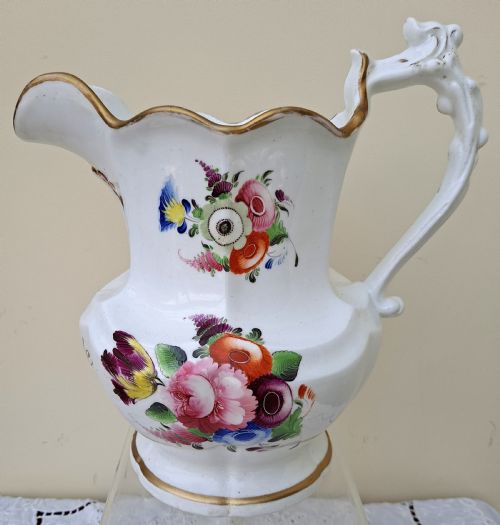
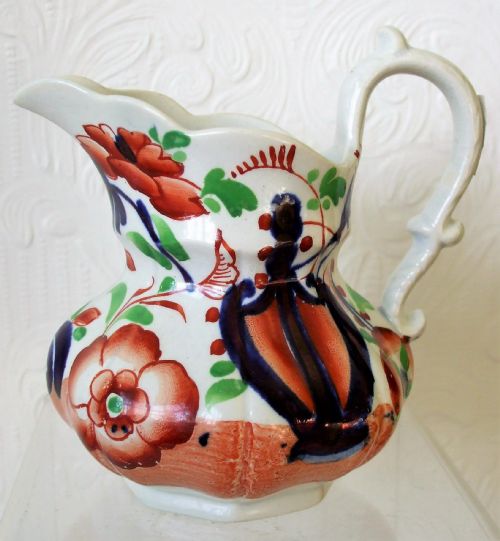
The selection here encompasses earthenware, stoneware, and porcelain pieces, sometimes finished with glaze, enamel, or gold leaf. Buyers encounter styles ranging from plain relief work to Victorian Majolica and Gothic revivals.
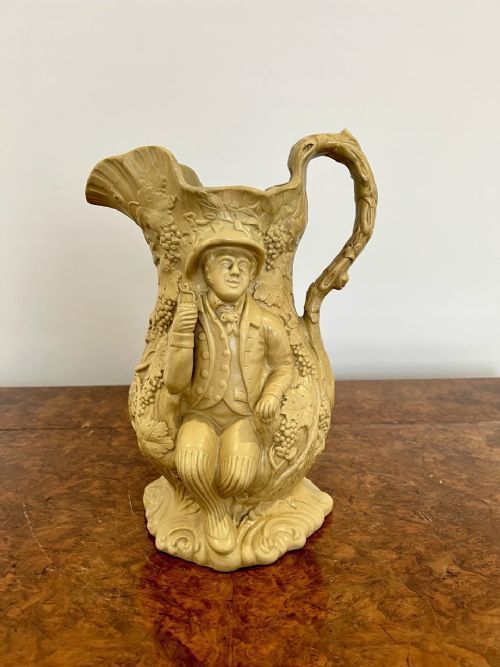
Makers utilised metal moulds to press clay into distinct shapes, creating sharp surface patterns such as bacchanalian scenes, plant motifs, and animal handles. Most examples date from the 1800s onward, reflecting industrial and domestic shifts in British ceramics.
Materials and technique
Potters formed these pitchers using earthenware, stoneware, and porcelain bodies, which were then fired to achieve durability. Stoneware examples often feature salt glazing or cream sprigged decoration applied directly to the surface.
Relief moulding involved pressing clay into metal or plaster moulds to produce raised figures, foliage, and geometric patterns. Artisans then added glazes, enamels, or partial gilding before a final kiln firing.
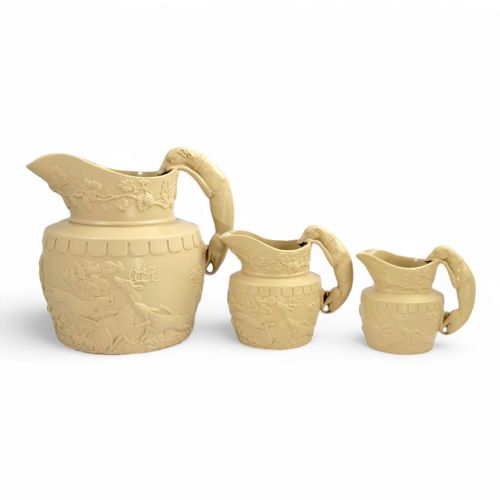
Objects on this page range from small milk jugs and pouch jugs to large exhibition stoneware and graduated sets of three.
Assessing quality and craftsmanship
Quality in a moulded ceramic pitcher depends on the crispness of the relief work and the depth of the mould impression. Finer pieces retain sharp details in figures and foliage, whereas worn examples show softened edges from overuse of the original mould.
The choice of body material and surface finish also distinguishes standard production from exhibition pieces. Superior items display careful hand-finishing, balanced handle attachment, and sophisticated glaze application rather than flat, uniform surfaces.
John Baley·Charles Meigh·Ridgway & Sons·Jones & Walley·Minton·Phillips & Bagster·George Jones
The Moulded Ceramic Pitcher Glossary
- Relief moulded
- A technique where clay is pressed into a carved mould to produce raised surface decoration. This method allowed potteries to replicate complex classical and naturalistic designs efficiently.
- Stoneware
- A dense, hard ceramic fired at high temperatures until vitrified and rendered waterproof. It resists liquid absorption without requiring a traditional glaze.
- Majolica
- A colourful lead-glazed earthenware introduced during the Victorian era. It is characterised by vibrant tones applied over moulded plant or animal forms.
- Pearlware
- A refined earthenware developed in the late eighteenth century with a bluish-white glaze that pooled in recesses. It served as an affordable alternative to true porcelain.
- Basalt
- A fine-grained, unglazed black stoneware developed in the eighteenth century. Its dark matte finish mimics ancient carved stone.
Moulded Ceramic Pitcher: Frequently Asked Questions
What is a moulded ceramic pitcher?
A moulded ceramic pitcher is a vessel shaped in a prepared form to create raised surface patterns. They were produced in large numbers during the Georgian and Victorian eras for everyday service and display.
Potters used earthenware, stoneware, and porcelain to form these jugs, often adding coloured glazes or metallic lustre finishes. The resulting pieces combine utilitarian function with elaborate decorative schemes.
How do I date a ceramic pitcher?
Dating relies on stylistic clues, ceramic bodies, and registry marks found on the base. Georgian pieces often show pearlware or basalt bodies, while Victorian examples lean toward majolica and complex relief scenes.
Makers frequently stamped their names or used patent marks that correspond to nineteenth-century production years. Comparing the style of the handle and the sharpness of the moulding helps narrow the period.
Were these pitchers used daily?
Many pitchers served practical roles in the dining room or dairy for holding milk, water, or ale. Their durable stoneware and earthenware construction made them suitable for regular household tasks.
Grand exhibition pieces and delicate porcelain versions were intended more for display or special hospitality. Graduated sets allowed households to serve different quantities from matching vessels.
What styles are common on these jugs?
Common styles include classical revival scenes, Gothic motifs, and naturalistic plant designs like cabbage leaves or bullrushes. Victorian majolica introduced bright, botanical ornamentation that appealed to contemporary tastes.
Manufacturers also produced commemorative jugs featuring historical figures, events, or hunting scenes with hound handles. These styles reflect the shifting decorative fashions across the nineteenth century.
How should I clean my pitcher?
Clean antique ceramic pitchers gently using warm water and a mild detergent with a soft cloth. Avoid harsh scrubbing or abrasive cleaners that can damage fragile glazes, enamels, or gold leaf.
Unglazed stoneware and basalt require particular care to prevent staining. Hand washing is essential, as dishwashers can cause thermal shock and permanent damage to nineteenth-century ceramics.