

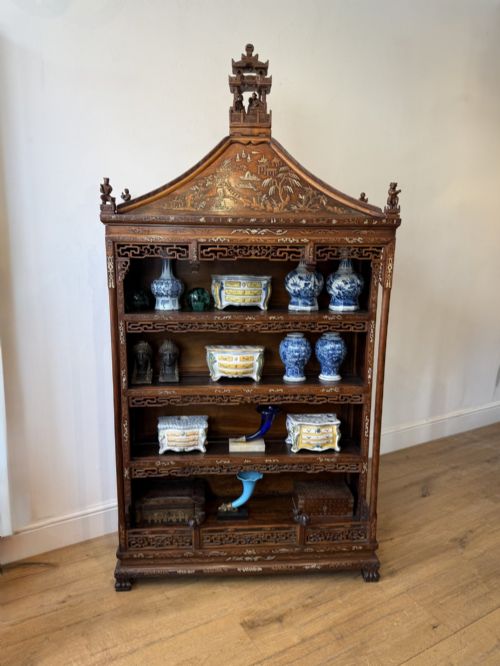


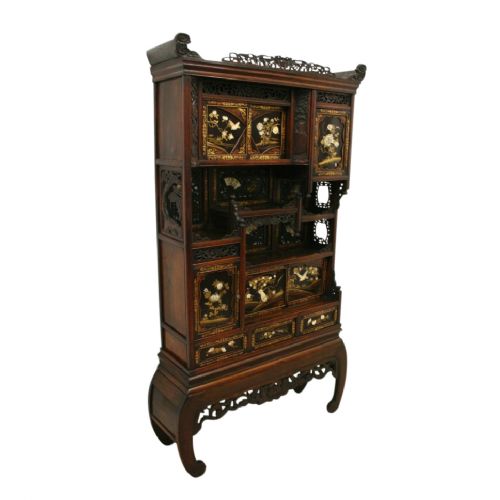

Mother of Pearl Shelf
A mother of pearl shelf brings a luminous surface and intricate inlay to a room, drawing the eye with shimmering iridescence.
Mother of Pearl Shelf
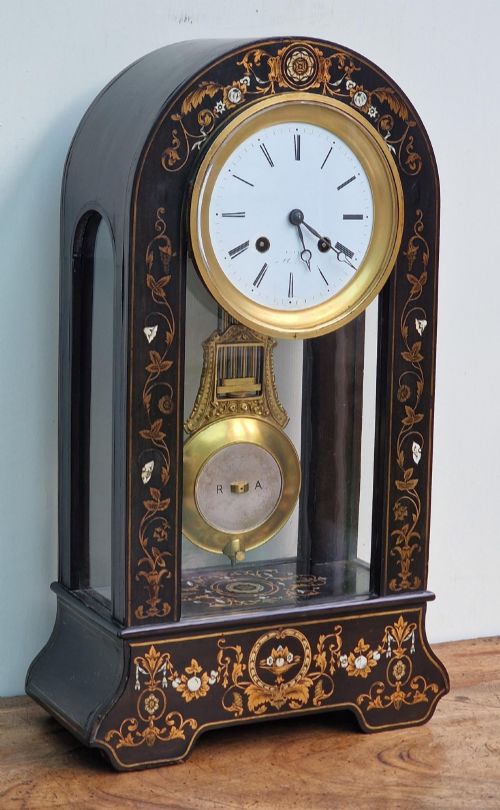
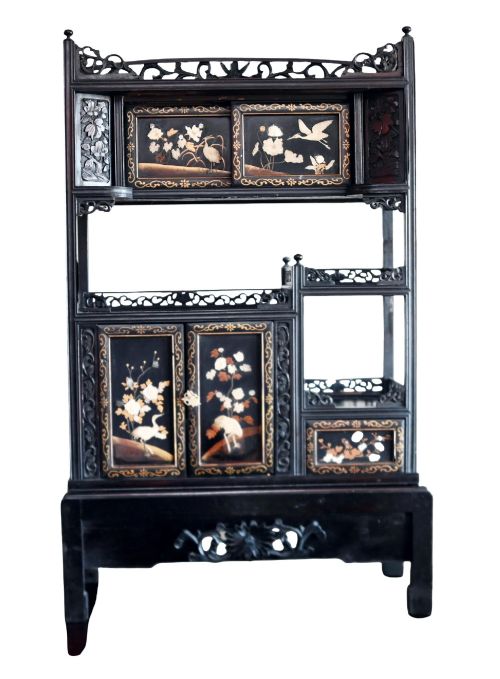
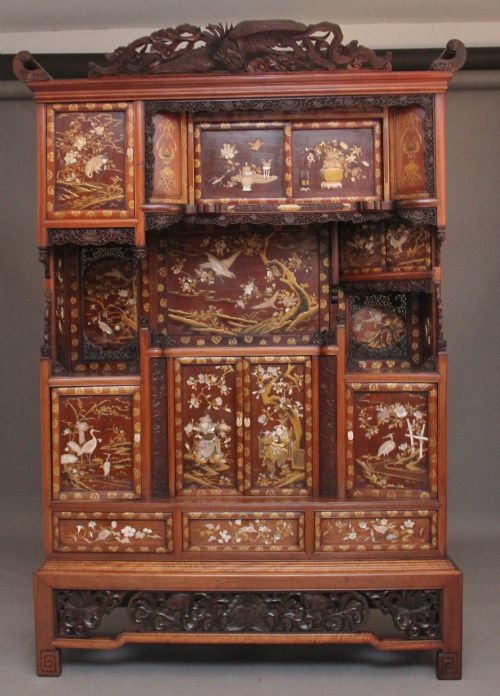
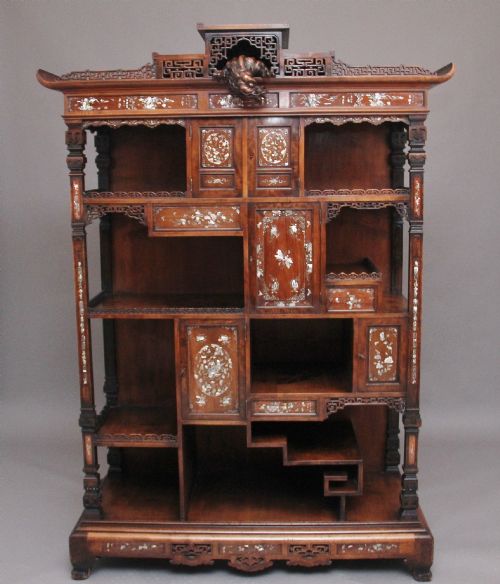
A mother of pearl shelf typically manifests as part of a wall bracket, a display cabinet, or a clock case rather than a standalone board. These pieces emerge across the nineteenth century in various cultural styles, including Japanese Meiji, Chinese Qing, Moorish Revival, and European Regency.
The objects span from small wall brackets designed to hold precious ornaments to grand Japanese shodana cabinets and Chinese display cabinets. Hardwoods such as rosewood and walnut serve as the foundational bodies for these decorative architectural elements.
How they were made
Craftsmen utilised dense timbers like rosewood, walnut, and general hardwoods as the primary structure for brackets, clocks, and cabinets. These dark woods provide a stark, contrasting backdrop that allows the luminous inlay to stand out.
Iridescent shell pieces were meticulously cut and hand-inlaid into recessed channels within the timber or lacquer surfaces. Additional decorative elements frequently incorporate brass, bone, and glass components to enrich the visual texture.
Mother of Pearl Shelf Retail Price Guide 2026
Typical asking prices for mother of pearl shelf among the pieces listed under this phrase on Sellingantiques today, from the lower quarter to the upper quarter. They describe what is for sale here now, not the wider market.
Materials recorded across the inventory include rosewood, walnut, lacquer, brass, glass, bone, and hardwood.
What varies in quality
The sophistication of the inlay work distinguishes a standard piece from an exceptional one, particularly in the precision of the fit and the complexity of the motifs. Tighter joints between the shell and the surrounding timber demonstrate superior workshop execution.
The choice of primary wood also dictates the tier of the piece, with richly grained rosewood and fine lacquer finishes commanding greater presence than simpler hardwood structures.
Seller of Reading·Walker and Hall·Savory and Fils a Paris
The Mother of Pearl Shelf Glossary
- Shodana
- A traditional Japanese multi-tiered display cabinet featuring staggered shelves, cupboards, and sliding doors. These pieces often incorporate elaborate carving and extensive inlay work.
- Wall bracket
- A decorative architectural shelf designed to project from a vertical surface for displaying small objects. Examples in this category frequently feature inlaid hardwood or carved structural elements.
- Regency
- A British design period spanning the early nineteenth century noted for classical restraint and elegance. Pieces from this era often utilise dark timbers with delicate contrasting inlay.
- Chinoiserie
- European artistic style reflecting Chinese aesthetic traditions through decorative motifs and lacquer techniques. This style appears on cabinets and display pieces from the nineteenth century.
- Moorish Revival
- An architectural and decorative style drawing on Islamic design influences from Spain and North Africa. Inlay and geometric patterning are central characteristics of this aesthetic.
Mother of Pearl Shelf: Frequently Asked Questions
What is a mother of pearl shelf?
A mother of pearl shelf usually forms an integral part of a wall bracket, a clock case, or a larger display cabinet rather than standing alone. These surfaces combine lustrous shell inlay with dark timbers to create striking visual contrast.
Such pieces range from nineteenth-century Japanese shodana cabinets to Moorish wall brackets, each serving to elevate small ornaments or simply adorn a wall.
How do I identify the period?
Dating relies on observing the stylistic cues of the woodwork, such as the distinct characteristics of the Japanese Meiji period or European Regency designs. Materials like rosewood and walnut, combined with specific inlay patterns, point directly to nineteenth-century production.
Examining the construction methods and the integration of the shell inlay helps confirm the historical context of the piece.
Where should I place a wall bracket?
A wall bracket functions best at eye level on a sturdy wall where its inlaid details can catch the light. These shelves suit narrow wall spaces that benefit from architectural depth and a decorative focal point.
Ensure the mounting is secure, as hardwoods and dense cabinet timbers carry considerable weight.
How do I clean inlaid wood?
Maintenance requires a soft, dry cloth to gently remove dust from the timber and the iridescent shell surfaces. Avoid chemical cleaners or excessive moisture, which can damage the lacquer and loosen the delicate inlay.
Regular, gentle dusting preserves the natural lustre of both the mother of pearl and the surrounding wood.