
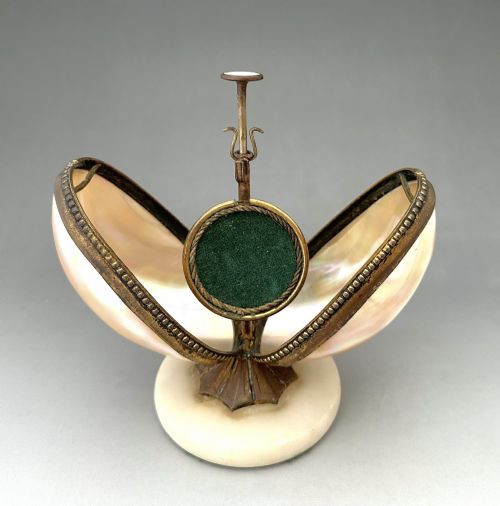


Mother of Pearl Caddy
These pieces of mother of pearl caddy bring tactile warmth and a polished lustre to any room through intricate shell inlay.
Mother of Pearl Caddy
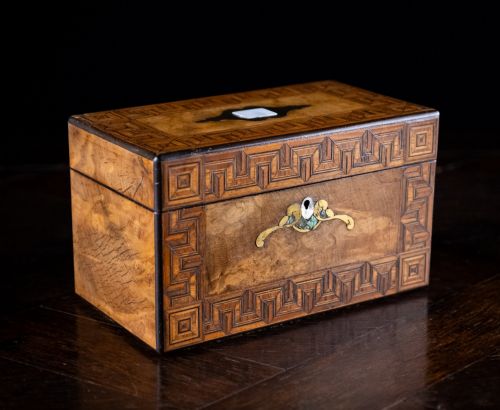
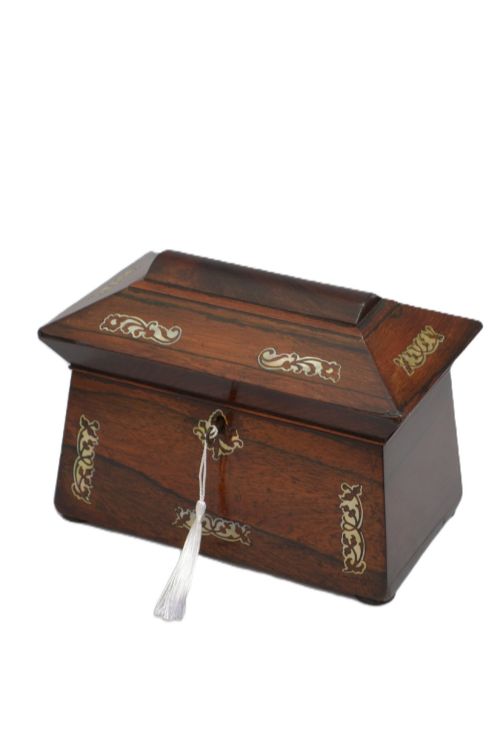
A mother of pearl caddy is a small lidded container designed originally for storing tea leaves, often taking the form of a rectangular box or a sarcophagus. Buyers searching this phrase meet examples spanning the Georgian, Regency, William IV, and Victorian periods.
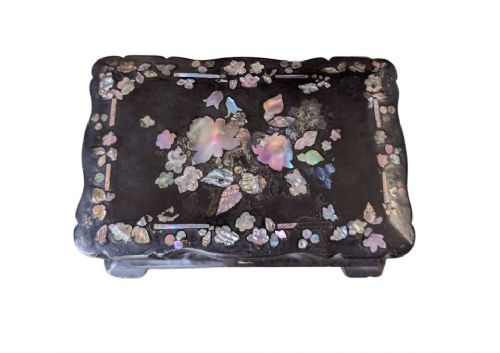
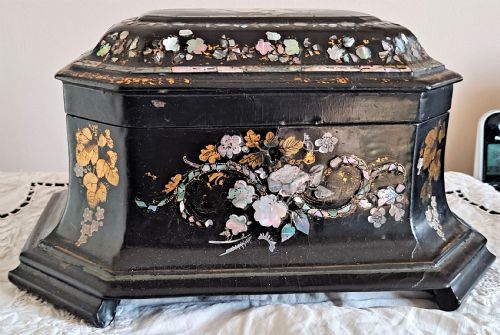
Most entries encountered on this page pair lustrous shell ornamentation with dense timbers like rosewood, coromandel, or painted papier-mâché. Makers shaped these vessels into tea chests, single-compartment boxes, and twin-division caddies intended for affluent domestic interiors.
Beyond the standard wooden forms, related items occasionally emerge in the archive and current stock, including papier-mâché tea caddies, tortoiseshell caddies, and small silver-mounted pieces. Each variation reflects the prevailing tastes of nineteenth-century craftsmanship.
How They Were Made
Craftsmen built the carcasses of these boxes from rich tropical hardwoods such as rosewood and coromandel, or moulded them from layers of papier-mâché. These surfaces provided a dark, contrasting background designed to make the iridescent shell inlay stand out.
The mother of pearl itself was meticulously sliced, shaped, and set flush into the wood or lacquer, sometimes complemented by delicate brass stringing or gold leaf. Artisans then polished the entire exterior to achieve a smooth, reflective finish.
Listings feature mother of pearl caddies utilising rosewood, coromandel, ebony, thuya wood, and papier-mâché across the Georgian, Regency, and Victorian periods.
What Varies in Quality
The distinction between ordinary and exceptional examples rests upon the precision of the inlay work and the complexity of the design. Fine specimens exhibit intricate foliate or figurative motifs where every piece of shell fits tightly into its carved recess without excess filler.
The choice of primary material also dictates the standing of the piece, with richly figured tortoiseshell, macassar ebony, or finely painted papier-mâché marking the upper tiers of nineteenth-century production. Original internal fittings, such as glass mixing bowls and lidded canisters, elevate the completeness of a box.
Jennens & Bettridge·Cocks & Bettridge·William Pugh
The Mother of Pearl Caddy Glossary
- Mother-of-pearl
- The hard, iridescent inner layer of certain mollusc shells, valued for its shimmering play of light. Craftsmen used it extensively for inlay work on nineteenth-century boxes.
- Papier-mâché
- A composite material made from paper pulp or layers of paper reinforced with glue, then baked and lacquered. It served as a smooth dark base for elaborate shell ornamentation.
- Sarcophagus
- A box shape featuring a domed or sloping lid reminiscent of an ancient stone coffin. This silhouette became especially popular for tea caddies during the Regency and Victorian eras.
- Caddy spoon
- A short-handled spoon specifically manufactured for measuring dry tea leaves from a container. Many period examples feature shell bowls and silver handles.
- Stringing
- A narrow strip of contrasting wood or metal inlaid into the surface of a box to create decorative borders. It frequently frames panels of mother of pearl.
Mother of Pearl Caddy: Frequently Asked Questions
What were tea caddies used for?
These boxes stored precious tea leaves securely under lock and key in nineteenth-century drawing rooms. Because tea was an expensive commodity, the containers protected the dry leaves from moisture and pilfering.
Inside, many caddies featured separate compartments for different varieties of tea, along with a central mixing bowl for blending leaves before brewing.
How do I care for a mother of pearl box?
Keep the box away from direct sunlight and sources of extreme heat to prevent the wood from warping and the shell inlay from loosening. A gentle dusting with a dry, soft cloth maintains the polished surface without damaging the delicate materials.
Avoid using liquid cleaners or chemical polishes, as moisture can seep beneath the shell and weaken the historical adhesives used during assembly.
How can I tell a Regency caddy from a Victorian one?
Regency pieces often display restrained geometric brass inlay alongside mother of pearl on dark rosewood, reflecting neoclassical symmetry. The forms tend to favour sharp architectural lines or sarcophagus shapes with neat bracket feet.
Victorian examples frequently embrace bolder papier-mâché constructions or more abundant, flowing floral shell motifs. The overall aesthetic shifts towards heavier ornamentation and rich, glossy black lacquering.
Are the mixing bowls inside original?
Many caddies retain their original cut or blown glass mixing bowls, though these fragile internal elements were frequently broken or replaced over generations. Finding a matching bowl nestled securely in its compartment adds significantly to the historical integrity of the piece.
When a bowl is absent, the vacant circular recess remains visible inside the wooden dividers, showing where the glass once rested.