





Moorish Style Table
These atmospheric pieces known as a moorish style table bring intricate geometric woodwork and detailed inlay into modern interiors.
Moorish Style Table
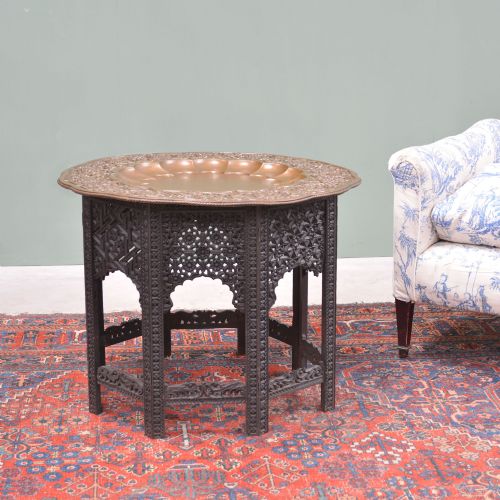
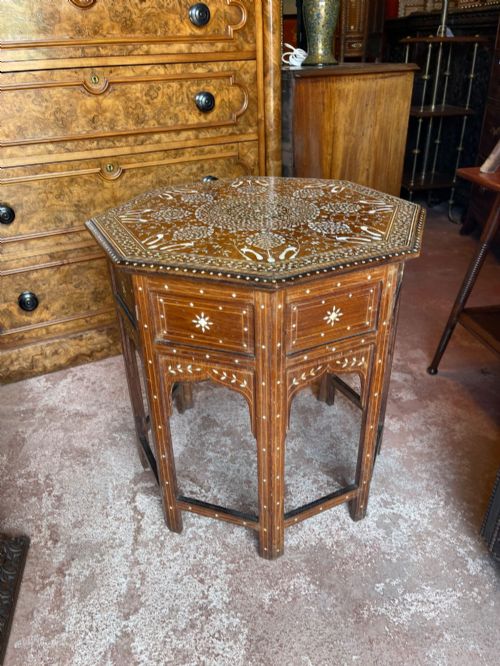
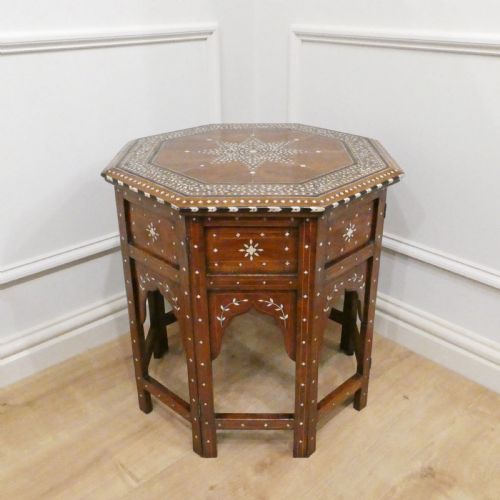
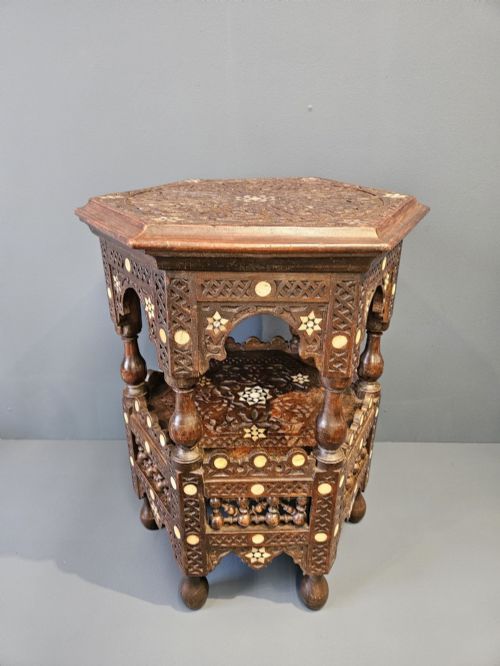
A moorish style table combines geometric shapes, intricate fretwork and detailed surface decoration inspired by historic Islamic and North African design. When searching this phrase, expect to encounter octagonal or hexagonal occasional tables, side tables and folding designs constructed during the nineteenth and early twentieth centuries. Many examples reflect the Victorian fascination with exotic craftsmanship, often produced by commercial firms like Liberty and Co or sourced from specific centres such as Hoshiarpur and Damascus.
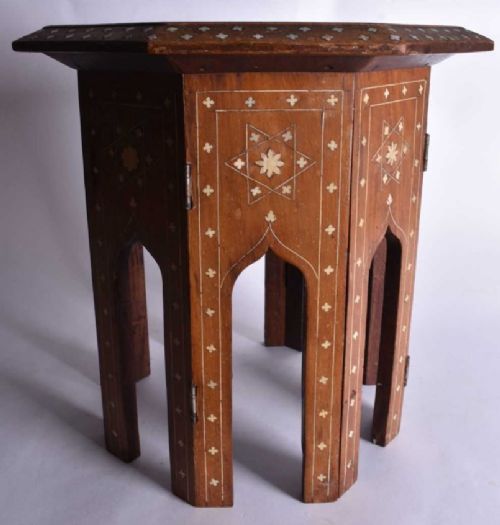
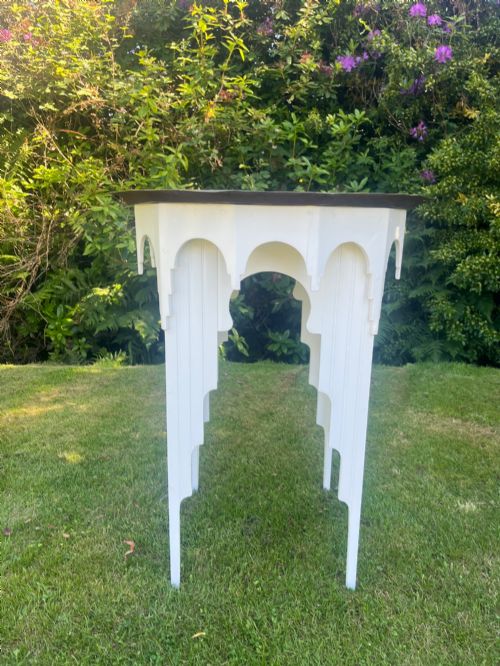
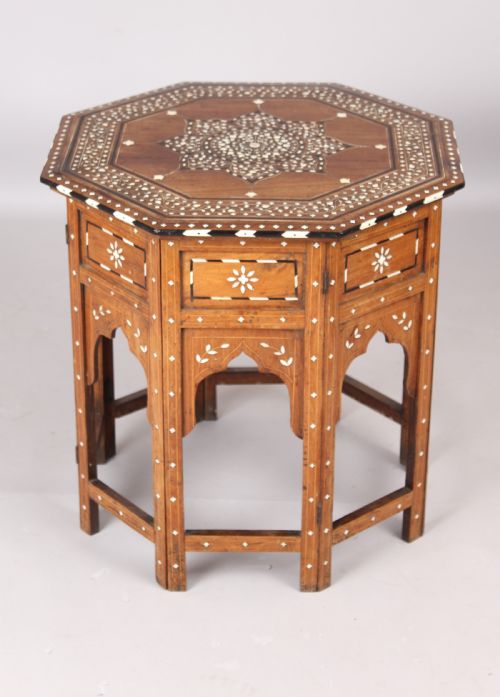
The most common formats on this page are folding tables with octagonal tops, designed to be stored easily or moved around a reception room. Alongside these sit occasional tables and lamp stands featuring characteristic low profiles and dense surface patterning. These objects served as smoking tables or display surfaces for ornaments in period homes, functioning as focal points within eclectic interiors.
Materials and construction
Makers constructed these pieces using dense hardwoods like walnut, mahogany, rosewood and padouk, alongside softer timbers such as oak and yew. Frameworks frequently feature ebonised finishes or openwork carved panels that create complex geometric lattices. Folding mechanisms rely on intricately pierced wooden hinges and interlocking joints that collapse flat without metal fixings.
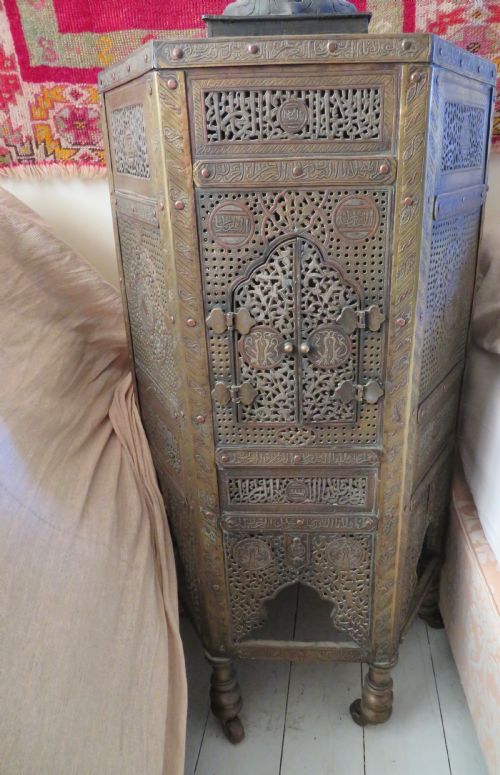
Surface decoration relies heavily on contrasting inlays of bone, mother-of-pearl and brass wire or sheet. Artisans carved shallow recesses into the timber base to receive delicate shell fragments and pieces of bone, securing them with dark resin or adhesive. Metal elements, including white-metal and copper-inlaid brass, appear on specific regional forms such as cairoware tables and candelabra.
Listings feature woods including walnut, rosewood, oak, padouk, ebonised wood and hardwood alongside bone and mother-of-pearl inlay.
Assessing quality and execution
Quality in a moorish style table depends on the precision of the woodwork and the density of the inlay rather than mere age. Superior examples display crisp, deeply carved openwork without splintering, whilst lesser pieces feature shallow, mechanical stamping or painted imitation patterns. The alignment of the geometric lattices and the tightness of the joinery indicate the skill of the maker.
The choice of inlay materials also distinguishes standard production from finer work. Tables incorporating genuine mother-of-pearl and finely shaped bone exhibit greater tonal variation and smoother surface integration than those utilising plain wood marquetry or sparse brass wire. The complexity of the geometric star patterns and the presence of signed attribution, such as work associated with Liberty and Co or Carlo Bugatti, elevate the standing of an individual piece.
Liberty and Co·Carlo Bugatti
The Moorish Style Table Glossary
- Hoshiarpur
- A city in northern India renowned for intricate wood carving and inlay work using shisham wood, brass, bone and mother-of-pearl. Tables from this region typically feature dense overall floral and geometric motifs.
- Cairoware
- Metalware objects produced in Cairo or influenced by Egyptian revival styles, often consisting of brass inlaid with copper and silver. This technique occasionally appears on the tops of hexagonal occasional tables.
- Octagonal
- Having eight sides and eight angles. This is the predominant geometric plan for the top surface of folding occasional tables in this style.
- Ebonised
- Timber treated with stain or polish to resemble ebony, creating a dark, glossy black surface finish. This technique was favoured by late nineteenth century European makers to highlight contrasting mother-of-pearl inlay.
- Mamluk Revival
- An artistic movement drawing on the decorative arts of the Mamluk Sultanate, characterised by complex geometric strapwork and metallic inlay. Pieces from this tradition often display elaborate star polygons.
Moorish Style Table: Frequently Asked Questions
Were these tables made in Britain or abroad?
Production occurred in both hemispheres, with many items imported directly from workshops in India, Syria and Egypt to satisfy European demand. British retail firms also manufactured their own interpretations using local timbers.
Imported examples typically feature native Indian or Middle Eastern hardwoods combined with regional inlay techniques. British versions produced by houses like Liberty and Co frequently adapted these aesthetic traditions to walnut, oak and ebonised frames.
How do I distinguish Liberty pieces from others?
Look for construction traits typical of Arts and Crafts manufacturing, including specific timber choices like walnut, oak, padouk and ebonised wood. Some pieces bear paper labels, stamps or distinctive design patterns recorded in trade catalogues.
While Liberty retailed many genuine imported items from Hoshiarpur and Damascus, their domestic workshop productions often fused Moorish geometric decoration with European furniture forms such as two tier tea tables and cabinets.
What is the purpose of folding table bases?
The folding octagonal base was designed for portability and versatility in Victorian and Edwardian drawing rooms. The intricate wooden lattice collapses flat, allowing the furniture to be stored away when not in use.
This clever interlocking construction relies entirely on wooden hinges rather than metal hardware. When opened, the frame supports the heavy inlaid top securely through balance and precise joinery.