
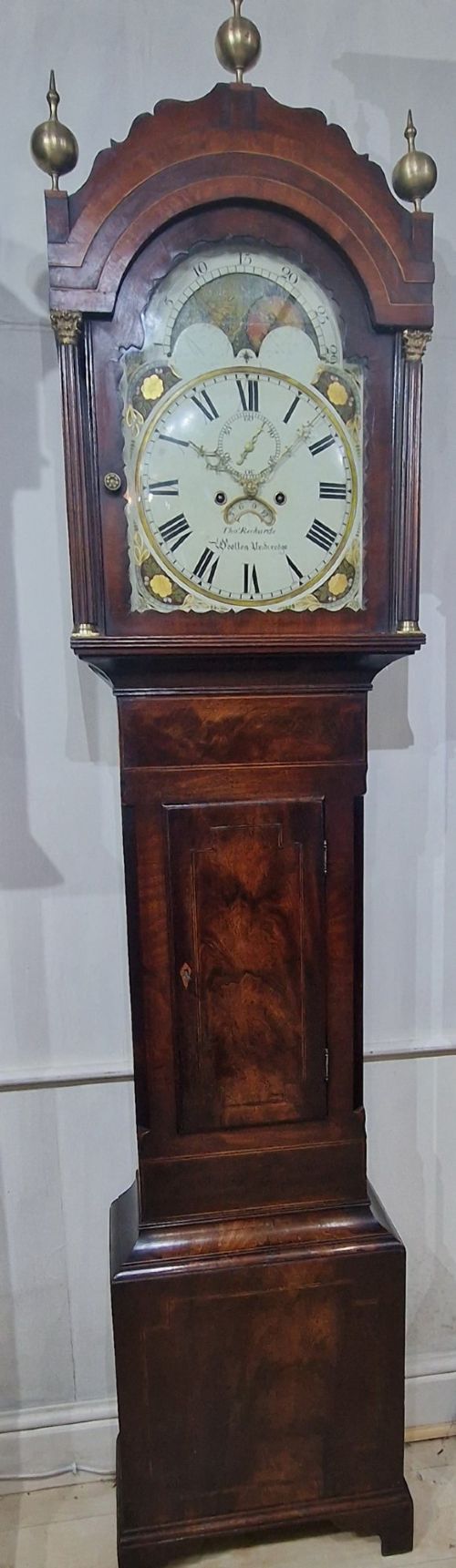
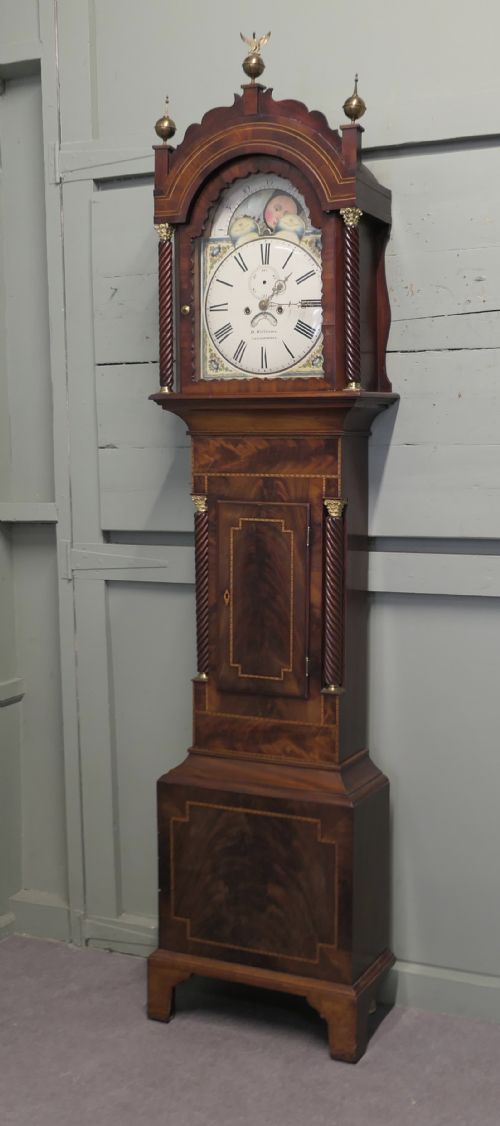


Moonphase Tallcase Clock
A moonphase tallcase clock combines dependable timekeeping with a painted lunar dial that tracks the phases of the moon through its traditional cycle.

Moonphase Tallcase Clock
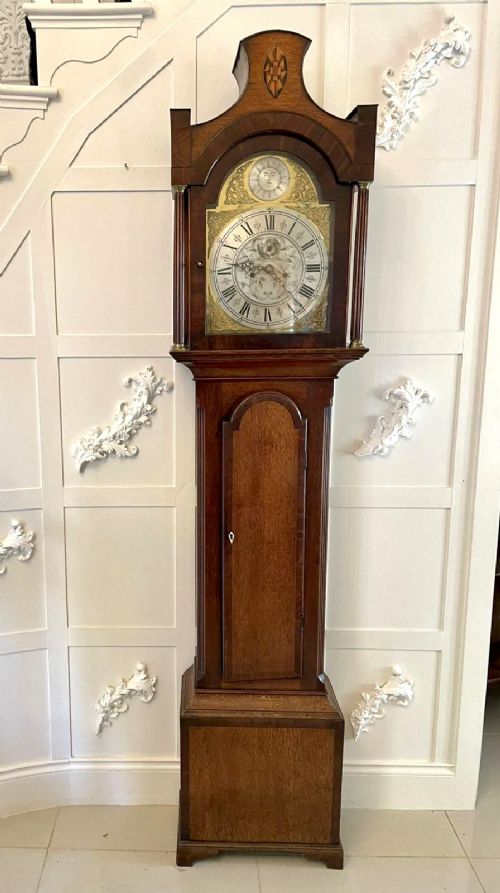
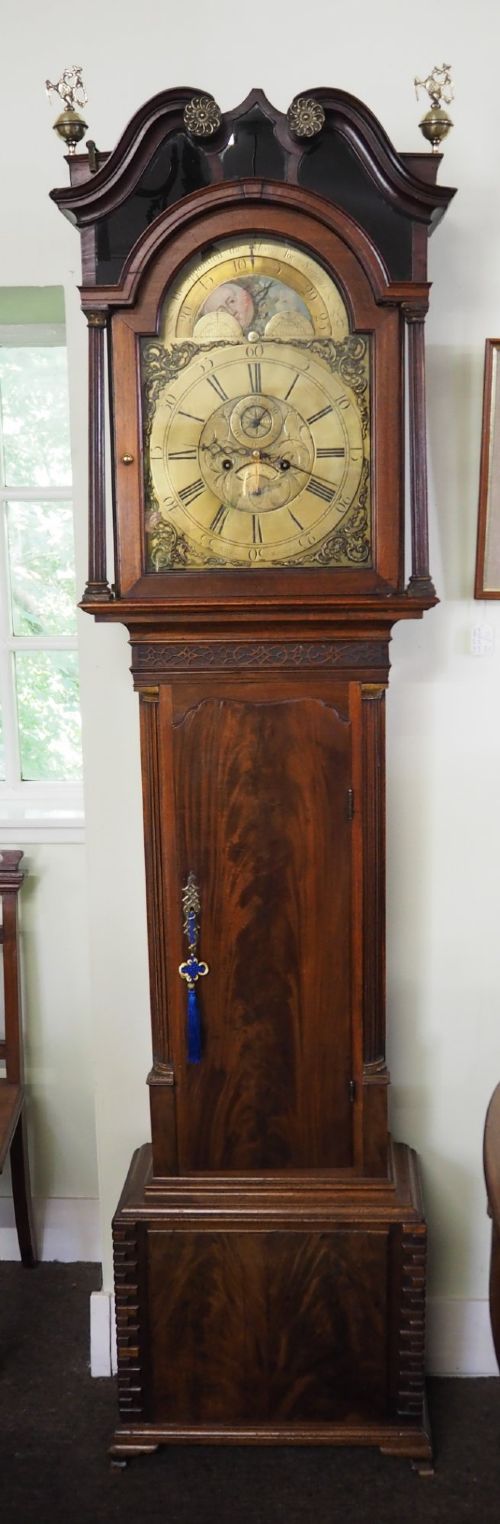
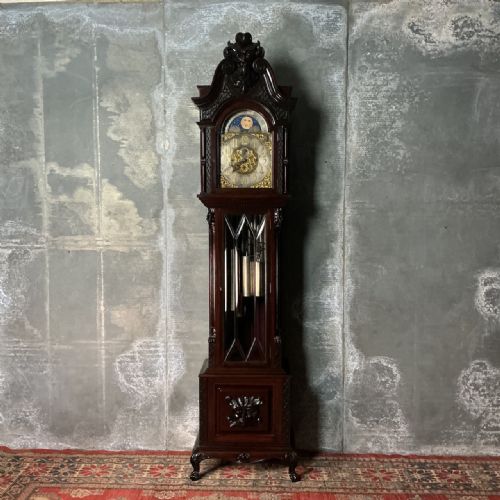
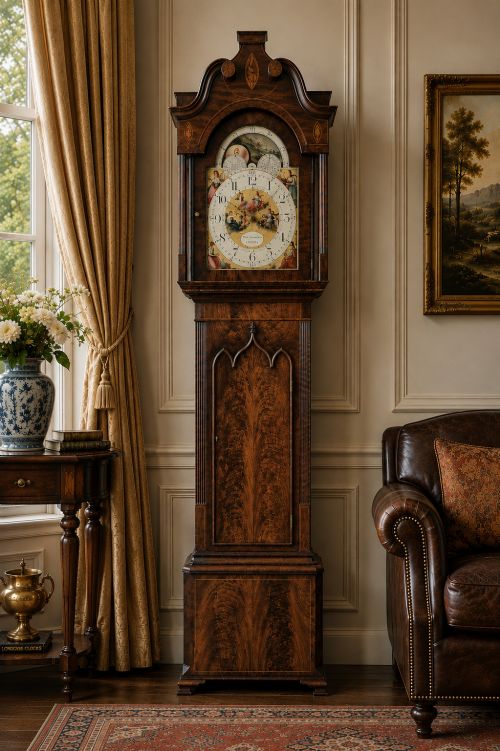
A moonphase tallcase clock stands as a commanding floor-standing timepiece, housing a weight-driven movement within a tall wooden case. These clocks measure time through long pendulums, whilst the arched dial displays the lunar calendar alongside the hours and minutes.
You will most frequently meet examples dating from the eighteenth and nineteenth centuries, spanning periods from Georgian mahogany to Victorian oak. The dial often bears the maker's signature and location, linking the clock directly to regional English and Welsh workshops.
Materials and construction
Cabinetmakers built these tall cases primarily using dense timbers such as mahogany, oak, and walnut, frequently applying fine veneers and decorative inlay. The wood protects the delicate hanging weights and pendulum from air currents that might alter the timekeeping.
Dial faces combine brass elements with painted iron or steel plates, where skilled signwriters executed the complex rotating moonphase disk by hand. Glass doors shield the dial and pendulum bob, allowing clear visibility of both the mechanics and the painted lunar scenes.
Listings feature clocks from the eighteenth and nineteenth centuries, utilising materials such as mahogany, oak, walnut, brass, and painted iron.
Judging quality and craftsmanship
The distinction between standard and superior pieces rests upon the precision of the movement and the artistry found on the dial. Cabinetwork with carefully matched grain figures and crisp inlay work separates finer regional examples from simpler utility pieces.
Makers who incorporated additional complications, such as alarm mechanisms or tidal dials alongside the moonphase, demonstrated higher technical ambition. The clarity and detail of the painted lunar face further distinguish the work of accomplished provincial clockmakers.
Samuel Kellett of Bredbury·D Williams of Crickhowell·Charles Dowsett Of Canterbury·Nevitt of Bristol·THOMAS DEAN of LEIGH·Wilshire & Link of Bristol·RICHARDSON OF MANCHESTER·THOS. BURCHALL of NANTWICH·ROBERT DARLING·Iames Richards Liverpool
The Moonphase Tallcase Clock Glossary
- Tallcase clock
- A freestanding, weight-driven timepiece housed in a tall wooden case designed to protect the pendulum. These are frequently referred to as grandfather clocks by collectors.
- Moonphase
- A rotating mechanism behind an arched dial aperture that tracks the lunar month. It uses a painted double-moon disk to display the phase of the moon.
- Movement
- The internal mechanical workings of the clock, typically driven by hanging weights. Eight-day movements require winding weekly, while thirty-hour versions need daily or weekly attention depending on the train.
- Dial
- The face of the clock where time is read, often constructed from brass or painted iron. Provincial examples frequently feature regional town names painted directly beneath the chapter ring.
- Train
- The series of gears within a movement that transmits power and controls the striking or timekeeping functions. Three-train movements typically power time, strike, and chime sequences.
Moonphase Tallcase Clock: Frequently Asked Questions
How do I wind an eight day tallcase clock?
You insert the winding key into the holes on the dial face and turn it clockwise until the heavy internal weights reach the top. Care must be taken not to overwind the movement.
Most eight day clocks require this attention once a week, ideally on the same day to maintain consistent timekeeping habits.
What is the purpose of a moonphase dial?
The rotating dial tracks the twenty-nine and a half day lunar cycle, showing whether the moon is new, waxing, full, or waning. Historically, this helped farmers, sailors, and travellers plan night-time journeys.
Today, it serves as a charming and decorative complication that showcases the mechanical ingenuity of period clockmakers.
How do I set the moonphase correctly?
You consult a current lunar calendar to find the exact phase of the moon on the present day. Most clocks allow you to gently advance the moon disk by hand using fingers behind the dial or through a small adjustment lever.
You simply match the painted moon on the dial to the current sky and let the internal mechanism advance it automatically from that point onwards.
Where should I place a tallcase clock in my home?
You should position the clock on a stable, vibration-free floor against a sturdy interior wall. Avoid placing it in areas subject to dampness, direct sunlight, or wide temperature fluctuations, which can warp the wooden case and affect the wood movement.
Securing the tall case to the wall using hidden brackets ensures safety, particularly if you have children or pets nearby.