



Nineteenth Century Tallcase Clock
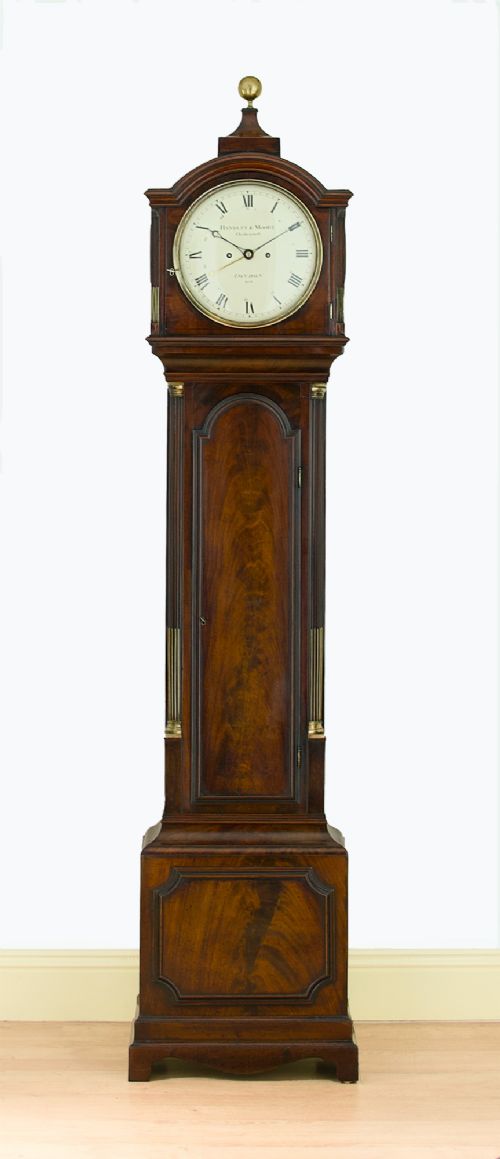
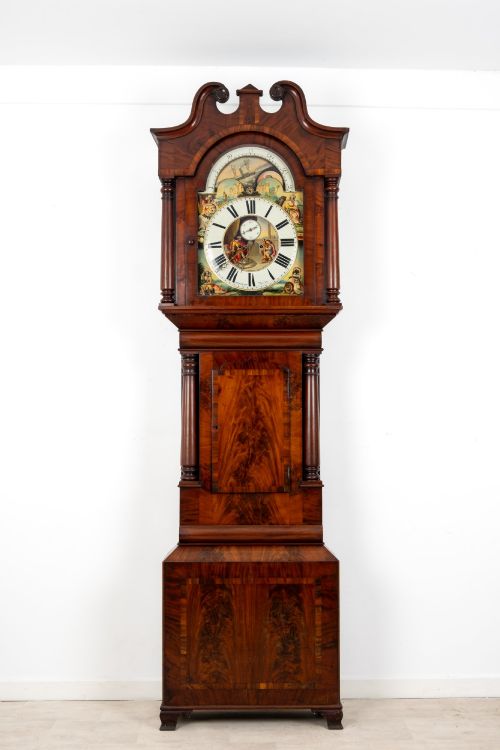
These nineteenth century tallcase clock examples stand tall in mahogany and ebony, offering the steady beat of brass movements to anchor a room.

Nineteenth Century Tallcase Clock
A nineteenth century tallcase clock represents a grand tradition of timekeeping, taking the form of longcase and grandfather clocks housed in timber floor-standing enclosures. When searching for a nineteenth century tallcase clock, buyers encounter robust floor-standing timepieces that dominate a domestic interior with their height and presence.
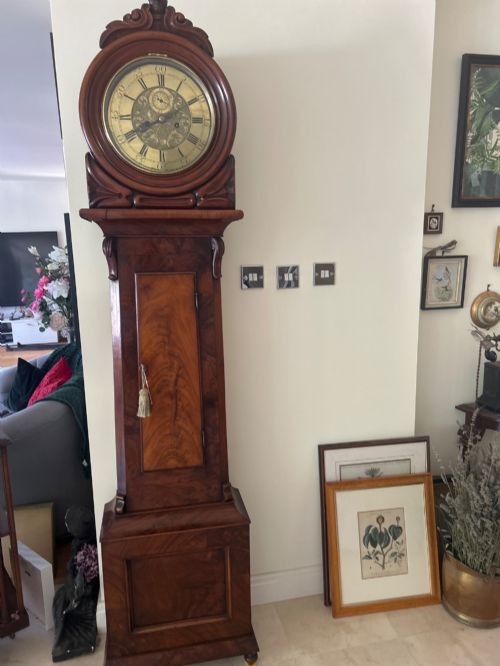
The pieces seen here span periods from the Georgian and Regency eras through to Victorian times and Napoleon III examples. Among these, mahogany cases predominate, alongside regional Scottish and Welsh variations.
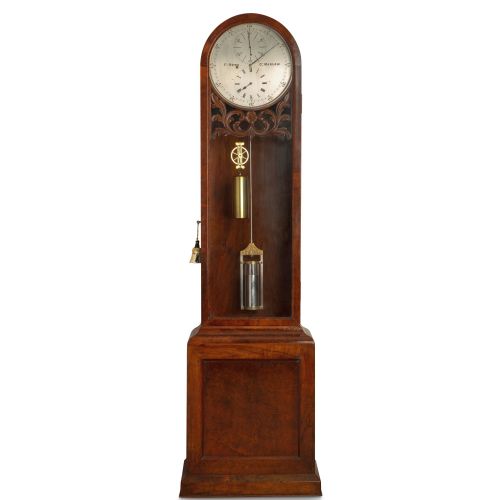
Makers recorded on this page range from London firms like Handley & Moore and Wightman to provincial specialists such as Parkinson Bros of Batley, Whitelaw of Edinburgh, and Richard Rowell of Oxford. Alongside standard longcase designs, the selection includes drumhead dials, moon phase complications, and precise regulators.
Materials and Construction
Cases rely heavily on timber construction, principally utilising solid and flame mahogany, often paired with ebonised wood or marquetry inlay. Interiors and dials incorporate brass mechanical components, glass face covers, and painted iron clock faces.
Movements are driven by eight-day weights or precision mechanisms, requiring skilled cabinetmaking to house the heavy pendulum and weights securely within the tall wooden trunk.
Moon phase dials allowed households to track the night sky from their hallway, long before outdoor lighting reached the village street.
Assessing Quality
Quality in these floor-standing timepieces rests on the integration of the cabinetwork with the precision of the movement. Finer examples display carefully chosen flame mahogany veneers, complex marquetry, or specialised dial work such as moon phases.
The reputation of the maker, whether a London workshop or a regional Scottish or provincial English horologist, adds distinct character and establishes the grade of craftsmanship in the movement.
Handley and Moore·Parkinson Bros·Whitelaw of Edinburgh·Wightman Of London·Aitchison of Glasgow·Frederick Rowe·Richard Rowell
The Nineteenth Century Tallcase Clock Glossary
- Tallcase clock
- A weight-driven pendulum clock housed in a tall wooden case that stands directly on the floor. These pieces are frequently called grandfather clocks.
- Regulator clock
- A precision pendulum clock designed to keep exceptionally accurate time. Such pieces often feature simplified dials intended for observation rather than domestic decoration.
- Moon phase
- A dial mechanism tracking the lunar cycle through a rotating disc behind the clock face. This complication appears on regional English and Welsh longcase examples.
- Drumhead clock
- A timepiece featuring a circular dial housing mounted atop a tall mahogany stem. This distinct Scottish Regency form sets itself apart from standard trunk designs.
- Marquetry
- Decorative inlay work using various coloured woods to form patterns on the clock case. Napoleon III examples utilise this technique extensively.
Nineteenth Century Tallcase Clock: Frequently Asked Questions
What is a tallcase clock?
A tallcase clock is a freestanding weight-driven pendulum clock enclosed in a tall wooden trunk. These pieces are designed to stand directly on the floor.
They combine cabinetmaking with complex internal brass movements to track hours, minutes, and sometimes lunar cycles.
How do I set up a tallcase clock?
Setting up requires placing the wooden case on a level floor and securing it to the wall to prevent movement. The pendulum and weights must then be hung carefully onto the internal brass motion works.
Once suspended, the pendulum is set into a steady swing to start the escapement mechanism.
What wood was used for these clocks?
Makers relied primarily on mahogany, including flame mahogany veneers, for the exterior trunk construction. Ebonised wood and intricate marquetry also appear on specific continental and regional pieces.
The choice of timber defined the visual weight and richness of the furniture piece within the home.
How do I distinguish regional styles?
Regional variations appear in the dial layout and cabinet proportions, such as Scottish drumhead forms or Welsh moon phase complications. London makers often signed the painted iron or brass dials explicitly.
Examining the signature on the dial alongside the timber grain helps identify the geographic origin of the workshop.