


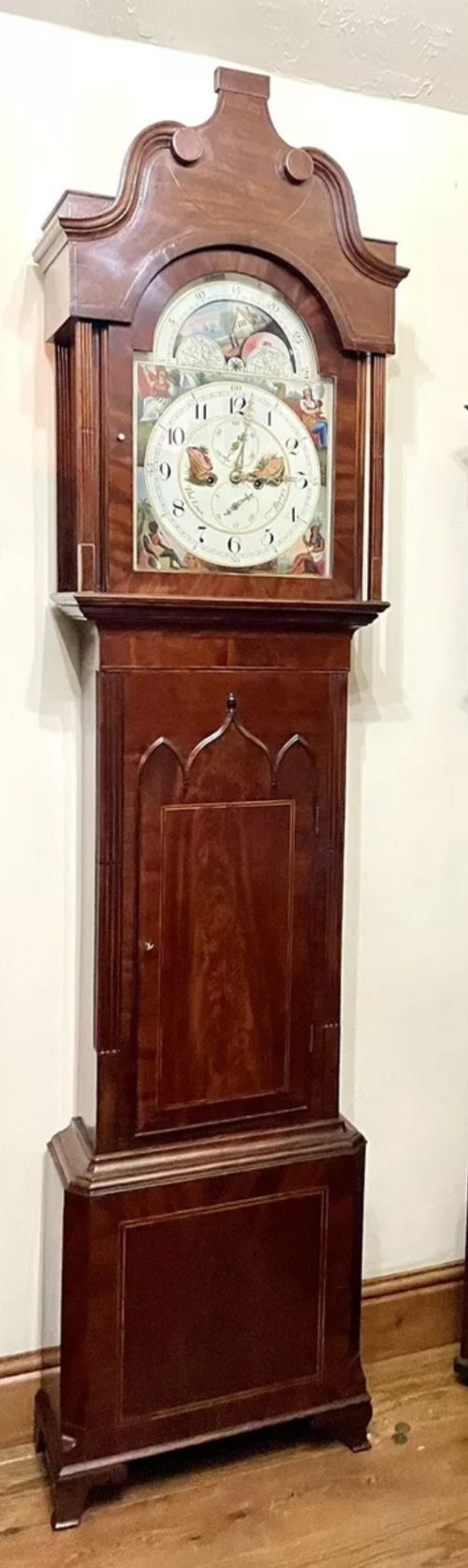


Moon Phase Grandfather Clock
When you search for a moon phase grandfather clock, you are looking at tall case timepieces housing intricate painted dials that track lunar cycles alongside the hours.

Moon Phase Grandfather Clock
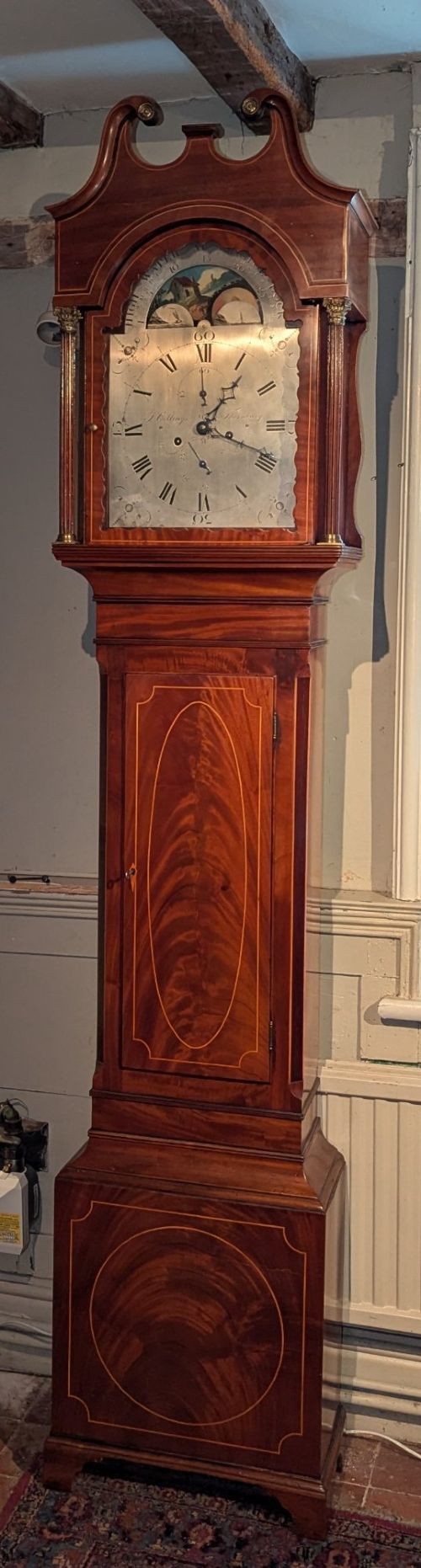
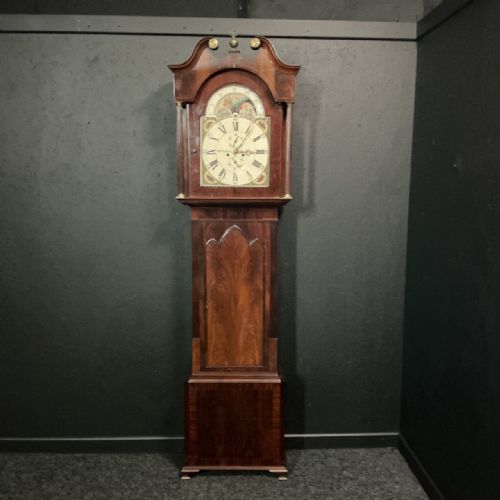
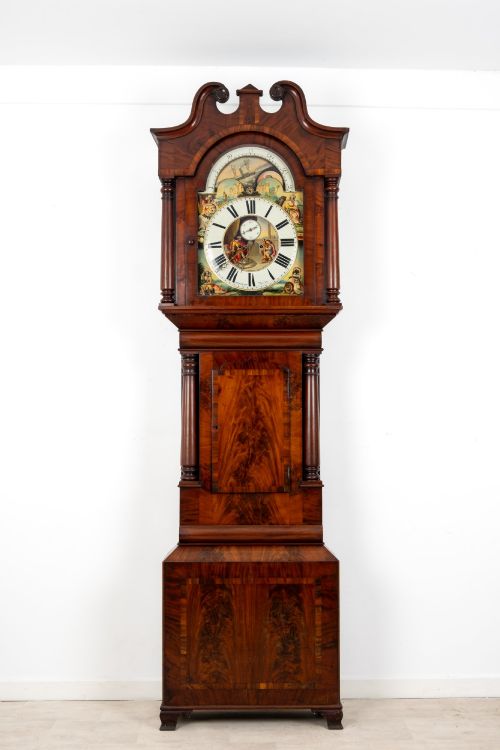
A moon phase grandfather clock is a tall floor-standing timekeeper, frequently referred to in listings as a longcase clock, designed to display the phases of the moon on an arched dial. These instruments emerged strongly during the eighteenth and nineteenth centuries, spanning periods from early Georgian and George III through to the Victorian and Edwardian eras. The examples met on this page are predominantly constructed from timber casings enclosing brass or painted iron movements with rolling lunar discs.
Makers housed these mechanisms in substantial wooden housings, most commonly fashioned from mahogany, flame mahogany, or oak, often finished with delicate inlay work. The dial displays the lunar month through a rotating disc that tracks the synodic month, governed by an internal mechanism connected to the clockwork. Buyers encounter both provincial regional makers from towns across Britain and metropolitan clockmakers who signed their brass or painted dials directly upon the face.
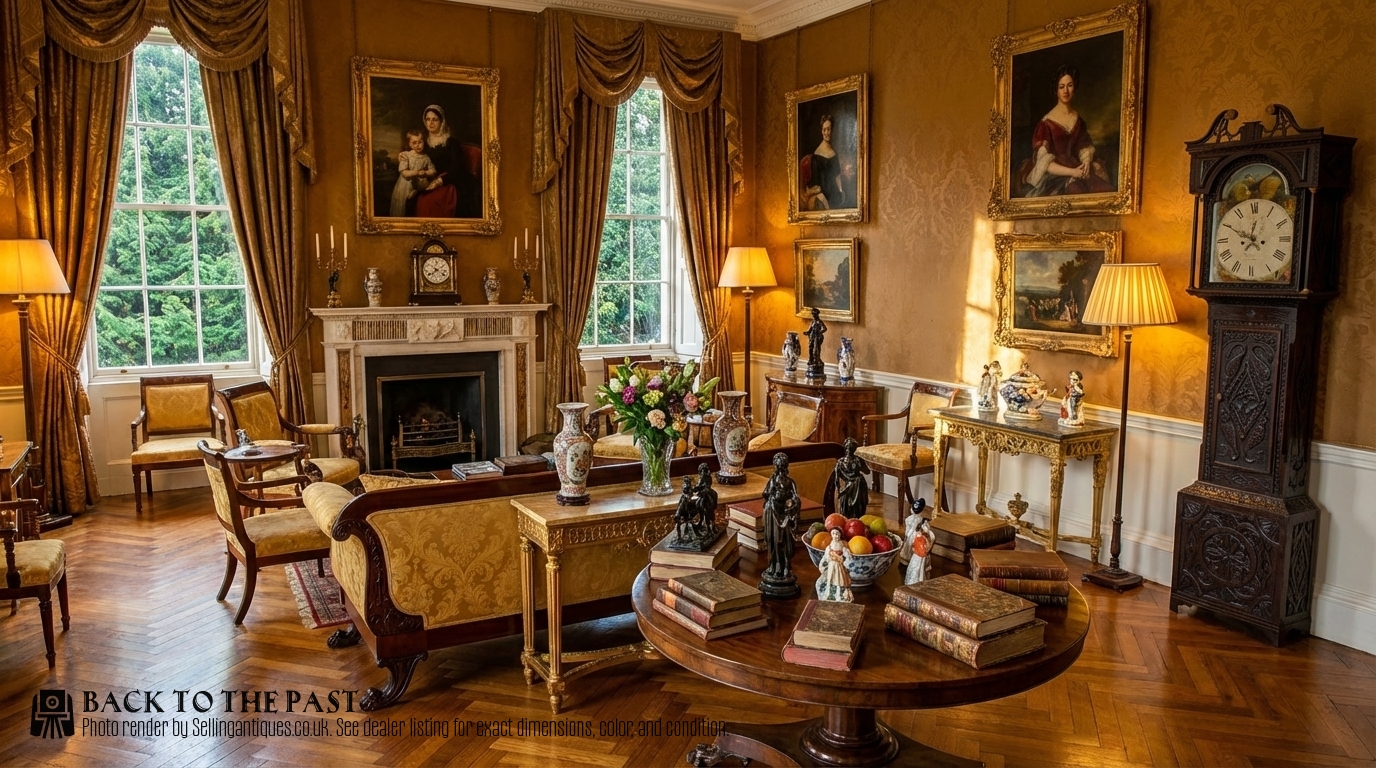
How They Were Made
Clockmakers utilised seasoned timbers such as mahogany and oak for the tall cases, employing cabinet-making techniques to construct the trunk, base, and hooded top that protects the dial. The wood was often polished, carved, or inlaid with contrasting veneers to accentuate the architectural proportions of the longcase.
The interior mechanical movement relies on brass wheels, steel pinions, and weights suspended by cords or chains, driving both the timekeeping train and the moon roller mechanism. Dials were formed from brass plates or iron sheets, subsequently painted and hand-lettered by specialists who depicted the lunar landscape and the phases of the moon within the arch.
Moon Phase Grandfather Clock Retail Price Guide 2026
Typical asking prices for moon phase grandfather clock among the pieces listed under this phrase on Sellingantiques today, from the lower quarter to the upper quarter. They describe what is for sale here now, not the wider market.
Provincial clockmakers frequently painted whimsical facial expressions onto the tiny moons revolving behind the dial arch.
What Varies in Quality
The standard of a moon phase grandfather clock depends heavily on the ambition of the original movement and the artistry of the dial painting. Simpler thirty-hour movements contrast with complex eight-day movements, musical mechanisms, or tube chiming systems that require greater engineering skill.
Cabinet work also sets examples apart, distinguishing standard regional carcase construction from exhibition quality pieces featuring figured flame mahogany, elaborate carving, or sophisticated Tunbridgeware style inlay. The clarity, artistic execution, and detailing of the painted moon roller dial further divide standard production from finer documented works.

Parkinson Bros Batley·Edward Shepley of Manchester·Edward White Birmingham·Will Lassell of Toxteth Park·Thomas Lees Bury·Thos Russell Lancaster·Furnival Oldham·Thomas Dean of Leigh·Stanyer Nantwich·R Lawson Leigh·John Wood of Grantham·Edward Glase of Bridgnorth·Henry Smith·William Mercer of Liverpool·David Griffith Carnarvon·John Wyat Altringham·Harford Bristol·Hunter of Bristol·John Uffington London·Farr of Bristol·Seddon of Frodsham·Fulford Plymouth·John Harrison Newcastle·James Booth Manchester·Tremlett of St Georges
The Moon Phase Grandfather Clock Glossary
- Longcase clock
- A tall pendulum clock enclosed in a wooden case designed to stand directly on the floor. This term is frequently used interchangeably with grandfather clock in historical records.
- Moon roller
- A rotating mechanical disc positioned behind the dial arch that displays the phases of the moon. It completes a full revolution every twenty-nine and a half days to track the lunar month.
- George III
- A stylistic and historical period spanning the late eighteenth century, associated with refined cabinet-making and classical proportions. Clocks from this era often display balanced mahogany cases.
- Dial
- The face of the clock where the hours, minutes, and lunar tracking are displayed. These were executed in engraved brass or painted iron.
- Movement
- The mechanical assembly of wheels, gears, weights, and escapements that drives the clock. Eight-day movements require winding weekly.
Moon Phase Grandfather Clock: Frequently Asked Questions
How do moon phase clocks work?
The mechanism connects the clock's gear train to a rotating painted disc behind the dial face. This disc advances incrementally to mirror the lunar cycle.
Most traditional movements use an eight-day gear train that drives the lunar display alongside the standard hour and minute hands.
Where were these clocks made?
Clockmakers operated in major cities and provincial market towns across Britain. Regional workshops often sourced local timbers and signed the painted dials directly.
Examples originate from locations ranging from London and Bristol to northern manufacturing towns and Scottish workshops.
How do I date a longcase clock?
Dating relies on stylistic clues in the wooden case architecture, the materials used, and the signature of the maker on the dial. Georgian pieces display different proportions compared to later Victorian iterations.
Makers' names and regional archives help anchor the period of production more precisely.
How do I maintain an eight-day movement?
An eight-day movement requires regular winding using a crank key to maintain tension on the suspended weights. Keeping the clock in a stable environment away from direct heat protects the wooden case.
Professional servicing ensures the brass gears and escapement continue to function accurately over time.