



Monochrome Landscape Picture
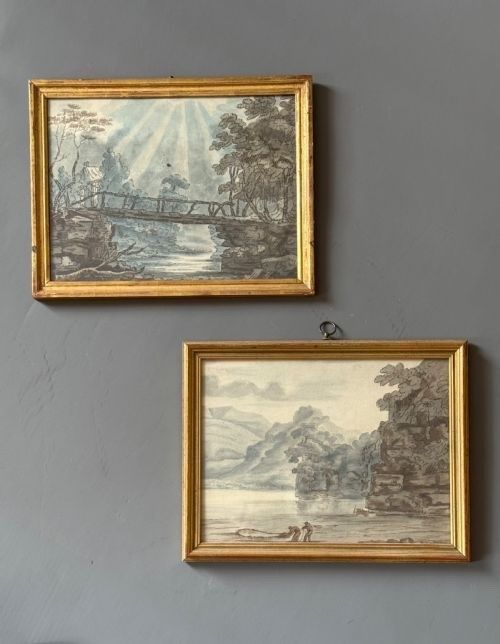
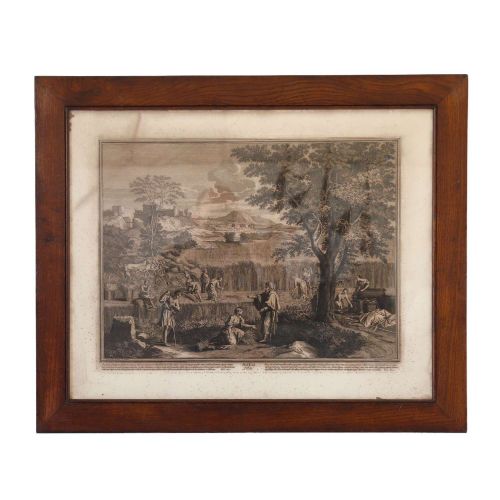
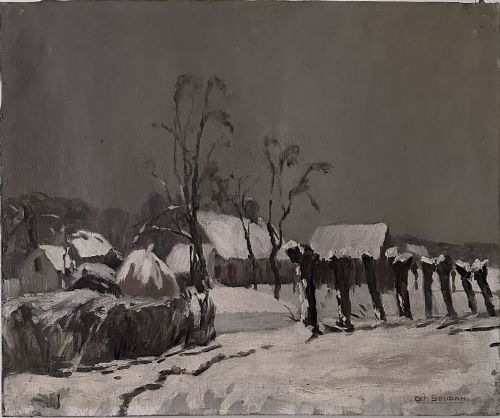
A monochrome landscape picture brings tonal depth to a room through ink, charcoal, or watercolour across periods from the seventeenth century to the twentieth.
Monochrome Landscape Picture
A monochrome landscape picture focuses purely on tone, light and shadow without the distraction of colour, capturing scenery through ink, charcoal, watercolour, and oil paint. The pieces gathered here span several centuries, including seventeenth-century engravings, nineteenth-century watercolours, and early twentieth-century drawings.
Buyers will encounter varied interpretations of scenery, from dramatic seascapes and winter villages to architectural ruins and alpine views. These works demonstrate how artists from the English School, the Victorian era, and the Modern British movement used limited palettes to achieve atmospheric depth.
Materials and methods
Artists created these works on paper or canvas using fundamental mediums such as ink, charcoal, and watercolour, alongside traditional printmaking techniques like engraving, etching, and lithography. The interaction between pigment and paper stock dictates the tonal range and permanence of each individual piece.
Many examples retain their original wooden frames and protective glass, which safeguard the delicate paper supports and fugitive water-soluble media from environmental damage over time.
Monochrome Landscape Picture Retail Price Guide 2026
Typical asking prices for monochrome landscape picture among the pieces listed under this phrase on Sellingantiques today, from the lower quarter to the upper quarter. They describe what is for sale here now, not the wider market.
The listings span from the seventeenth century through to the mid-twentieth century, employing paper, canvas, ink, charcoal, and watercolour.
Factors of quality
Quality rests upon the sureness of the draughtsmanship and the artist's ability to manipulate light and shadow across a restricted palette. Stronger works command attention through confident brushstrokes or pen lines that establish immediate spatial depth without relying on colour.
The condition of the paper support and the integrity of the medium also dictate standard, where foxing, fading, or heavy damp staining detract from the visual impact. Original framing and clear attribution to recorded makers elevate the standing of a piece within its period.
William Manners·William J Hodgson·Sir Muirhead Bone·Norman Janes·Fred Lawson·Henry Bright·Henri Joseph Harpignies·Thomas Lound
The Monochrome Landscape Picture Glossary
- Engraving
- A printmaking process where an artist cuts lines directly into a metal plate with a burin to hold ink. The resulting impressions offer exceptional linear precision and detail.
- Aquatint
- A variant of etching that produces tonal areas resembling watercolour washes through the use of powdered resin. It allows artists to achieve subtle gradients of light and dark.
- Lithography
- A planographic printing method based on the mutual repulsion of oil and water on a limestone slab or metal plate. It captures the exact character of a drawn line.
- Foxing
- The brown spots and patches that commonly appear on antique paper due to chemical reactions over time. Its presence and extent influence the overall state of preservation.
Monochrome Landscape Picture: Frequently Asked Questions
How do I care for antique works on paper?
Keep drawings and prints away from direct sunlight to prevent the fading of ink, charcoal, and watercolour pigments. Maintain stable indoor humidity levels to protect the paper and backing materials from moisture damage.
Ensure that framing uses acid-free materials and that the glass does not touch the surface of the artwork directly. Proper conservation framing preserves both the medium and the paper support for future years.
What defines a monochrome work?
A monochrome work uses a single colour or a restricted tonal scale, typically black, grey, sepia, or brown ink on a light ground. This limitation directs the viewer's attention entirely toward form, texture, and the play of light.
Artists employed this approach across various eras to emphasise draughtsmanship and mood over literal colour representation. The style encompasses everything from rapid field sketches to finished exhibition pieces.
How can I tell the period of a drawing?
Dating relies on stylistic clues, framing methods, and the specific composition of the paper stock and watermarks. Earlier works often exhibit hand-laid paper and specific handling of wash or ink consistent with known artistic movements.
Signatures, inscriptions, and documented artist working dates also help narrow down the timeframe. Comparing the technique to established examples from the same century confirms the period.
Are these works original or printed reproductions?
The collection includes both unique hand-drawn or painted pieces and period printmaking such as engravings and lithographs. Original drawings show evidence of the artist's hand, including pencil underdrawings, brush texture, and ink pooling.
Printed editions display consistent plate marks or fine dot structures characteristic of historical print techniques. Examining the surface under magnification clarifies the distinction between a direct drawing and a printed multiple.