
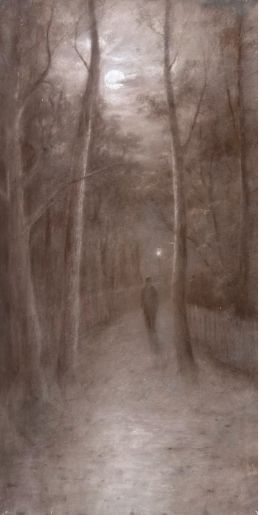
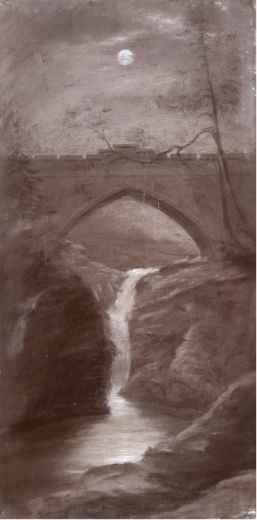


Monochrome Landscape Drawing
A monochrome landscape drawing captures the quiet depth of scenery through tonal variation, offering subtle views that rely entirely on line and shade.
Monochrome Landscape Drawing
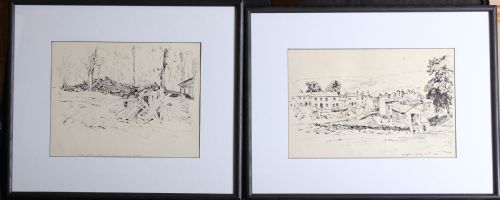
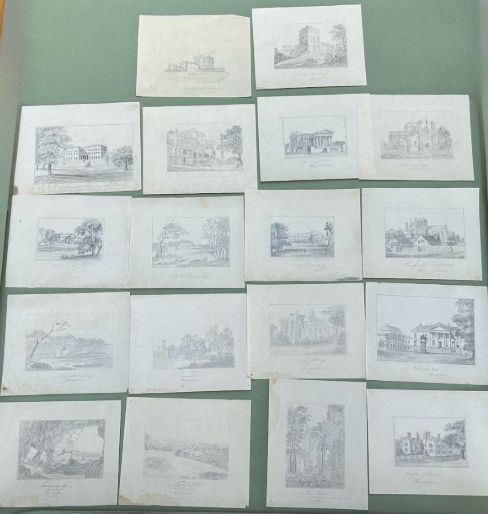
A monochrome landscape drawing relies on restricted palettes and tonal restraint to depict natural scenes, townscapes, and architectural studies. These works span from the eighteenth century through the twentieth century, encompassing periods like the Georgian era, Victorian period, and mid-century British art.
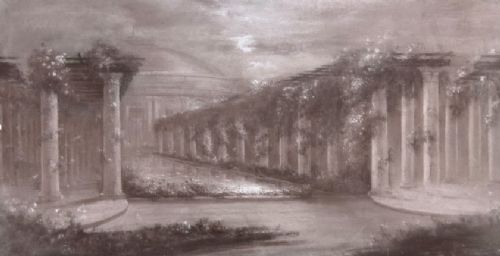
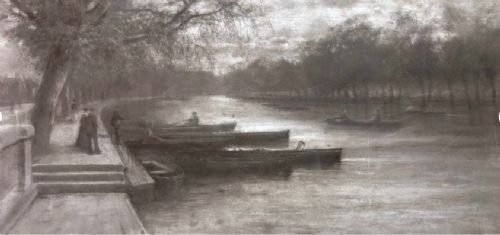
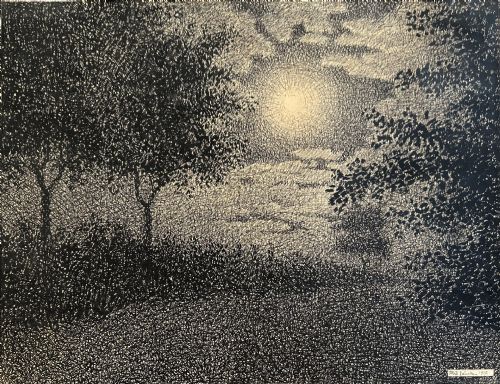
The selections on this page feature original sketches, paintings, and works on paper created in mediums such as charcoal, ink, graphite, and pencil. Examples range from detailed topographical studies of specific locations like the English Lake District and Bruges to moody twilight and moonlit scenes.
Buyers encounter both finished exhibition pieces and spontaneous field sketches by named artists or anonymous hands associated with specific regional schools. These diverse works share a common focus on light, shadow, and contour without the distraction of full colour.
Materials and Working Methods
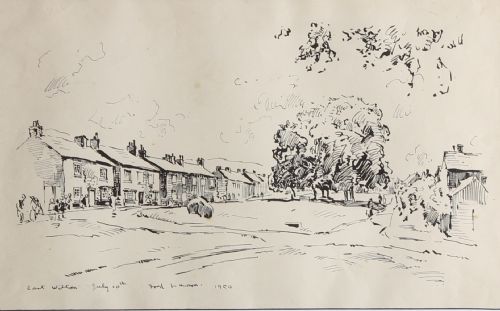
Artists utilise paper, card, and occasionally canvas stretchers as the primary support for these works, applying drawing materials by hand. Charcoal and graphite provide soft gradients and deep shadows, while pen and ink deliver precise architectural lines and sharp botanical details.
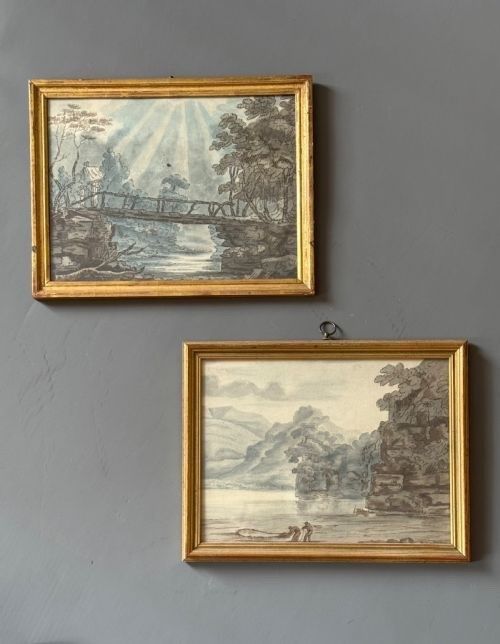
Watercolour washes and sepia tones frequently supplement pencil or ink foundations to build atmospheric depth and directional light. Many pieces combine media, layering charcoal or graphite with ink washes to enhance the tonal range of skies, water, and foliage.
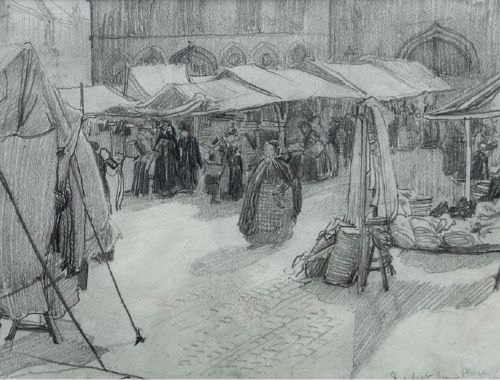
Several drawings preserve nineteenth-century views of Belgian markets and Hampshire fields through the quiet scratch of a humble pencil.
Distinctions in Execution and Preservation
Quality rests upon the sureness of the hand and the efficiency of the marks used to convey atmosphere and structure. Superior works demonstrate an economy of line and confident tonal control that establishes immediate spatial depth and convincing light.
Condition and preservation play a critical role, as works on paper remain sensitive to light exposure, damp, and acidic mounts. Intact framing, minimal foxing, and strong contrast without fading distinguish the finest survivals from tired or damaged examples.
Henry Percy Huggill·Fred Lawson·Edward Dayes·Peter Tillemans·Henry Bright·Henry Edridge·Henri Joseph Harpignies·Thomas Lound
The Monochrome Landscape Drawing Glossary
- Tonalism
- An artistic style that prioritises mood, shadow, and atmospheric effects over strict topographical accuracy. Works in this manner often use muted palettes and low light.
- Wash
- A thin, translucent layer of diluted ink or watercolour applied with a brush to create smooth background tones or shadow effects. This technique builds atmospheric depth behind crisp pen or pencil lines.
- Graphite
- A form of carbon used in pencils to produce grey marks ranging from hard, pale lines to soft, deep darks. It allows for fine detail as well as broad shaded areas.
- Charcoal
- A drawing material made from burnt organic matter that yields rich, velvety darks and rapid coverage. It appears frequently in studies capturing dramatic light or nocturnal scenes.
- Topographical
- Depicting specific, recognisable geographical locations, buildings, or towns with descriptive accuracy. These drawings often serve as historical records of landscapes and architecture.
Monochrome Landscape Drawing: Frequently Asked Questions
How should I frame an antique drawing?
Protect works on paper by using acid-free mounts and conservation-grade backing materials to prevent discolouration over time. Keep frames away from direct sunlight to preserve the delicate inks and charcoals.
Select simple framing profiles that do not overwhelm the restrained palette of the drawing. Traditional wooden or gilt frames often complement the period aesthetic of eighteenth and nineteenth-century works.
What subjects appear in these drawings?
The subjects range from quiet rural landscapes and coastal views to townscapes, architectural studies, and dramatic ruin sites. Many pieces record specific British and European locations from past centuries.
Nocturnal scenes and twilight views also feature prominently, capturing the interplay of moonlight and shadow. These compositions focus on atmosphere rather than bright daylight details.
Can I hang drawings in natural light?
Minimise direct exposure to strong sunlight, as prolonged UV rays can fade inks, watercolours, and graphite marks. Position works on interior walls away from direct windows where possible.
Utilise conservation glass with UV-filtering properties to protect vulnerable paper and pigments from environmental damage. Regular monitoring ensures the drawing remains stable in its environment.