





Monochrome Dog Artwork
Monochrome dog artwork brings together centuries of canine portraiture in ink, charcoal and graphite, offering buyers timeless character and historic charm.
Monochrome Dog Artwork
Monochrome dog artwork encompasses a diverse range of historic prints, etchings, engravings and original drawings that capture canine subjects without colour. Buyers searching this phrase encounter pieces spanning from the eighteenth century through the Victorian era and into the early twentieth century.
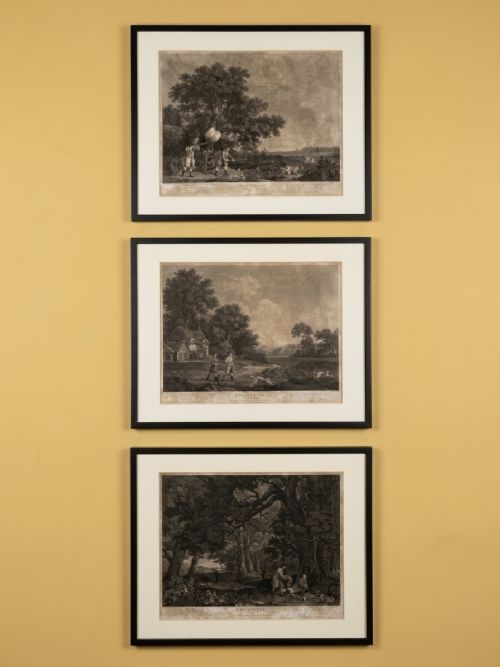
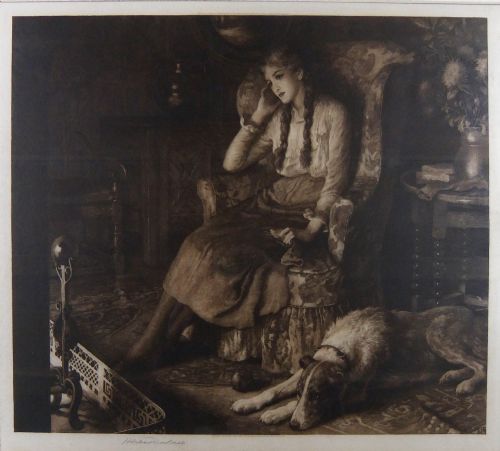
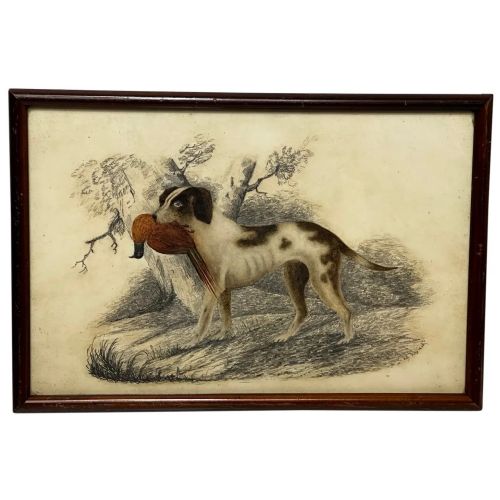
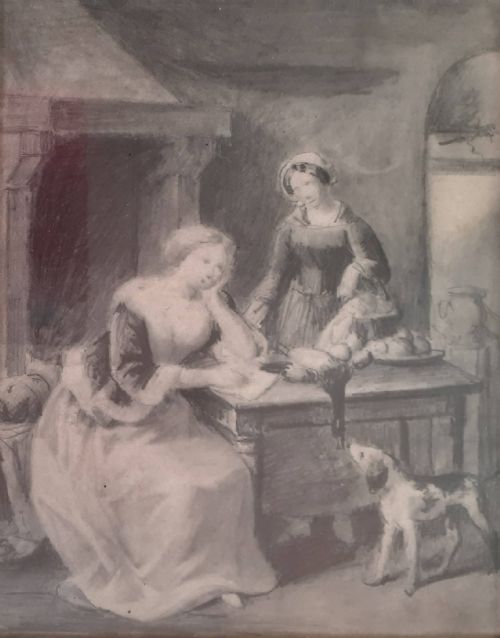
The selections on this page are dominated by original etchings, notably works by Herbert Dicksee, alongside graphite drawings, charcoal paintings and eighteenth-century engravings. Formats range from framed prints to detailed drawings depicting sporting dogs, terriers, bulldogs and gun dogs.
Stylistically, these pieces draw upon Victorian realism, Edwardian sensibilities, Georgian traditions and early twentieth-century realism. English country house aesthetics and French genre manners also appear, reflecting the varied ways artists immortalised dogs across different centuries.
Materials and techniques
These works rely on fundamental graphic mediums such as ink, charcoal and graphite applied directly to paper. Artists utilised etching and drypoint techniques on metal plates to produce fine, detailed prints, often protected behind glass within wooden frames.
Engraving formed a primary method for eighteenth-century and nineteenth-century reproduction, allowing intricate lines to define the coats and expressions of the subjects. Charcoal and graphite drawings provided artists with the scope for tonal depth and immediate textural nuance on paper.
Monochrome Dog Artwork Retail Price Guide 2026
Typical asking prices for monochrome dog artwork among the pieces listed under this phrase on Sellingantiques today, from the lower quarter to the upper quarter. They describe what is for sale here now, not the wider market.
Listings feature paper, ink, wood, glass, charcoal and graphite across periods from the eighteenth century to the 1930s.
Judging quality in monochrome pieces
Quality in these works rests upon the clarity of the line and the strength of the tonal contrast achieved by the artist or printmaker. Strong etchings and drawings display a confident handling of fur, musculature and expression that brings the animal to life on the paper.
The condition of the paper and the crispness of the impression separate standard decorative prints from finer collector pieces. Earlier impressions from plates and well-preserved graphite or charcoal drawings retain a vitality that weaker or faded examples lose over time.
William Woollett·George Stubbs·Herbert Dicksee·Sir Edwin Landseer·Alexandre Decamps
The Monochrome Dog Artwork Glossary
- Etching
- A printmaking process where lines are bitten into a metal plate with acid before ink is applied and transferred to paper. This technique allows for fine, painterly detail.
- Drypoint
- A printmaking method where an artist scratches directly into a metal plate with a sharp needle, producing a rich, velvety burr along the lines. This creates soft, dark lines unique to the process.
- Engraving
- A technique where an artist cuts lines directly into a hard plate using a burin, resulting in clean and precise imagery. Eighteenth-century sporting series frequently utilised this method.
- Graphite
- A form of carbon used as a drawing medium, offering a range of greys from silvery tones to deep blacks. Antique graphite drawings rely entirely on shading and line weight.
- Charcoal
- A porous carbon material made from burnt wood, used to create bold and expressive monochrome drawings. It provides deep blacks and smooth tonal blending.
Monochrome Dog Artwork: Frequently Asked Questions
How do I identify an original etching?
Original etchings typically display a distinct plate mark impressed into the paper surrounding the image, alongside rich ink textures.
Closer inspection under magnification reveals the fine raised lines of ink characteristic of intaglio printing rather than flat photographic reproduction.
How should I frame and display these works?
Monochrome works on paper require conservation framing with acid-free mounts and UV-filtering glass to protect them from light damage.
Keeping them away from direct sunlight preserves the integrity of the paper, graphite, ink and charcoal over time.
What subjects are most common?
Portraits of specific breeds like bulldogs, spaniels, terriers and gun dogs dominate the available imagery across these historic periods.
Scenes also capture working dogs in the field, sporting moments, or domestic settings showing dogs in country houses.
How do I tell Victorian pieces from earlier eras?
Victorian works often lean towards heightened realism and sentimentality in animal depiction, reflecting contemporary artistic tastes.
Eighteenth-century engravings and Georgian pieces tend to exhibit more formal sporting compositions and distinct typographic lettering beneath the image.