




Model Sailing Boat
These model sailing boat examples bring maritime history indoors, offering carefully crafted wooden hulls and rigging that capture the spirit of classic naval vessels.
Model Sailing Boat
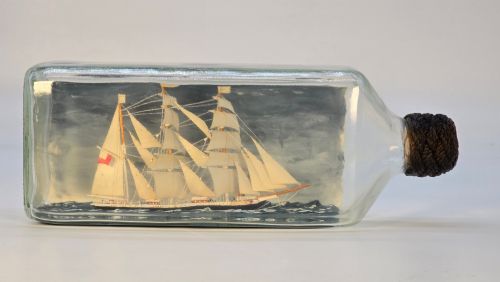
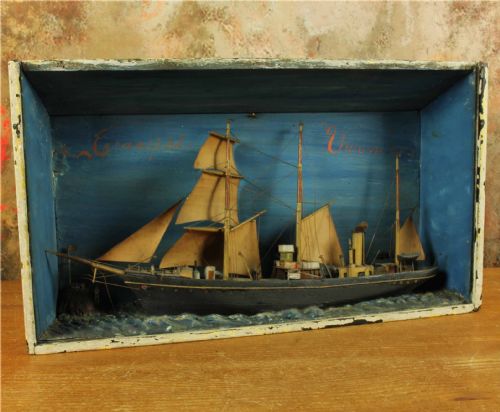
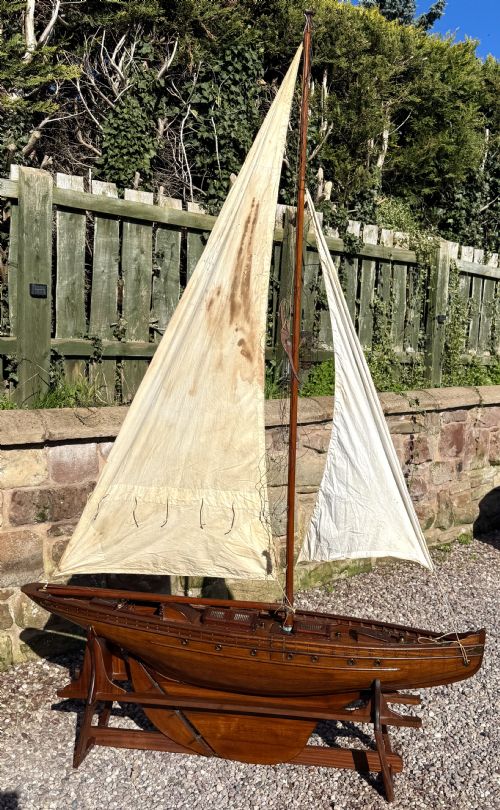
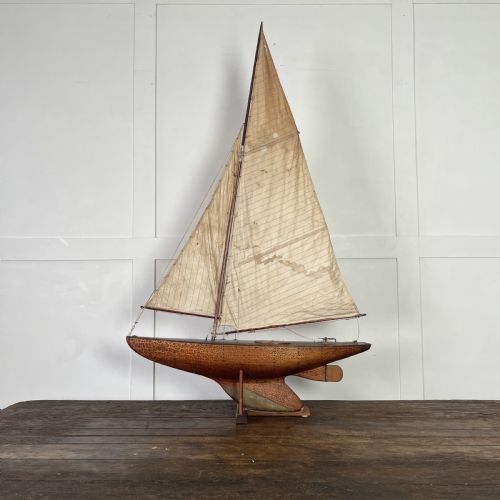
When you search for a model sailing boat, you encounter everything from large pond yachts designed for open water to intricate ship dioramas housed in bottles or glass shadow boxes. The pieces gathered here span the Victorian era, the Edwardian period, and the early twentieth century, reflecting both maritime folk art and precise scale modelling.
You are most likely to meet scratch-built wooden pond yachts and framed dioramas on this page, often showing the single-masted ketch or multi-masted configuration typical of British and European craftsmanship. These vessels range from utilitarian training models to decorative objects carved and rigged by hand.
The selection includes specific historical representations, such as named merchant vessels and naval ships, alongside anonymous racing yachts built for speed on Victorian park lakes. Each piece retains the physical character of its working life or hobbyist origin.
How they were made
Makers constructed these hulls primarily from wood, often employing carvel planking techniques for pond yachts and solid carved blocks for smaller display pieces. Metal fixtures, brass fittings, and lead keels provided necessary weight and structural detail, while cordage and thread formed the standing and running rigging.
Paint finishes and canvas sails completed the visual presentation, sometimes protected within glazed shadow boxes or glass bottles. These materials were worked by hand using simple workshop tools, resulting in scratch-built objects that demonstrate traditional maritime carpentry.
Listings feature wood, canvas, glass, paint, metal, brass, thread, and cordage across Victorian, Edwardian, and twentieth-century periods.
What varies in quality
The distinction between standard examples and superior work lies in the fidelity of the scale proportions and the precision of the rigging. Finer pieces demonstrate meticulous attention to deck furniture, block pulleys, and hull symmetry rather than rough approximation.
The integrity of original materials also dictates quality, particularly where surviving canvas sails, brass fittings, and glass cases remain intact. A master maker achieved convincing realism through restraint and exactness in miniature carpentry.
The Model Sailing Boat Glossary
- Diorama
- A three-dimensional scene enclosed in a box or bottle, depicting a ship at sea with painted backgrounds and sculpted water. These displays protected delicate rigging from dust and damage.
- Ketch
- A two-masted sailing boat with the smaller mizzenmast stepped forward of the rudder post. This rig appeared frequently on working vessels and leisure craft alike.
- Scratch-built
- Describes a model constructed from raw materials by hand rather than assembled from a commercial kit. Such pieces rely on the maker's direct interpretation of plans or actual vessels.
- Pond yacht
- A free-sailing model boat designed to cross park ponds without human intervention, relying on adjusted rudders and sails. They were built for performance on the water as well as display.
- Carvel hull
- A method of planking where hull boards are laid edge-to-edge flush against a supporting frame. This technique created a smooth exterior surface on larger wooden models.
Model Sailing Boat: Frequently Asked Questions
Were these models made by professionals?
Many fine examples originated from commercial marine model makers working for shipping companies or wealthy owners. Others emerged from skilled amateurs and sailors carving during quiet watches.
Amateur folk art pieces often display charming local variations in technique, whereas professional commissions prioritize exact scale accuracy.
How do I date a wooden pond yacht?
Examine the hull construction methods, metal fittings, and deck hardware styles. Earlier nineteenth-century examples often feature simpler deck layouts and heavier iron components.
Paint layers, wood oxidation, and the specific style of the rigging blocks also provide reliable clues to the decade of manufacture.
Can these boats still sail on water?
Pond yachts were originally built to sail, and many retain their functional wooden hulls, rudders, and lead keels. However, fragile rigging and dried wood make modern sailing inadvisable.
Displaying them on stands preserves the historic canvas sails and cordage from strain and accidental water damage.