


Mobile Serving Cart
A mobile serving cart brings hospitality to any room, offering tiered surfaces and wheels for carrying tea, drinks and food with ease.
Mobile Serving Cart
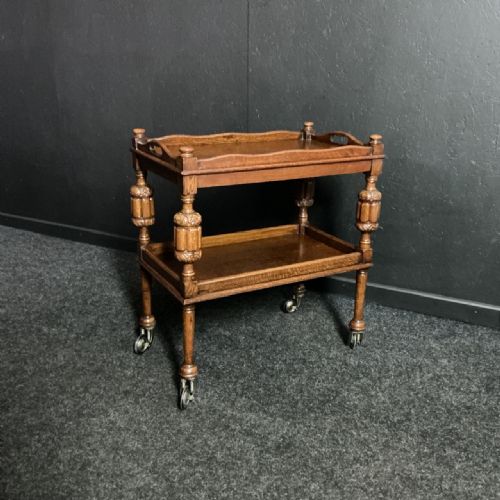
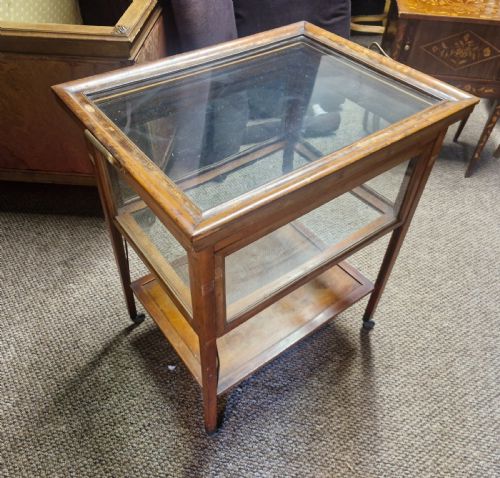
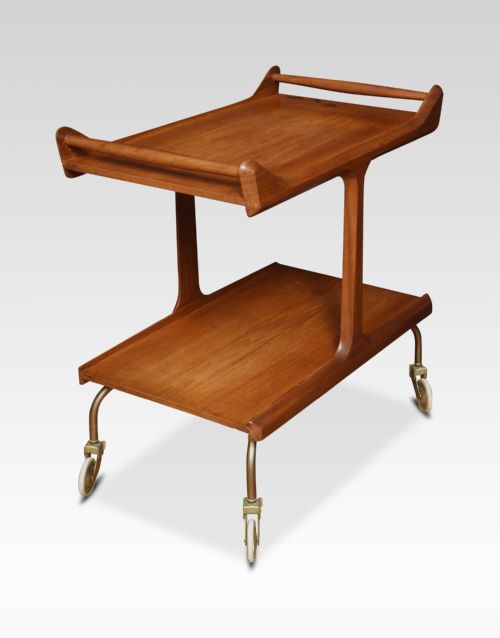
A mobile serving cart is a versatile piece designed for moving refreshments across rooms, appearing primarily as tea trolleys, drinks trolleys and bar carts. These pieces range from Edwardian and Victorian designs to 1930s Art Deco and mid-century interpretations.
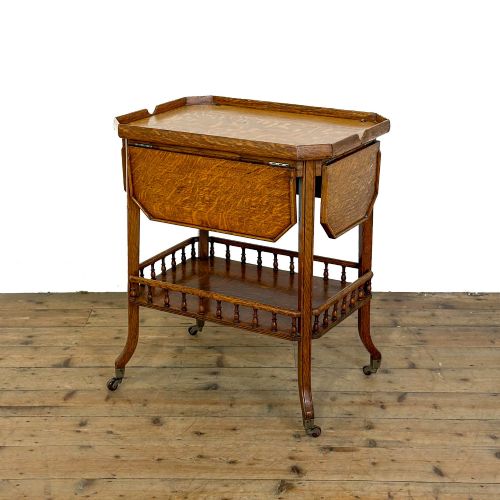
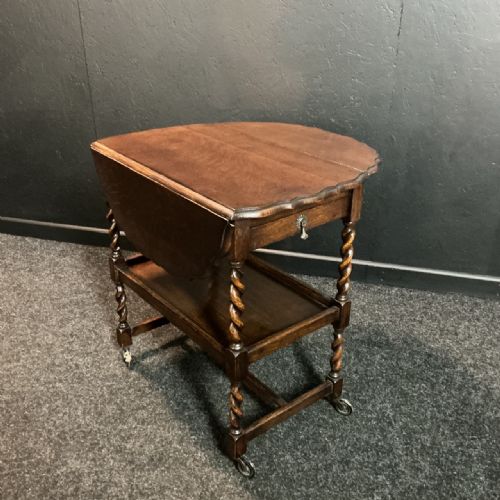
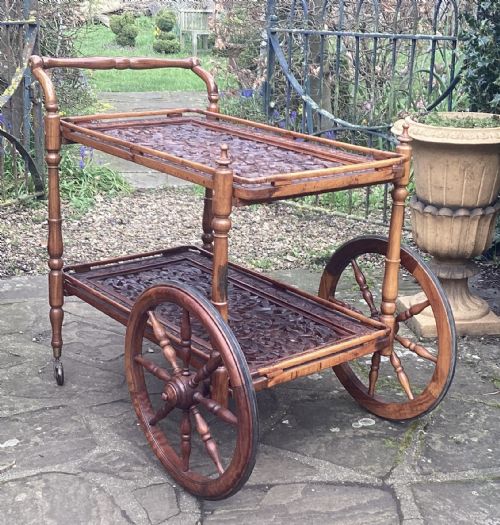
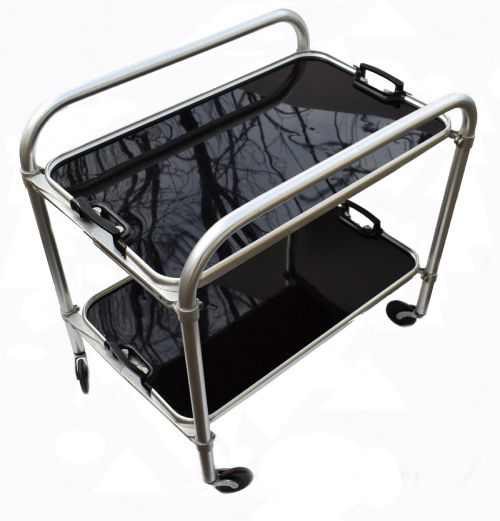
The most common versions met here date from the Edwardian period and the 1930s, constructed in timber or metal with wheels. Many feature practical additions such as drop sides, removable trays and multiple tiers for holding tableware and bottles.
Origins vary from British workshops to Anglo-Indian production, reflecting changing domestic habits around afternoon tea and entertaining. Buyers choose them for their combination of mobility, shelving space and period character.
How they were made
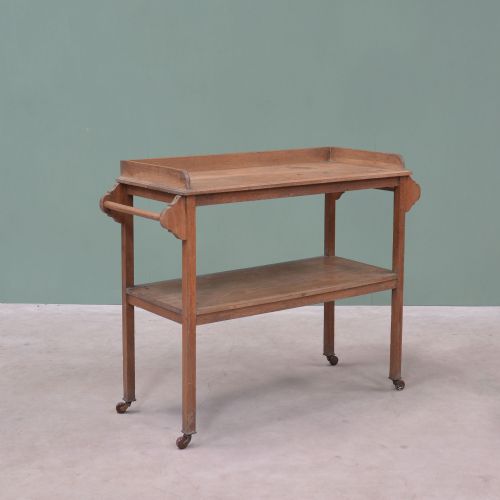
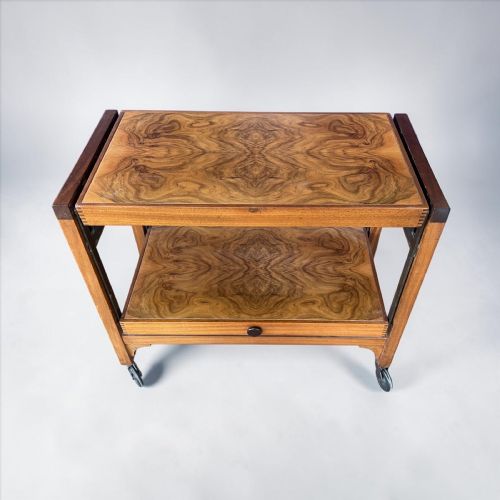
Makers utilised solid timbers such as oak, mahogany, walnut and beech, frequently building two-tier structures supported on wheels. Drop sides and lift-off trays provided adaptable workspace for serving tea and cake.
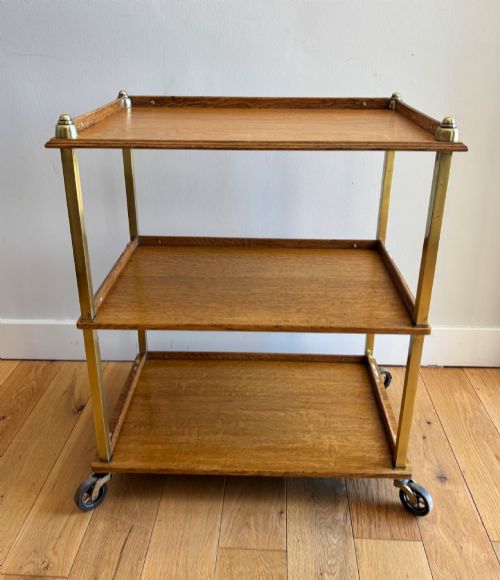
Twentieth-century examples introduced metal elements, including chrome, brass, aluminium and iron, paired with glass or black glass surfaces. Cane binding and carved hardwood also appear, showing diverse construction methods across different styles.
One exceptional trolley comes bound in cane, proving that even tea service needed a touch of holiday texture.
What varies in quality
Quality rests in the choice of materials and the integrity of the construction, from solid hardwoods to applied cane work and cast metal frames. Finer pieces demonstrate careful joinery in drop-side mechanisms and well-fitted removable trays.
Design distinction separates standard utilitarian trolleys from striking Art Deco or Anglo-Indian examples that incorporate specific stylistic details. The movement of the wheels and the condition of the glass or timber tiers complete the assessment.
Lusty of Leicester
The Mobile Serving Cart Glossary
- Drop sides
- Hinged flaps on a tabletop or trolley that fold down to save space or lift up to extend the surface area when serving.
- Etagere
- A piece of furniture with a set of open shelves for displaying or holding small objects and serving items.
- Metamorphic
- Describing furniture designed to transform its shape or function, such as a trolley that converts between different uses.
- Removable tray
- A detachable upper section of a trolley that allows glasses or teaware to be carried independently of the main frame.
Mobile Serving Cart: Frequently Asked Questions
What are mobile serving carts used for?
These pieces were originally designed for serving afternoon tea, cakes and drinks across different rooms in a home without carrying heavy trays.
Today, they serve equally well as mobile cocktail bars, side tables or display surfaces in living spaces.
How do I date a serving trolley?
Dating relies on identifying materials, hardware and stylistic details such as Edwardian woodwork or Art Deco chrome and black glass.
Construction methods and wheel types also offer strong clues to the decade of manufacture.
Are the trays on these trolleys removable?
Many examples feature a lift-off tray forming the top tier, designed to be carried independently to a table or kitchen.
Others are fixed into the tiered structure for added stability during movement.
How do I live with a vintage trolley?
Position your trolley where its wheels can move freely across your flooring, and use the tiers to store glassware, bottles or books.
Regular maintenance involves treating the wood or metal surfaces gently according to their specific material.