




Mirrored Wall Cabinet
A mirrored wall cabinet brings light and polished timber to a room, and the pieces found here span from walnut corner cupboards to mahogany shop displays.
Mirrored Wall Cabinet
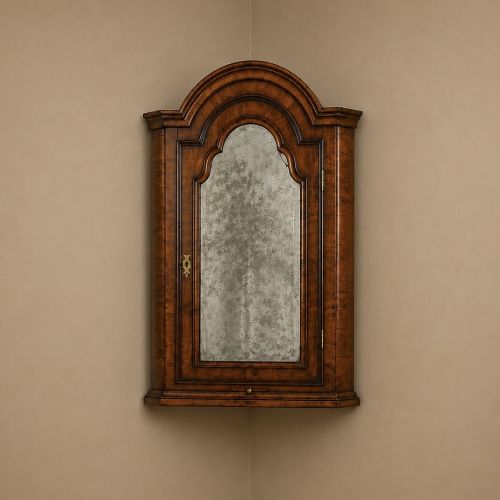
A mirrored wall cabinet combines enclosed storage with reflective glass, appearing across periods from the eighteenth century to the twentieth. These pieces hang upon walls or fit into corners, functioning as display cabinets, shaving mirrors, and key cabinets.
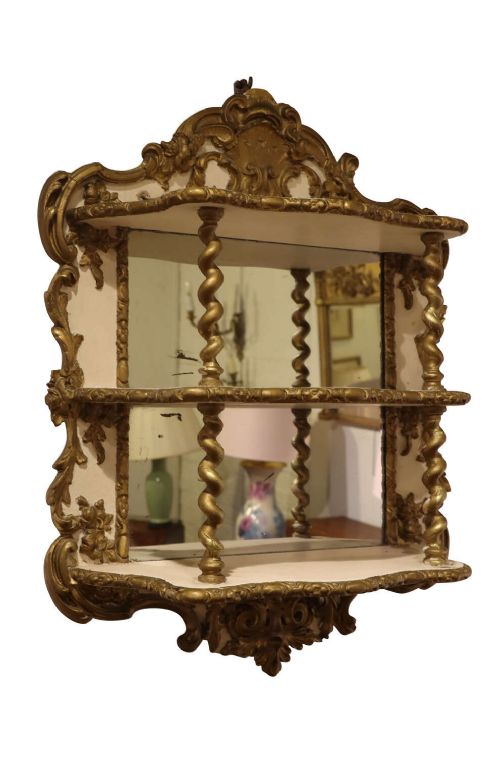
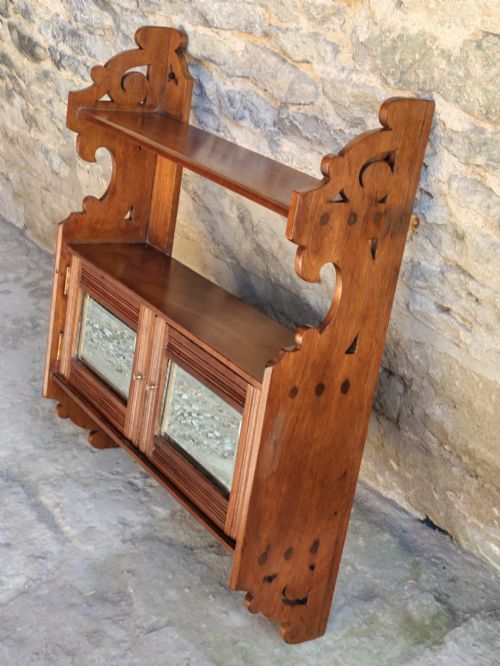
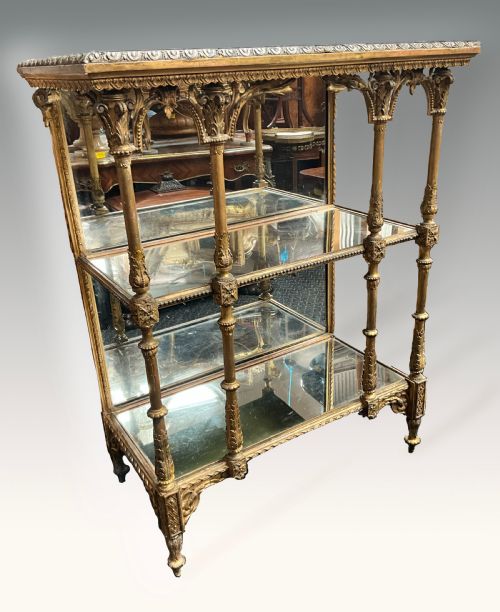
The versions most frequently met on this page include walnut hanging pieces and Edwardian mahogany wall cabinets. Alongside these, buyers encounter French Rococo revival painted étagères, Aesthetic movement Anglo-Japanese designs, and Victorian giltwood shelves.
Makers and designers worked within diverse regional traditions, ranging from Danish Empire mahogany pieces to English corner cupboards with original mirrors. The forms adapt to domestic and shop interiors alike, utilising glass and polished timber to brighten smaller spaces.
How they were made
Makers utilised timber frames of walnut, mahogany, rosewood, oak, and satinwood, often enhanced with painted or giltwood surfaces. Cabinet construction relied upon traditional joinery to support the weight of mirrored doors and interior shelves.
Glass plates provided the reflective and display surfaces, sometimes paired with brass hardware and candle slides. Gesso ornamentation and inlay work appeared on specific revival styles, adding texture and decorative detail to the timber carcasses.
A shaving mirror and key cabinet combination ensures your keys are polished while your face is inspected.
What varies in quality
The quality of a mirrored wall cabinet depends upon the selection of timber and the preservation of original elements such as mirror glass and brass fittings. Finer examples display accomplished carving, inlay, and gilding that remain faithful to their period of origin.
Structural integrity and the condition of the mirrored surfaces distinguish standard utility pieces from exceptional cabinetwork. The refinement of the proportion and the subtlety of the painted or polished finish dictate the standing of each piece.
Town and Emanuel
The Mirrored Wall Cabinet Glossary
- Giltwood
- Wood carved and coated with gold leaf or a gold-coloured finish. This technique was favored for ornate Victorian and Rococo revival frames and display shelves.
- Étagère
- A piece of furniture consisting of open shelves for displaying small objects. These often incorporate mirrored backs and painted surfaces.
- Satinwood
- A durable, yellowish wood used for fine furniture inlay and cabinet panels. It provides a bright contrast against darker timbers such as mahogany and rosewood.
- Overmantel mirror
- A large mirror designed to hang above a fireplace mantelpiece. Edwardian versions frequently integrated shelving and cabinet compartments.
- Aesthetic movement
- A late nineteenth-century design style emphasising visual beauty over narrative content. Anglo-Japanese variants within this style utilised ebonised or walnut timbers and distinct decorative motifs.
Mirrored Wall Cabinet: Frequently Asked Questions
Where should I hang a mirrored wall cabinet?
These cabinets suit hallways, bathrooms, and principal rooms where wall space permits a combination of storage and reflection. Their dimensions require secure fixing to wall studs or masonry.
Smaller pieces function well above basins or side tables, while larger display cabinets demand open wall areas to balance their visual weight.
How do I date a mirrored wall cabinet?
Dating relies upon timber selection, hardware, joinery techniques, and stylistic markers recorded in the piece. Eighteenth-century examples often feature walnut and candle slides, whereas Edwardian and later pieces display lighter mahogany or inlaid satinwood.
Mirror glass characteristics also offer guidance, as older plates exhibit subtle distortions or hand-beveled edges distinct from modern manufacturing.
Were mirrored wall cabinets used in shops?
Certain surviving pieces served commercial environments rather than domestic interiors. Mahogany shop display cabinets with mirrored interiors were constructed to showcase small wares while amplifying light within the display space.
These commercial forms share construction methods with domestic wall cabinets but prioritize internal display capacity.
How do I care for the mirror and wood?
Maintenance requires gentle cleaning of the glass with appropriate solutions that avoid seepage behind the silvered backing. Timber surfaces benefit from minimal moisture and occasional waxing suited to the specific wood polish.
Avoiding direct sunlight prevents the fading of rosewood, mahogany, and walnut finishes over time.