

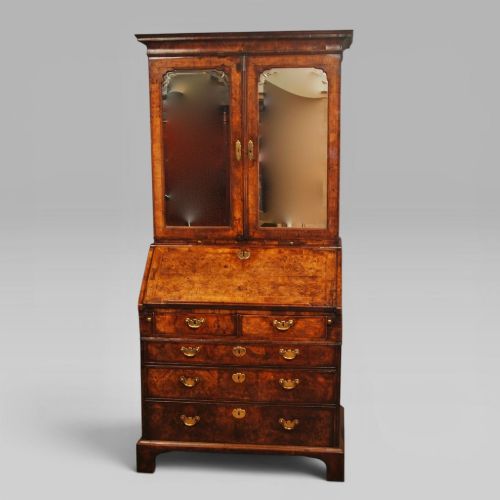
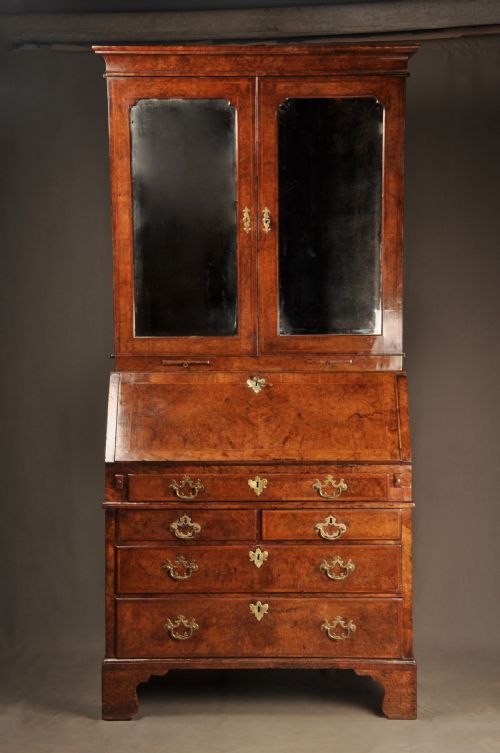


Mirrored Door Writing Cabinet
A mirrored door writing cabinet brings together deep walnut timber, reflecting glass plates and fitted fall-front desks for serious study and storage.
Mirrored Door Writing Cabinet
A mirrored door writing cabinet is typically encountered on this page as an 18th century bureau bookcase or bureau cabinet, rooted in the Georgian, George I, and Queen Anne periods. These substantial double-dome or double-door forms combine a sloping writing flap enclosing small drawers and pigeonholes with an upper bookcase section.
The primary forms stem from early English cabinet-making traditions, spanning walnut, burr walnut, oak, and red lacquered surfaces. Makers of the period engineered these dual-purpose items to house libraries while providing a private, enclosed surface for correspondence.
How they were made
Construction relies heavily on figured walnut and burr walnut veneers laid over solid oak or secondary timbers, often shaped into double-dome top configurations. Cabinet-makers utilised brass hardware for hinges and handles, supporting heavy fall fronts and doors.
Upper compartments integrate bevelled or flat mirror glass panels within the doors to catch and reflect candlelight across the room. Surface finishes range from polished lacquer to traditional wax polish, highlighting the intricate grain patterns of the wood.
Mirrored Door Writing Cabinet Retail Price Guide 2026
Typical asking prices for mirrored door writing cabinet among the pieces listed under this phrase on Sellingantiques today, from the lower quarter to the upper quarter. They describe what is for sale here now, not the wider market.
What varies in quality
Quality separates pieces through the selection of timber figures, such as highly figured burr walnut veneers, and the preservation of original mirrored door plates. Finer examples display meticulous symmetry in grain matching across the fall front and drawer fronts.
The sophistication of the internal drawer layout within the bureau section also dictates merit, along with the retention of early brass hardware and structural integrity in the cornice mouldings.
The Mirrored Door Writing Cabinet Glossary
- Bureau bookcase
- A combined piece of furniture featuring a sloping desk flap over drawers beneath an upper glazed or mirrored bookcase section. This form dominated high-end English cabinet-making in the early eighteenth century.
- Burr walnut
- Timber taken from walnut tree growths, producing highly swirling, decorative grain patterns prized by period cabinet-makers. It is typically sliced into thin veneers for application onto primary carcases.
- Double dome
- An upper cabinet cornice featuring two arched or domed sections side by side, characteristic of grand early eighteenth-century case furniture. This silhouette adds vertical presence and architectural dignity.
- Fall front
- A hinged writing flap that pulls down to a horizontal position for working, concealing a fitted interior of small drawers and pigeonholes. It folds back up to lock away writing materials.
- Lacquered
- Coated with resinous finishes, sometimes in red, following Asian-inspired techniques popularised in seventeenth and eighteenth-century Europe. This process creates a smooth, glossy decorative surface.
Mirrored Door Writing Cabinet: Frequently Asked Questions
What is a mirrored door writing cabinet?
A mirrored door writing cabinet is a tall case piece combining a shelved upper bookcase behind reflective glass doors with a lower desk workspace.
Such items served as both functional secretary desks and display furniture for valuable libraries in wealthy homes.
How do I date a walnut bureau bookcase?
Dating relies on examining construction traits, timber choices, and architectural styles like double-dome cornices or bracket feet.
Early eighteenth-century pieces often feature specific walnut veneers, herringbone banding, and original brasses typical of the Queen Anne and George I eras.
Where should I place a bureau bookcase?
These tall cabinets require substantial wall space and benefit from placement away from direct sunlight to protect aged wood veneers.
Positioning them in a study or drawing room allows the mirrored doors to reflect natural light and brighten the interior space.
Are the mirrored doors original?
Original mirror glass often exhibits subtle distortion, bevelling, and light foxing consistent with early manufacturing methods.
Checking the fit within the wooden frame and the nature of the securing glaziers' putty helps determine authenticity.