

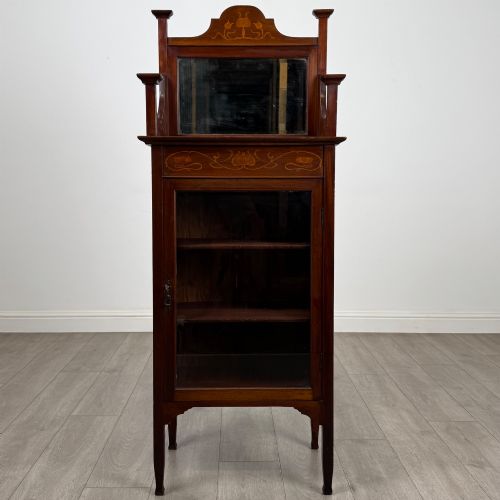
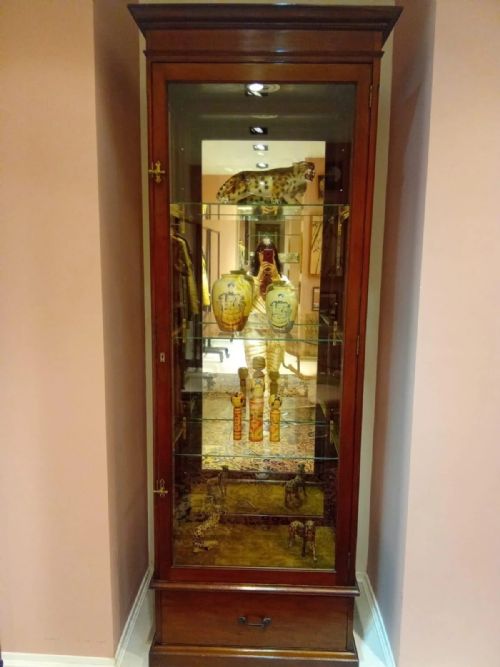
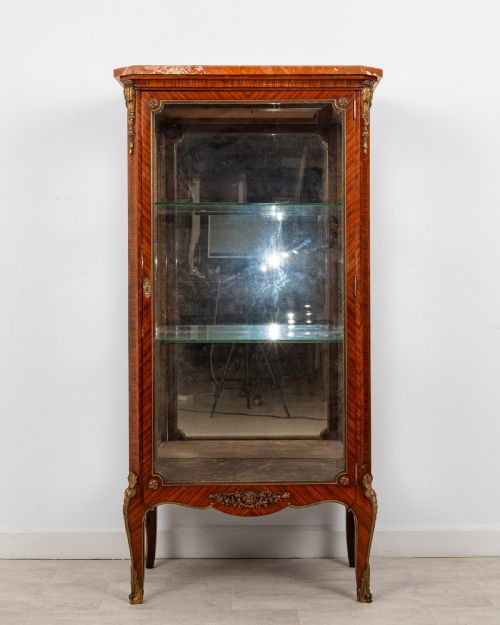
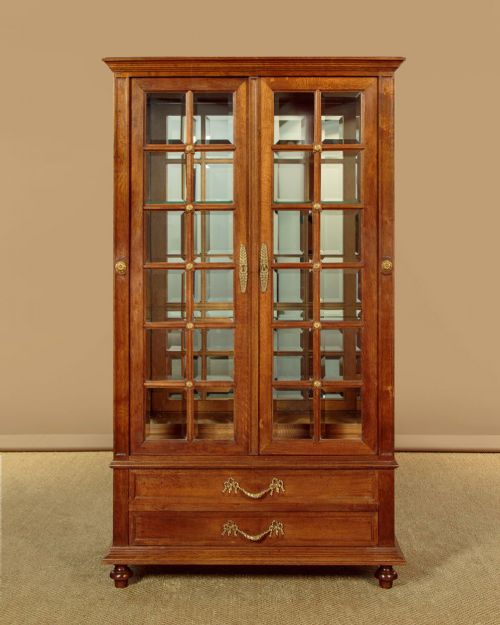


Mirrored Display Case
These mirrored display cases bring depth and reflected light to collections, turning everyday items into deliberate focal points.
Mirrored Display Case
A mirrored display case serves to showcase small treasures, china, or curiosities while bouncing ambient light back into the room through internal glass and mirrored panels. When searching for a mirrored display case, you encounter floor-standing vitrines, compact wall cabinets, and countertop shop counters from the nineteenth and twentieth centuries.
The Edwardian and Victorian eras dominate the selection, bringing rich mahogany, walnut, and kingwood frames alongside revived French Louis styles and robust shop fittings. Pieces range from large architectural cabinets with adjustable shelves to intimate countertop domes and hanging wall units designed to maximise interior brightness.
Materials and construction methods
Makers built the structural carcases primarily in dense timbers such as mahogany, oak, and kingwood, frequently enhancing them with satinwood inlay, brass mounts, or gilt ormolu details. Glass panels form the viewing windows, while silvered mirror glass lines the back interiors to multiply the visual impact of displayed objects.
Joinery methods reflect the period of origin, employing traditional cabinet-making techniques for freestanding furniture alongside sturdier glazed construction for retail shop counters and commercial display cases.
Mirrored Display Case Retail Price Guide 2026
Typical asking prices for mirrored display case among the pieces listed under this phrase on Sellingantiques today, from the lower quarter to the upper quarter. They describe what is for sale here now, not the wider market.
Certain shop cabinets spent decades holding Cadbury's sweets before finding a second life displaying miniatures.
Distinctions in craftsmanship
Quality reveals itself in the choice of timber veneers, the crispness of marquetry inlay, and the weight of cast ormolu mounts affixed to the frame. Superior examples display seamless glass joints, original working locks with keys, and heavy mirrored backs that retain their silvering without dark oxidation spots.
The refinement of the carving and the proportion of glazing bars separate standard domestic cabinets from pieces bearing signature mounts or originating from notable workshops and retailers.
François Linke·G. Durand·John Stow Ltd·Town and Emanuel
The Mirrored Display Case Glossary
- Vitrine
- A glass-fronted cabinet designed specifically for displaying fine porcelain, curiosities, or decorative objects. These often feature glazed sides to let light pass through from multiple angles.
- Ormolu
- Gilded bronze mounts applied to furniture for decorative enrichment. This technique gained widespread favour during revival periods mimicking French eighteenth-century designs.
- Marquetry
- Decorative veneer patterns formed by fitting together thin pieces of wood, shell, or ivory into wood panels. Edwardian and nineteenth-century cabinet makers used this to create floral or geometric borders.
- Pier cabinet
- A piece of furniture designed to fit narrow wall spaces typically found between windows. These often incorporated mirrored backs and glass doors to brighten darker corners of a Victorian room.
Mirrored Display Case: Frequently Asked Questions
Where should I place a mirrored display case?
Position your cabinet perpendicular to a window so natural light enters the glass panels and catches the internal mirrored back.
Avoid placing the timber directly next to active heat sources, which can dry out older woods and cause veneer to lift.
How do I clean the interior mirror glass?
Use a soft, lint-free cloth and a mild glass cleaner applied directly to the cloth rather than sprayed onto the glass. This prevents moisture from seeping behind the silvered backing or damaging the surrounding timber frame.
Take care around older foil or mercury mirrors, treating them with particular gentleness.
Can shelves be adjusted in antique display cabinets?
Many Edwardian and Victorian shop or domestic cabinets feature adjustable wooden or glass shelving supported by brass brackets. Some earlier fitted interiors remain fixed to preserve the original structural integrity of the piece.
Check individual descriptions to see if shelf heights can be modified for taller items.
How do I distinguish Edwardian from Victorian cabinets?
Victorian pieces tend to use heavier timber frames, darker finishes, and more robust carvings inspired by earlier historic revivals. Edwardian examples often feature lighter mahogany or satinwood, inlaid stringing, and a more delicate overall proportion.
Both periods frequently utilised mirrored backs to amplify interior light.