
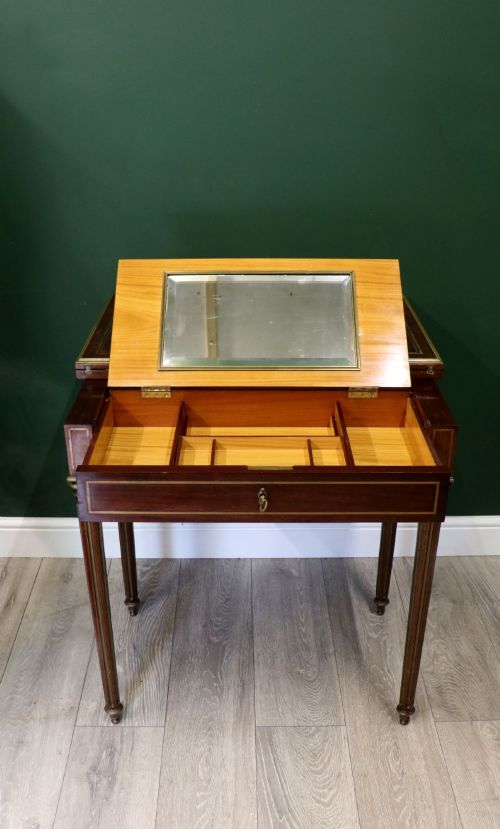
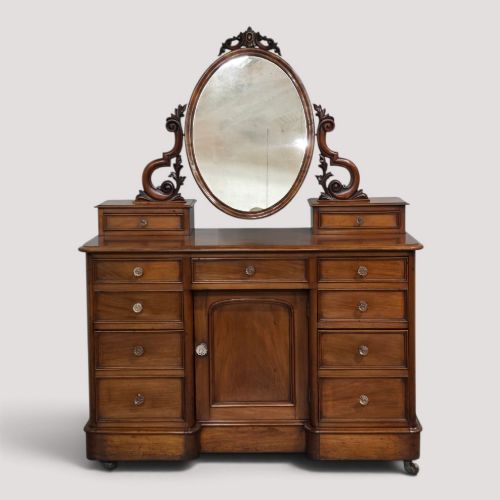
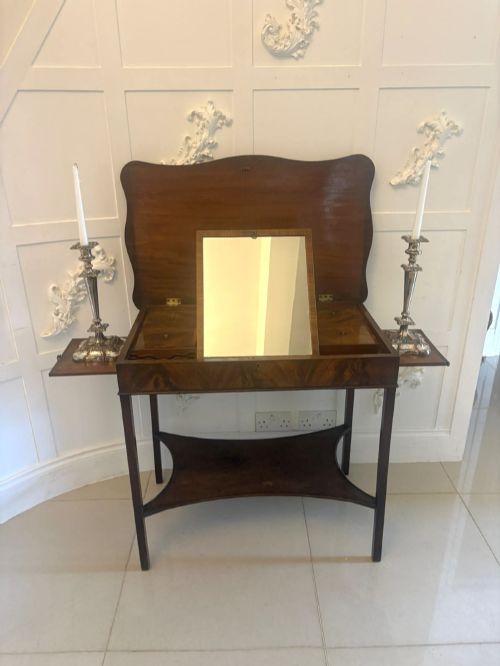
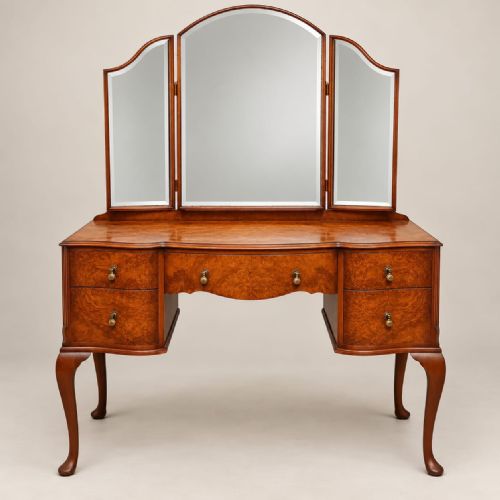
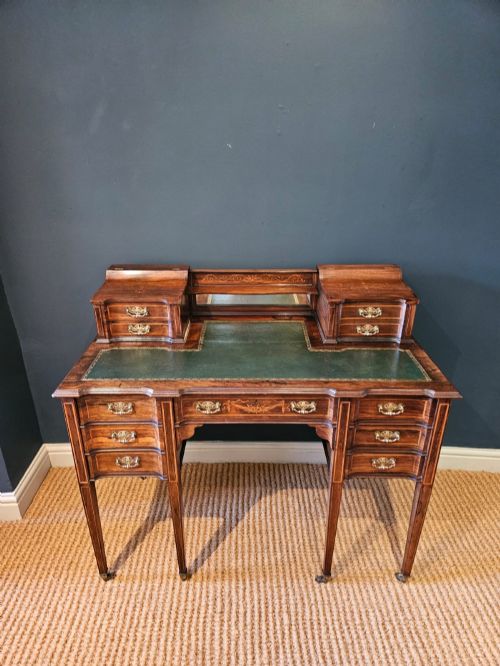
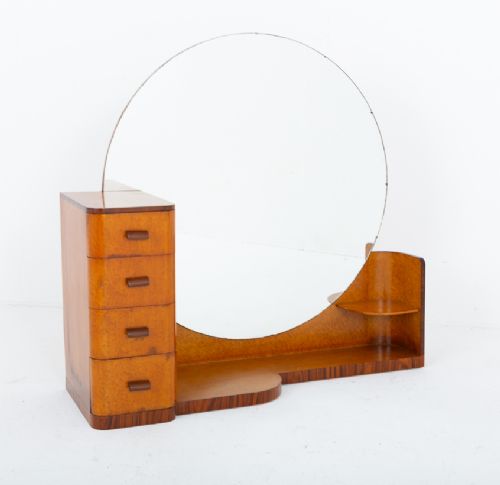
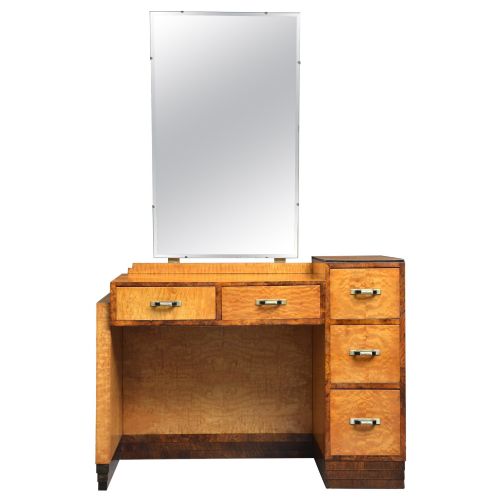
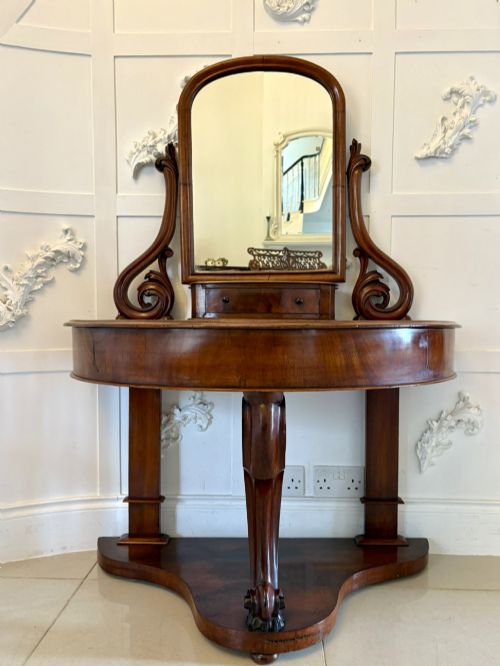
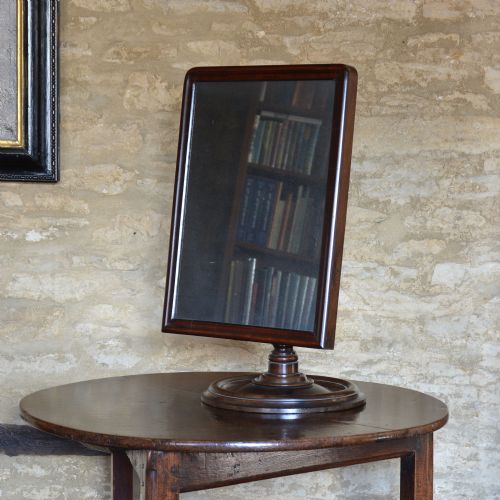
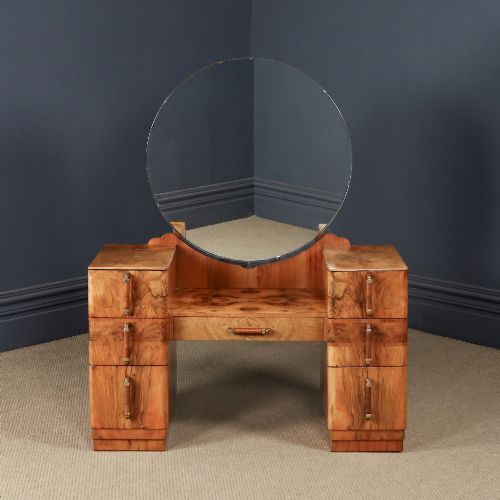
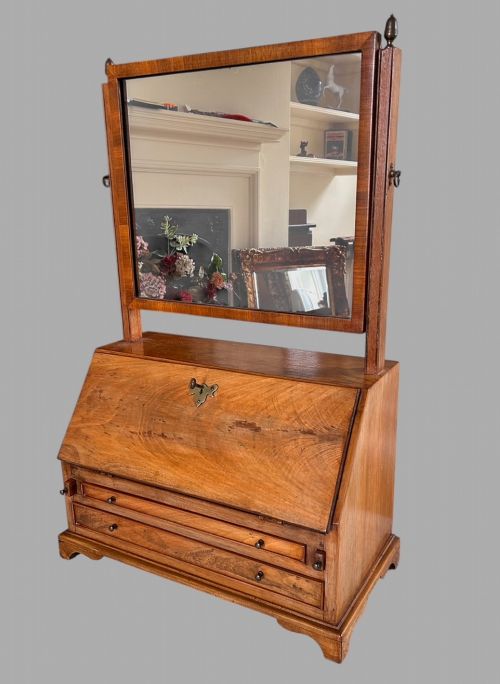
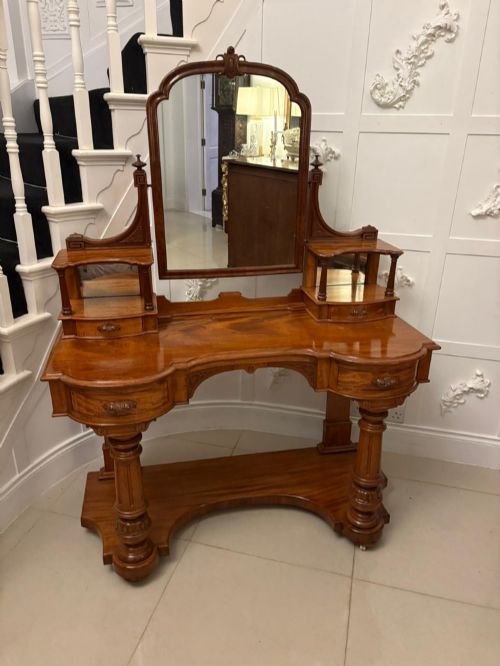
Mirrored Desk Table
These mirrored desk table pieces combine a writing surface with glass reflection, offering a practical setup for personal grooming and written correspondence.
Mirrored Desk Table
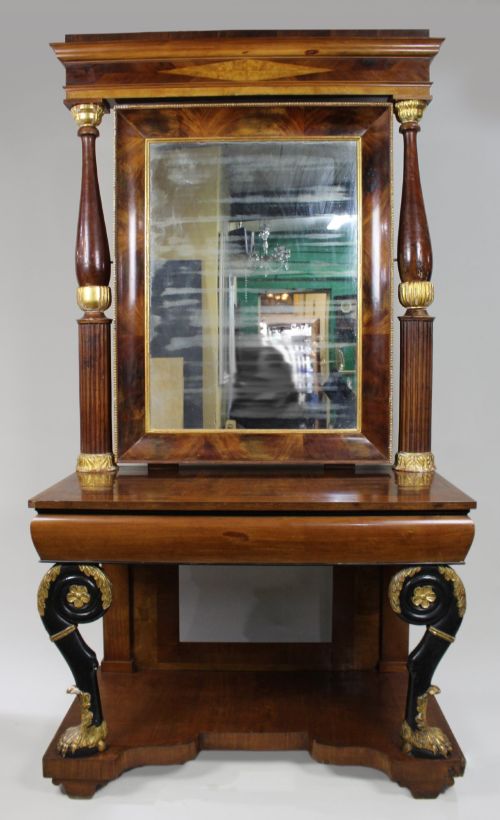
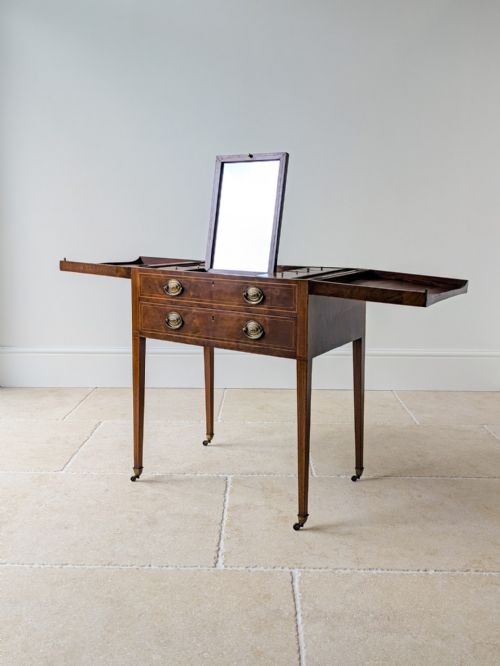
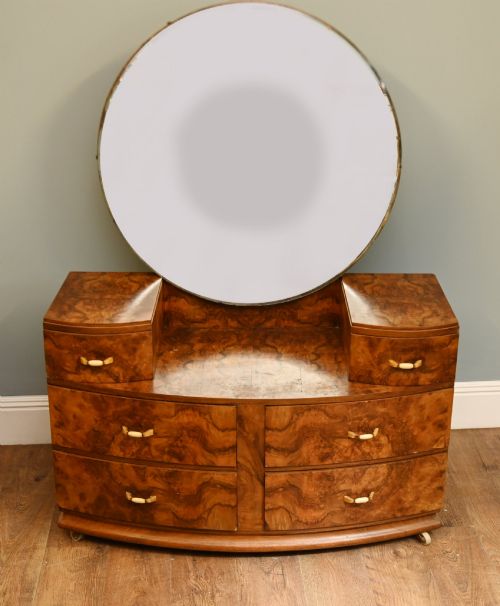
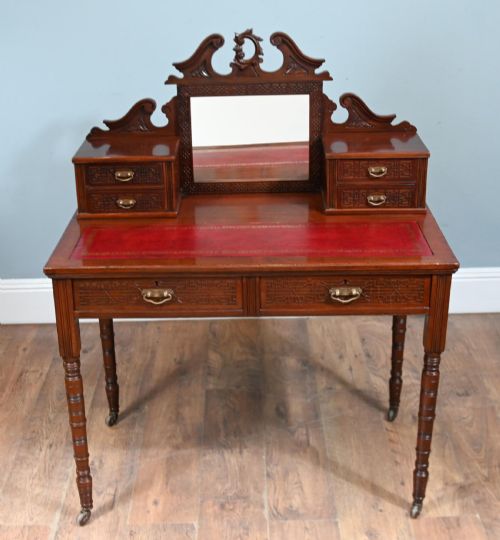
A mirrored desk table brings together a surface for writing or grooming with an integrated or accompanying glass mirror. When searching for a mirrored desk table, buyers encounter forms that merge dressing furniture with small desks.
The selections span centuries from the eighteenth through the twentieth, touching periods such as Victorian, Edwardian, and Art Deco. Common manifestations include dressing tables, vanity units, and writing tables fitted with mirrors.
Many items derive from English and French workshops, utilising woods like mahogany, walnut, and satinwood alongside specialised glass components. The exact form shifts between large pedestal pieces and compact tabletop bureau designs.
Materials and construction
Cabinet makers utilised solid timbers and veneers such as mahogany, walnut, burr walnut, oak, and satinwood to build the foundational frames. These woods were often polished, carved, or inlaid with contrasting boxwood and maple details.
Mirrored components range from simple swivelling table plates to triple mirror arrangements and adjustable shield glasses. Specialised mounts in brass, ormolu, and pewter provide structural support and decorative contrast to the timber.
Some gentleman's desks included specialised compartments for secret correspondence alongside shaving mirrors.
Assessing quality
Quality rests in the selection of figured veneers and the crispness of carved wooden details. Pieces displaying matching burr walnut grains or hand-painted satinwood motifs stand apart from plain constructions.
The integration of the mirror structure relative to the desk base determines overall refinement. Original glass plates, sturdy joints, and intact maker labels distinguish superior examples from standard workshop output.
Heals·Maple and Co·Thomas Rubergall·Louis Auguste Moreau
The Mirrored Desk Table Glossary
- Burr walnut
- A figured wood grain obtained from the wart-like growths on walnut trees. It creates complex swirling patterns highly prized in cabinet making.
- Satinwood
- A durable hardwood with a lustrous yellowish sheen. It serves well for fine inlay work and decorative writing furniture.
- Ormolu
- Gilded bronze used for decorative mounts on furniture. It provides a metallic accent common in French Empire pieces.
- Giltwood
- Timber coated with gold leaf or gold paint. It appears frequently on decorative frames and mirrors.
- Shield mirror
- A glass plate shaped like a heraldic shield. This format is often mounted on pivots atop Edwardian dressing tables.
Mirrored Desk Table: Frequently Asked Questions
What is a mirrored desk table?
A mirrored desk table is a hybrid piece of furniture that functions as both a writing surface and a vanity station. It typically incorporates a fitted glass mirror either attached to a superstructure or resting upon the tabletop.
These pieces serve bedrooms and dressing rooms, allowing individuals to write letters or apply cosmetics at a single consolidated station. The design evolved through various periods to accommodate changing domestic habits.
How do I date a mirrored desk table?
Dating relies on observing the primary timbers, hardware styles, and construction methods. For instance, Georgian and Victorian pieces exhibit different leg turnings and dovetailing techniques compared to Art Deco models.
Examining the mirror glass itself can also offer clues, as older plates may show subtle distortions or bevel edges characteristic of specific manufacturing eras.
Where should I place it?
These items suit bedrooms, dressing rooms, or quiet study spaces where natural light can assist with grooming or reading tasks. Positioning them near a window maximises the utility of the integrated glass.
Ensure adequate floor space is available for associated seating such as matching stools or small chairs often paired with these units.
Are the mirrors original?
Original mirrors often display signs of age such as slight foxing, minor silvering loss, or hand-beveled edges. Replacement plates are common given the fragile nature of old glass.
Checking the fixings and the timber backing helps determine whether the glass has remained with the desk frame since its manufacture.