



Mirrored Back Dresser
A mirrored back dresser brings generous proportion and reflected light to a dining room, combining deep timber storage with an elevated glass display.
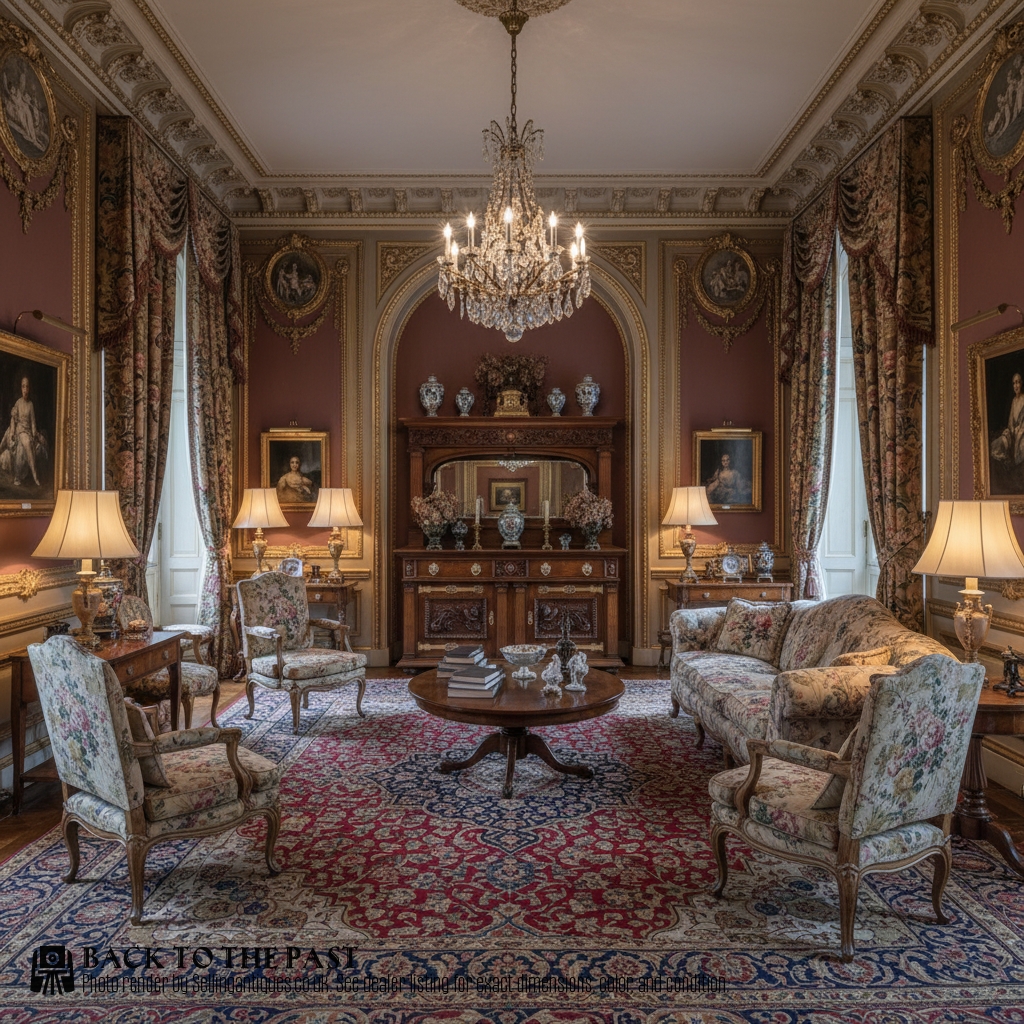
Mirrored Back Dresser
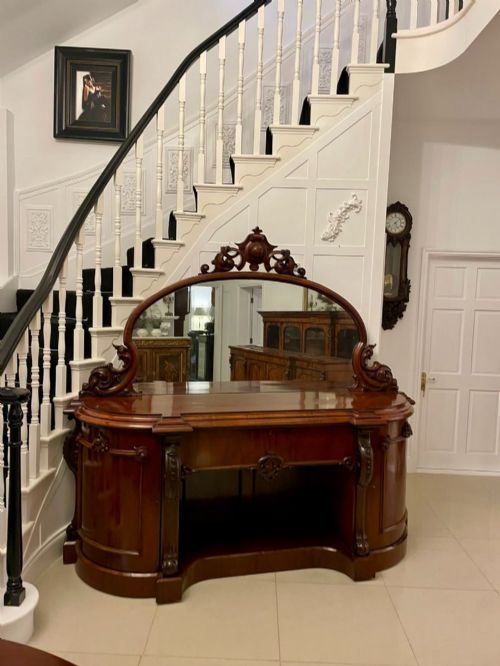
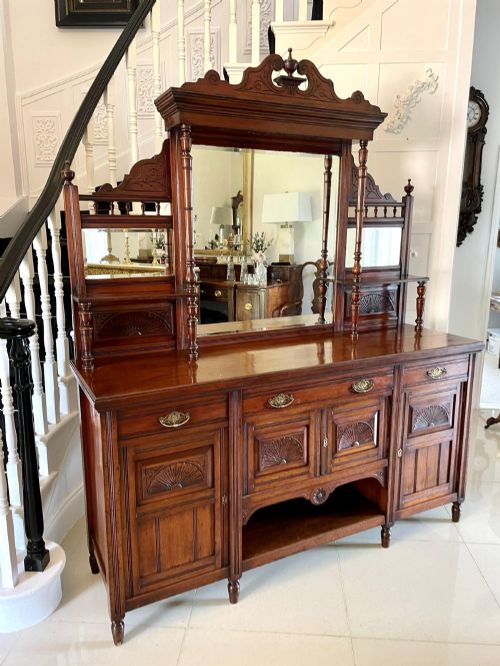
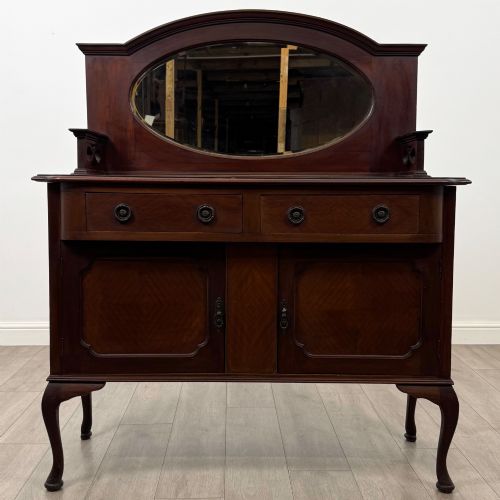
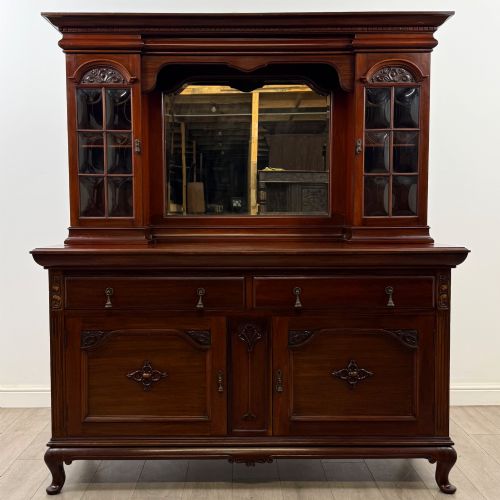
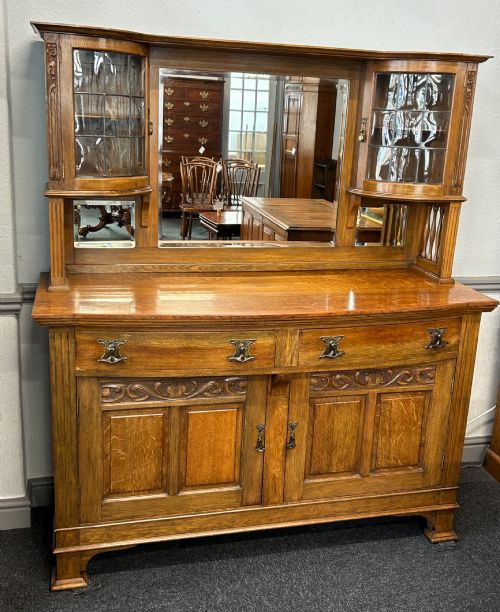
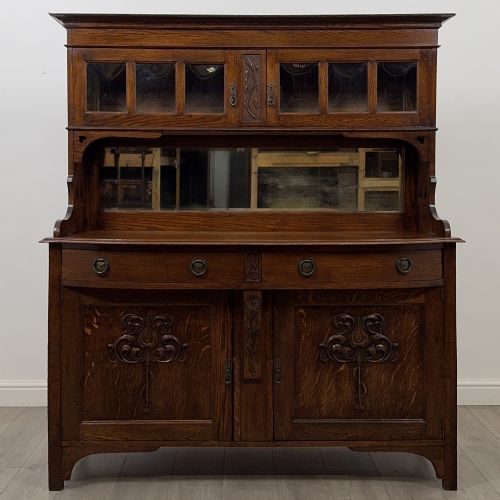
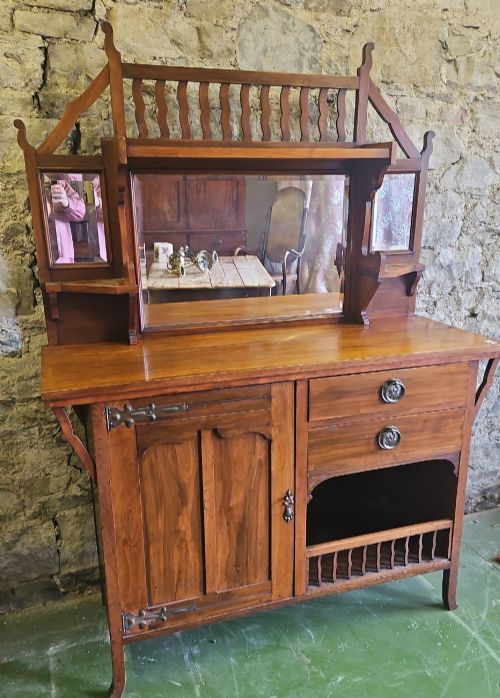
A mirrored back dresser combines a heavy timber base with an integrated upper mirror, serving as a prominent dining room or hall storage piece. The examples seen on this page span the Victorian and Edwardian eras, with many dating from the nineteenth century into the early twentieth century.
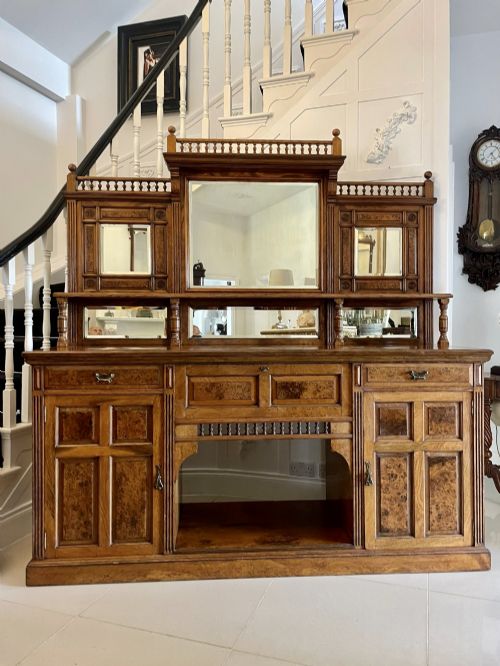
Buyers will encounter various forms, including traditional sideboards, side cabinets, and dedicated display furniture. Oak, mahogany, walnut, and pollard oak dominate the construction, often ornamented with carved details or inlaid panels.
Construction and materials
Cabinet makers utilised dense hardwoods such as oak, mahogany, and walnut to build the foundational carcasses and heavy doors. Pollard oak and rosewood appear in select pieces to provide distinctive grain patterns and richer surface tones.
Bevelled and plain mirror glass is integrated into the upper backboards, secured within wooden frames or flanked by display shelves. Brass hardware, including hinges and drawer pulls, complements the dark timbers, whilst hand carving defines the Victorian and Arts and Crafts styles.
Listings feature oak, mahogany, walnut, rosewood, and pollard oak across Victorian and Edwardian styles.
Evaluating the craftsmanship
The refinement of the hand carving and the selection of timber figures distinguish standard utility items from exceptional workshop productions. Pieces featuring figured pollard oak, detailed marquetry inlay, or integrated majolica panels demonstrate higher levels of decorative ambition.
Structural integrity relies on the thickness of the timber and the stability of the joints supporting the heavy mirror glass. Superior examples retain their original bevelled mirrors, brass fittings, and matching timber patination across the entire base and superstructure.
T Simpson and Son·Shapland & Petter
The Mirrored Back Dresser Glossary
- Sideboard
- A large dining room piece designed for storing tableware, featuring cupboards and drawers beneath a flat top surface.
- Pollard oak
- Timber taken from trees that have been pollarded, producing a dense, highly mottled grain pattern prized by nineteenth-century cabinet makers.
- Mirror back
- An upper superstructure fitted with glass plates, designed to reflect light and display decorative objects above the main cabinet.
- Arts and Crafts
- A design movement focusing on traditional craftsmanship, simple forms, and visible construction methods rather than excessive ornamentation.
- Inlay
- The technique of embedding contrasting pieces of wood or other materials into the primary surface to create decorative patterns.
Mirrored Back Dresser: Frequently Asked Questions
Where should a mirrored back dresser be placed?
These large pieces traditionally anchor a dining room wall, positioned opposite a window to maximise the reflected light in the space. They also function effectively in spacious entrance halls or large living areas where ample surface and storage capacity is required.
The height of the superstructure requires adequate ceiling clearance and a solid wall to support the combined weight of timber and glass. Buyers should measure both floor space and vertical clearance before installation.
How do I care for the mirror glass?
Original mirror glass benefits from gentle cleaning with a soft cloth and a mild glass cleaning solution applied sparingly to avoid seeping behind the silvering. Care must be taken around the wooden frames to prevent moisture damage to the antique timber.
Over decades, antique mirrors often develop natural foxing or dark spots within the glass plates. This ageing process is a normal characteristic of vintage silvering and contributes to the authentic appearance of the piece.
What is the difference between Victorian and Edwardian examples?
Victorian pieces tend to be heavier and more ornate, featuring dark timbers, deep mouldings, and elaborate carvings such as green man motifs or heavy scrolls. They reflect a taste for substantial construction and decorative display.
Edwardian designs often exhibit lighter wood tones, cleaner lines, and influences from the Arts and Crafts movement or Art Nouveau. These later pieces can appear less imposing in modern interiors whilst retaining traditional storage formats.
Can the top mirror section be removed for transport?
Many mirrored superstructures are constructed to detach from the base sideboard to facilitate easier moving and installation through doorways. They typically fasten with internal screws or wooden dowels that can be unscrewed from the back.
Buyers should inspect the connection points before moving the furniture to ensure all fixings are safely located and removed. Professional furniture transport is recommended for larger multi-part cabinets.