




Miniature Furniture Sample
These miniature furniture sample pieces are scaled-down demonstrations of cabinet-making skill that bring traditional forms into compact spaces.
Miniature Furniture Sample
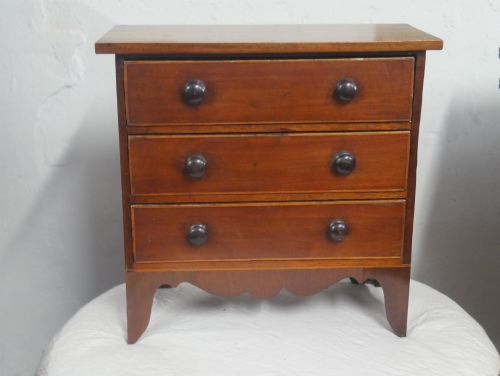
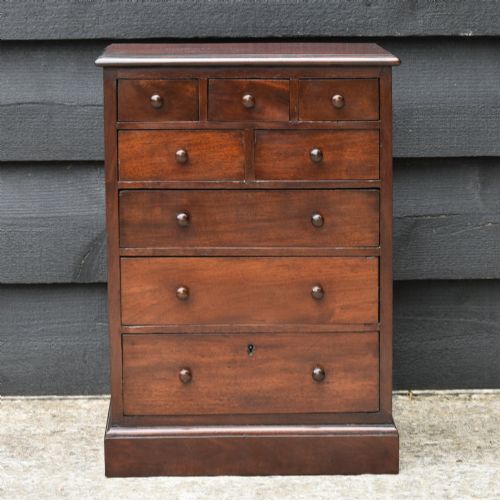
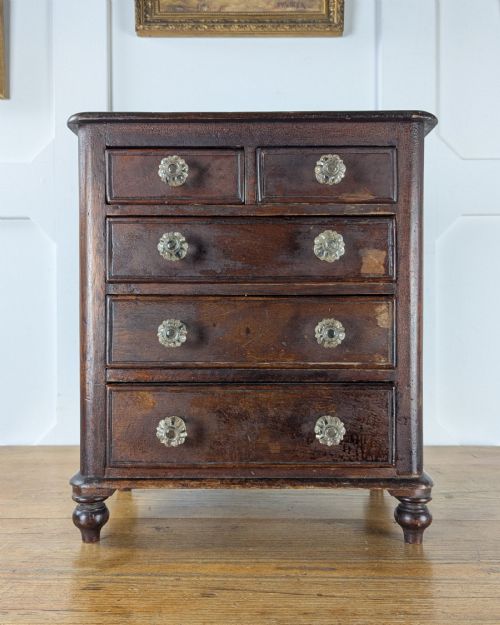
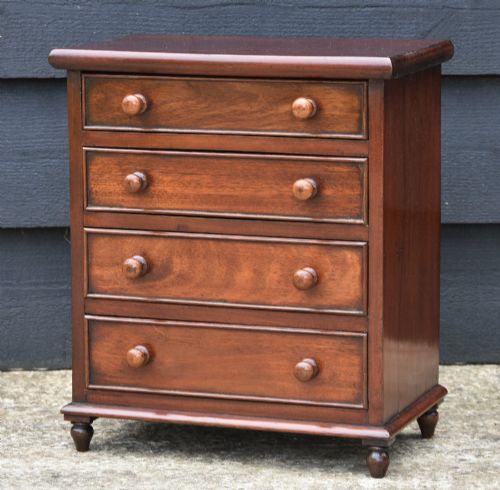
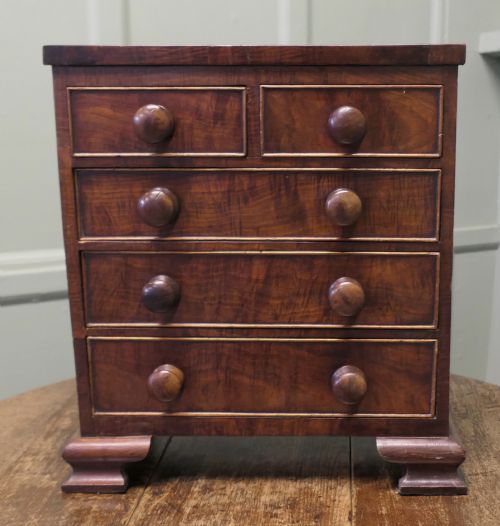
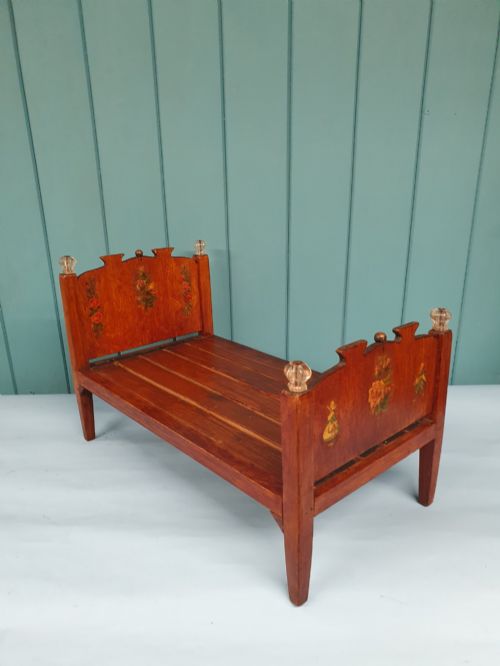
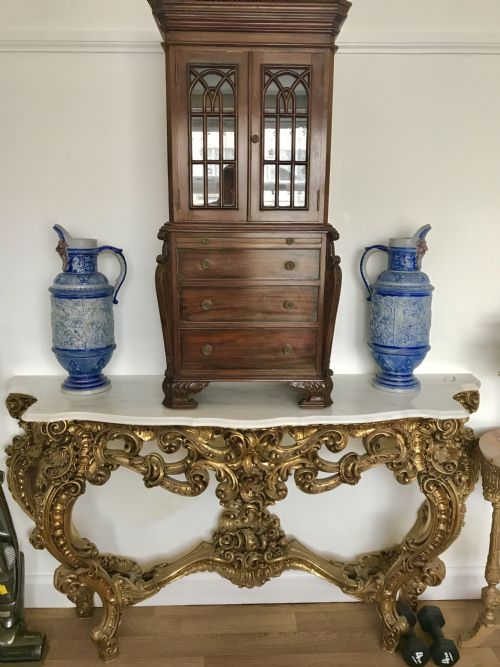
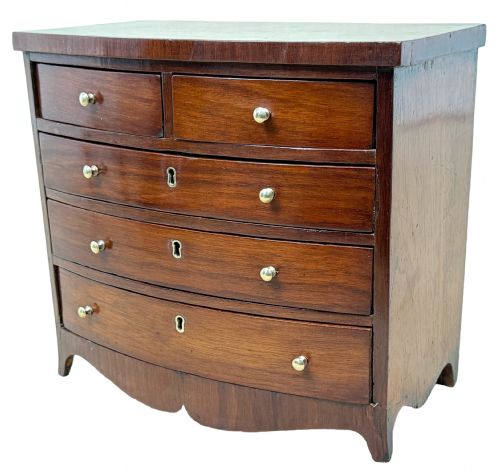
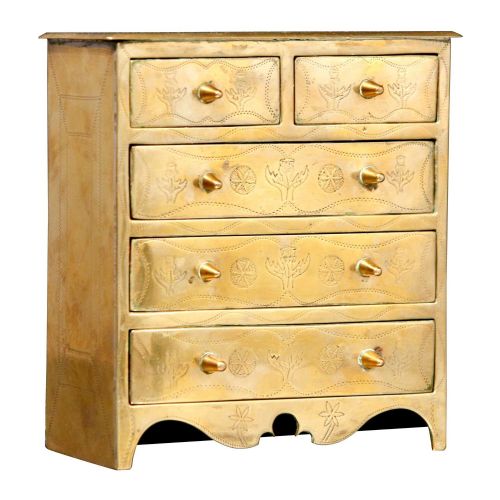
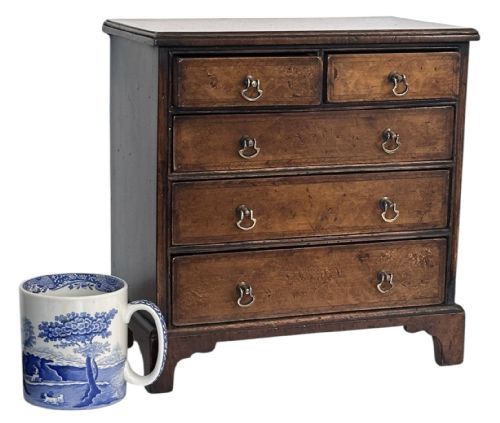
Miniature furniture sample pieces mostly take the form of miniature chest of drawers, alongside centre tables, commodes, and small seating. These items span periods from the seventeenth century through to the Edwardian era, with nineteenth-century Victorian examples appearing most frequently.
Originating as maker demonstrations, journeyman pieces, or sales traveller samples, these small objects replicate full-sized domestic furniture accurately. Regional variations emerge in pieces like Scottish apprentice chests and English satinwood or mahogany designs.
Materials and Technique
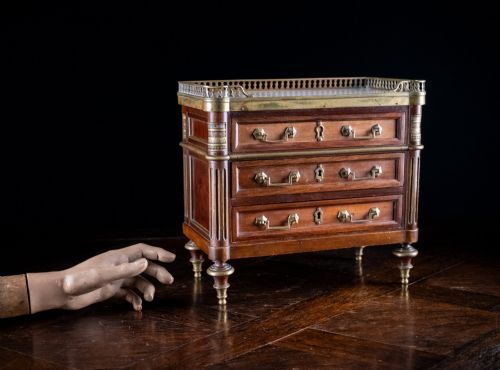
Makers utilised timber such as mahogany, walnut, burr oak, yew, and pitch pine, often pairing wood with brass handles, bone escutcheons, or marble tops. Construction mirrors standard cabinet-making through dovetailed drawer boxes and turned feet.
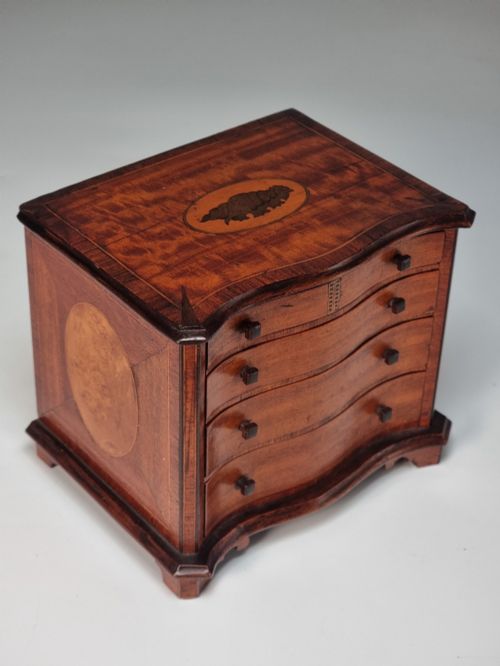
Surface finishes include French polishing on mahogany and carved ornamentation on oak. Smaller details involve secret drawers, inlaid banding, and ebonised moulding.
Some miniature chests include fully functional secret drawers hidden behind decorative mouldings.
Distinctions in Execution
Proportion and scale distinguish finer pieces from simpler items, as maintaining the exact geometry of a full-sized bureau bookcase or linen press requires precise measurement. The handling of secondary timbers and the crispness of turned feet indicate the maker's skill level.
The choice of decorative veneers, such as figured walnut, burr oak, or satinwood, elevates a piece beyond plain pine or standard mahogany. Hardware integration, including engraved brass work and fitted interior compartments like jewellery trays, separates standard examples from exceptional ones.
A. F. Lloyd, Bideford
The Miniature Furniture Sample Glossary
- Apprentice piece
- A demonstration object made by a craftsman to prove proficiency before gaining guild admission. These miniature items show advanced joinery scaled down.
- French polish
- A shellac finish applied in multiple thin layers using a rubbing pad. This technique imparts a glossy surface to mahogany and walnut furniture.
- Serpentine
- A furniture front curving outward at the centre and inward at the sides. This contour demands precise woodworking skill.
- Escutcheon
- A protective plate surrounding a keyhole. Miniature versions often utilise brass or bone.
- Dovetail
- A joint formed by interlocking wedge-shaped fingers. It secures drawer corners in quality cabinet work.
Miniature Furniture Sample: Frequently Asked Questions
What is miniature furniture sample?
These objects are small-scale representations of full-sized furniture designs created by cabinet-makers. They served as trade samples or proof pieces.
They replicate larger wardrobes, chests, and tables using identical materials and construction methods.
How do I date these pieces?
Dating relies on identifying the prevailing furniture style, such as Georgian, Regency, or Victorian, combined with timber choices like mahogany or pitch pine. Construction methods also offer clues to the period of manufacture.
Mouldings, handles, and secondary woods help narrow down the decade in which the piece was constructed.
Where should I display them?
Their compact size allows them to sit comfortably on desk tops, sideboards, or dedicated shelving units. Collectors often group them alongside other small antiques.
Placing them away from direct sunlight protects vulnerable wood veneers and polished surfaces from fading.