

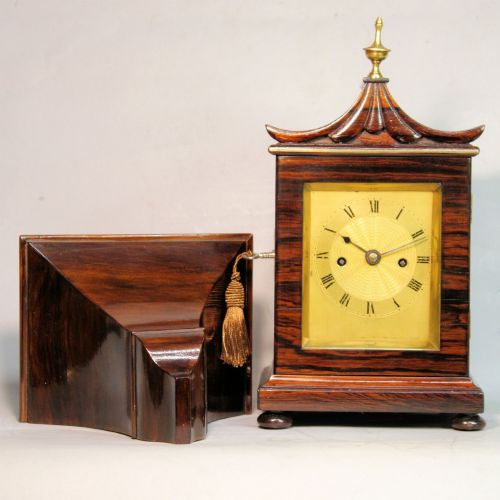


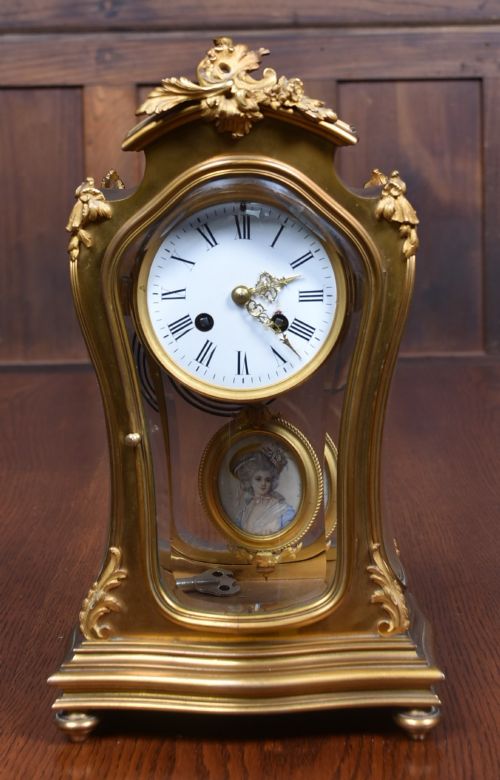


Miniature Brass Mantel Clock
These small timepieces offer practical timekeeping within compact metal housings, making a miniature brass mantel clock a charming addition to any desk or shelf.
Miniature Brass Mantel Clock
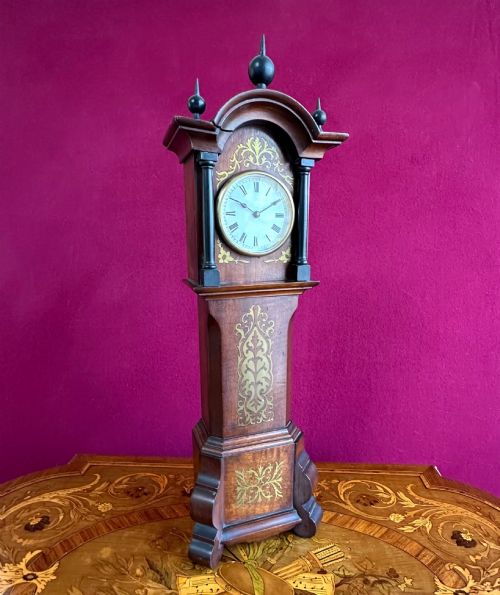
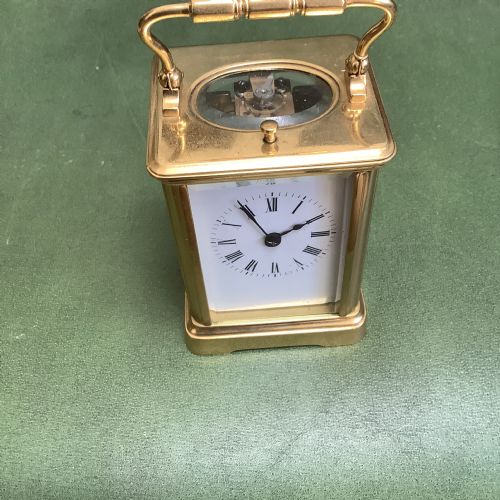
A miniature brass mantel clock brings traditional timekeeping into a compact scale designed for desks, shelves and smaller rooms. The selection encompasses various domestic designs ranging from simple travelling timepieces to elaborate ornamental examples.
Carriage clocks and bracket clocks dominate the available forms, spanning periods from the Regency era through the Victorian period and into the Edwardian decades. English and French workshops produced the majority of these pieces, utilising brass, gilt bronze and glass.
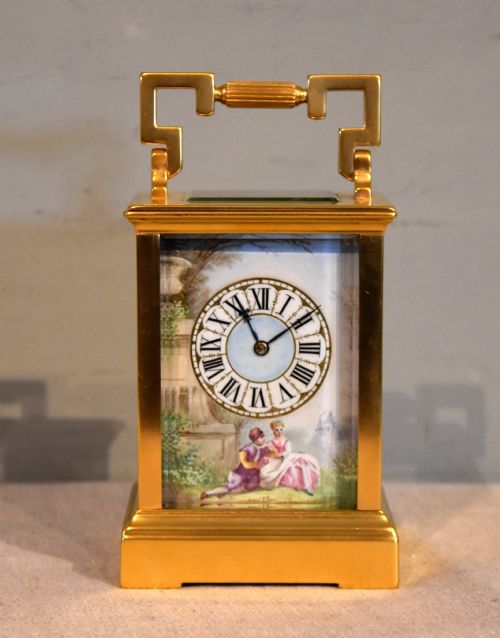
Many examples incorporate enamel dials and visible mechanical movements, showing influences from Gothic revival, Rococo styles and classical proportions.
What varies in quality
The sophistication of the internal movement and the depth of surface decoration set the finer examples apart from standard timepieces. Fully engraved brass cases and multi-day striking mechanisms demonstrate superior workshop capability compared to simple timepieces.
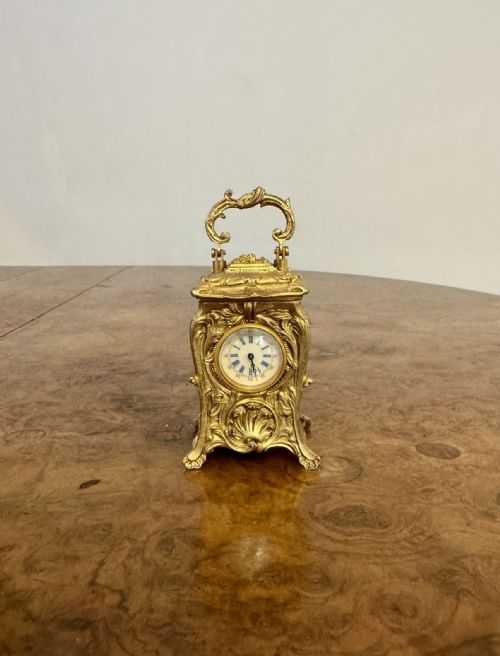
The clarity of enamel dials and the crispness of cast ormolu details indicate the level of craftsmanship invested in the object. Signed movements by notable makers generally command greater attention from collectors.
Listings feature 19th Century, Victorian, Edwardian, and Regency periods alongside materials including brass, gilt bronze, mahogany, and glass.
Mappin & Webb·Grimaldi and Johnson·Richard co·J C Vickery·McCabe·Adams of Lombard Street·Perigal & Duterrau·Wilson And Gill London
The Miniature Brass Mantel Clock Glossary
- Carriage clock
- A portable spring-driven timepiece originally designed for travelling, enclosed in a brass case with glass panels.
- Fusee
- A conical pulley used in clock movements to equalise the driving force of the mainspring as it winds down.
- Ormolu
- Gilded bronze used for decorative mounts and cast case elements on French and English mantel clocks.
- Skeleton clock
- A timepiece with an open framework that exposes the gear train and movement to view.
Miniature Brass Mantel Clock: Frequently Asked Questions
How do I wind a miniature brass clock?
Most of these timepieces utilise a dedicated winding key inserted into the dial or back plate to tension the mainspring.
Care should be taken not to overwind the mechanism to ensure the longevity of the internal springs.
Where were these clocks made?
The majority originate from workshops in Britain and France, with specific pieces linked to London makers or French horological centres.
Export markets also influenced production, leading to specialised pieces intended for international buyers.
How do I tell Victorian from Edwardian models?
Victorian examples often display heavier ornamentation such as Rococo revival or Gothic motifs and rich gilding.
Edwardian pieces tend to show lighter proportions and simpler architectural lines reflecting changing domestic tastes.
Can these clocks run on a wall?
Certain bracket and library configurations were supplied with optional wall brackets for elevated placement.
Standard carriage and mantel clocks are designed to sit flat on horizontal surfaces for stable operation.