




Military Campaign Chest Drawers
Military campaign chest drawers are rugged, modular storage units originally built for officers on the move, combining clever joinery with functional transportability.
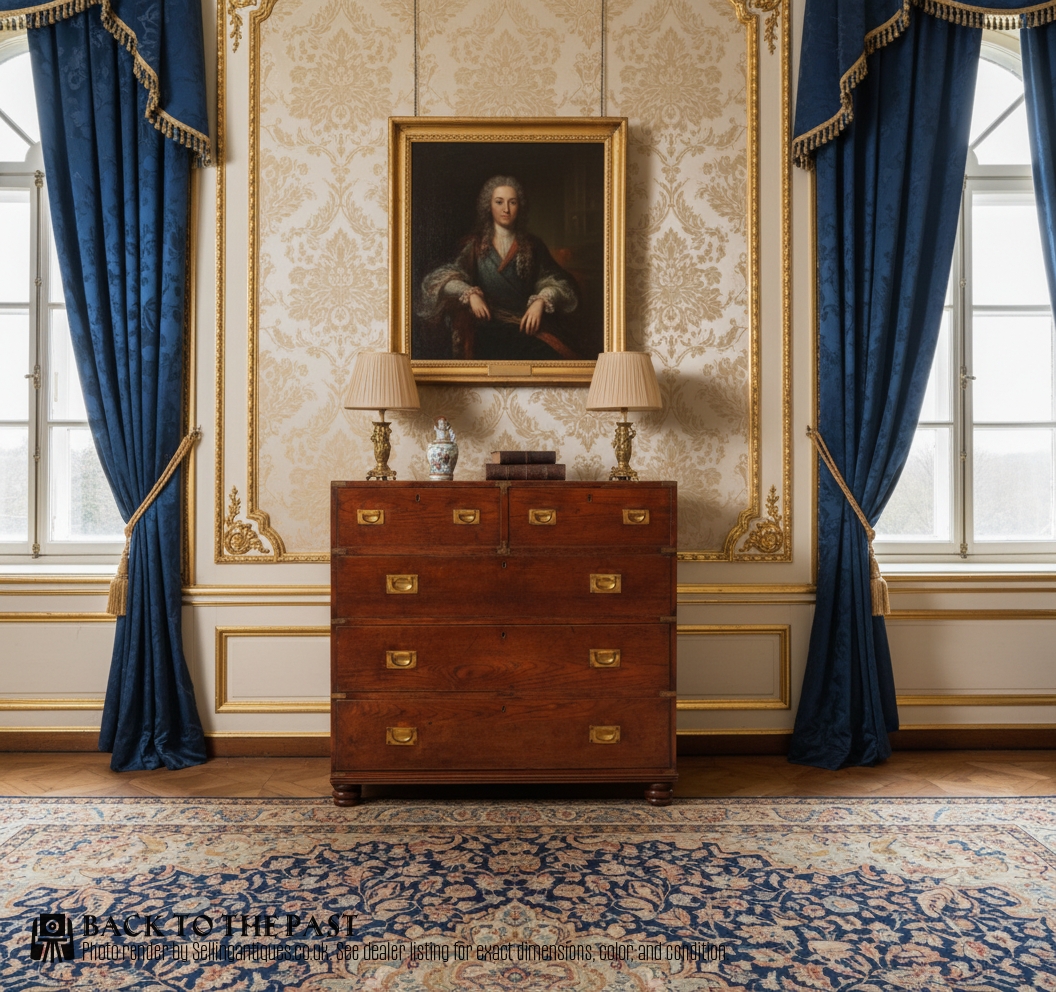
Military Campaign Chest Drawers
Military campaign chest drawers are utilitarian storage pieces designed to dismantle into separate sections for easy transport during colonial campaigns and relocations.
The pieces appearing on this page span the eighteenth, nineteenth, and early twentieth centuries, reflecting changing domestic tastes alongside strict military specifications.
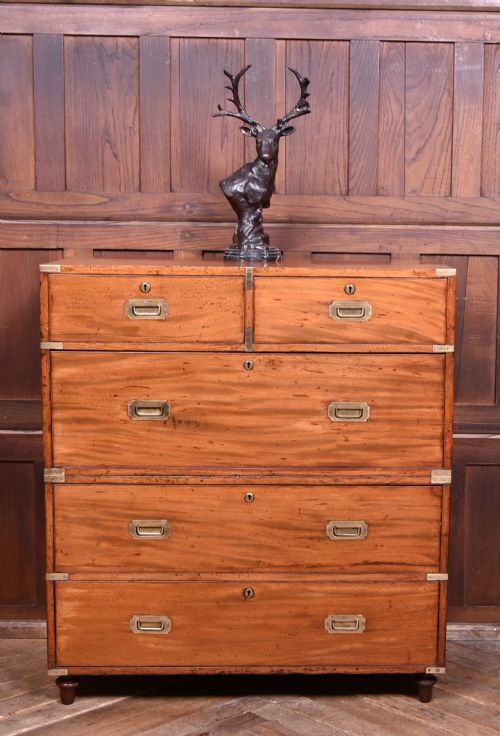
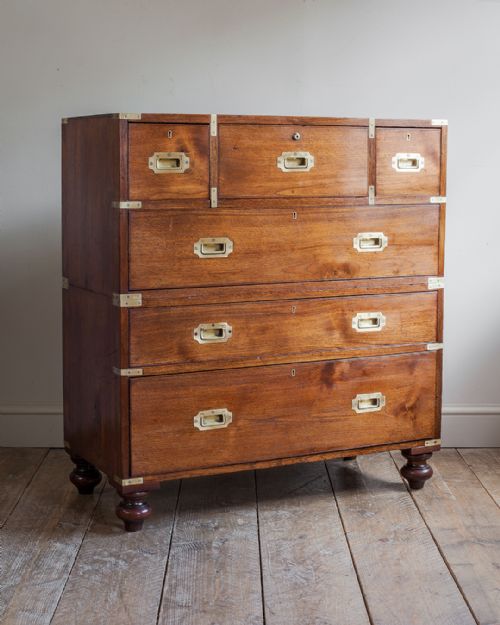
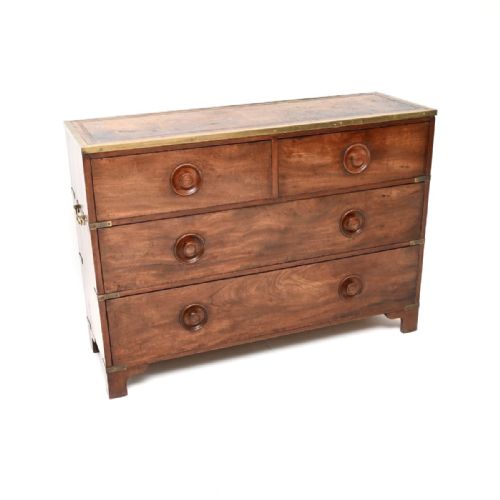
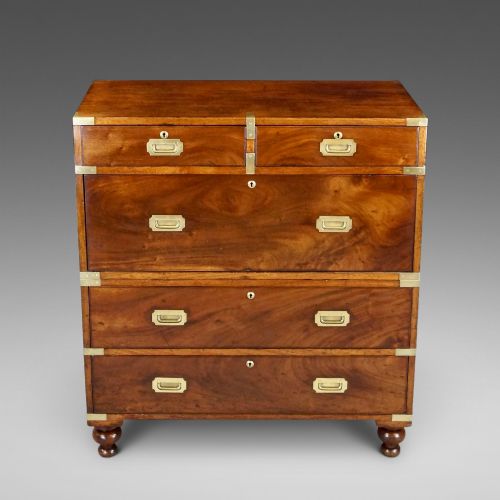
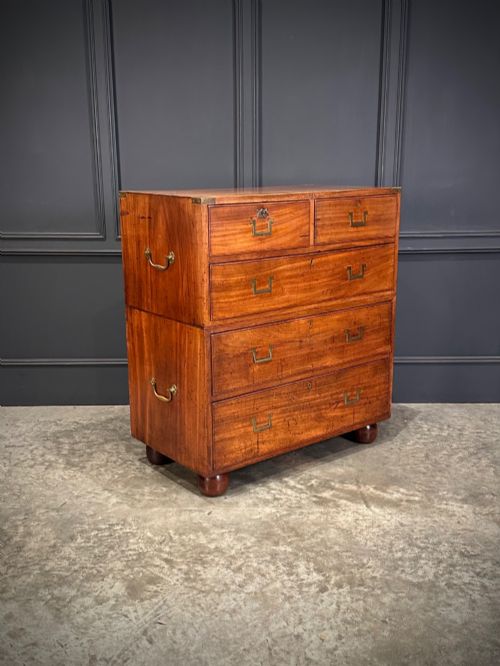
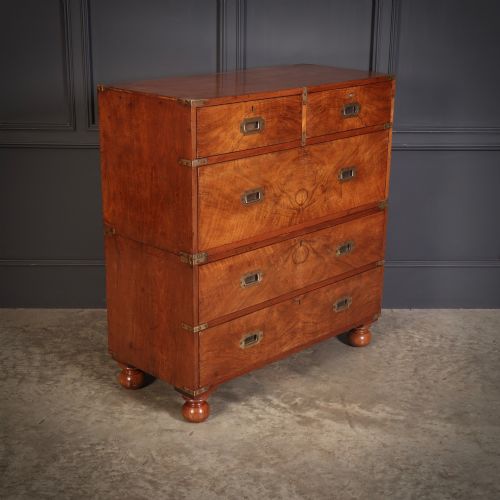
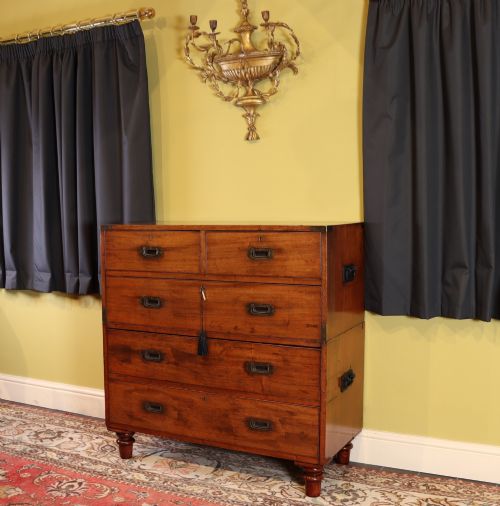
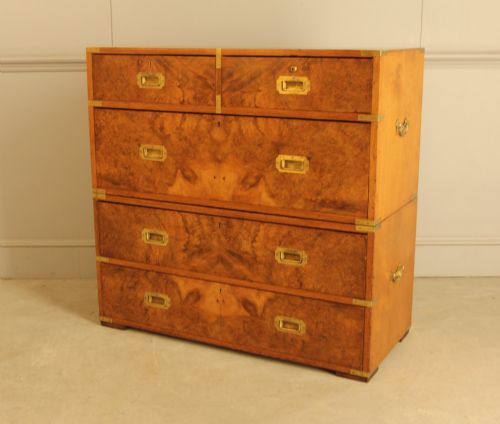
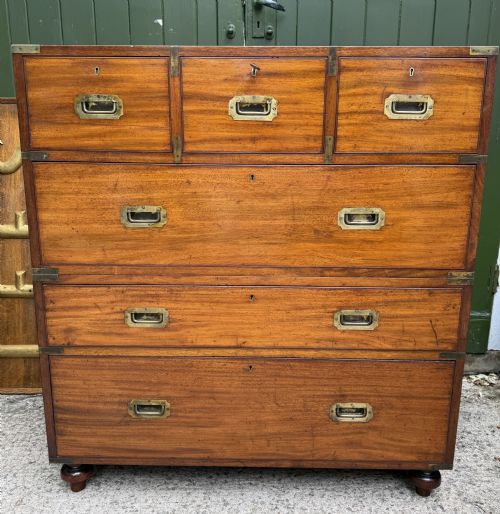
Most examples found here are mahogany, teak, or camphor wood chests featuring two stacked sections, brass corner brackets, and recessed carrying handles.
Materials and Construction
Cabinetmakers utilised dense timbers like mahogany, teak, and camphor wood to withstand tropical climates, heavy handling, and long sea voyages without warping.
Brass corners, straps, and flush-fitting handles were countersunk into the wood to protect vulnerable edges and prevent snagging during transit.
Drawers typically divided into two separate modular boxes, secured with iron locking mechanisms and fitted with internal dust flaps to protect contents.
Listings feature woods including mahogany, teak, camphor wood, walnut, yew, and rosewood across nineteenth and twentieth-century periods.
Distinction in Craft
Quality rests in the precision of the hardware placement and the tightness of the carcass joints, which ensured the two modular sections aligned seamlessly after repeated assembly.
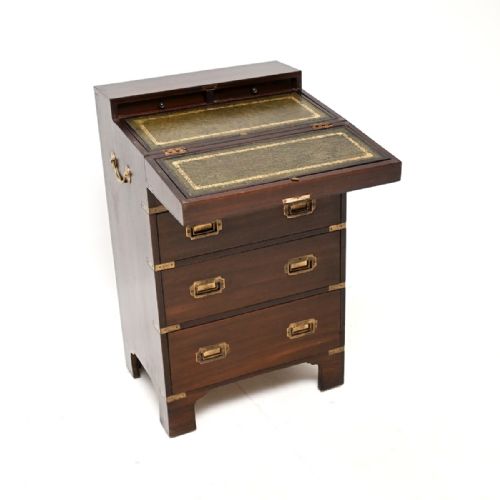
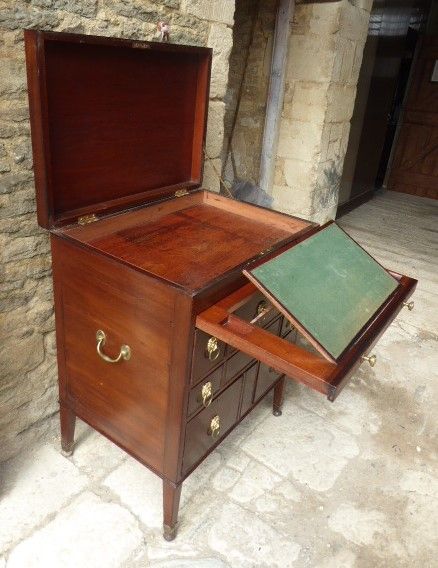
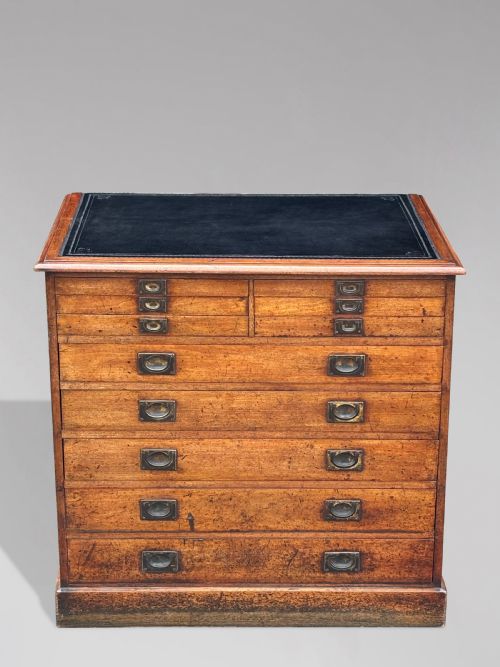
Finer examples feature secondary drawer configurations, such as fitted secretaire desks with pigeonholes and leather writing surfaces, rather than simple storage drawers.
The choice of timber grain, untouched original brasswork, and maker stamps distinguish standard utility chests from elite pieces commissioned by senior officers.
S. W. Silver & Co·Ross & Co·Army & Navy·W Day·W Preist
The Military Campaign Chest Drawers Glossary
- Two-part chest
- A cabinet constructed in separate upper and lower modular sections designed for independent stacking and transport. This configuration defines the classic campaign storage form.
- Recessed handle
- A pull-ring or drop handle set into a shallow cavity carved into the drawer face. This prevents the hardware from protruding beyond the wood surface.
- Secretaire chest
- A chest of drawers featuring a pull-out top drawer with a drop-front revealing a writing surface and small pigeonholes. It doubled as a portable officer desk.
- Brass bound
- The reinforcement of cabinet edges and corners with countersunk brass plates and strips. This protected the hardwood from impact damage on the march.
- Camphor wood
- An aromatic hardwood native to Asia, prized for its insect-repellent properties and durability. It was frequently utilised for campaign chests made in colonial stations.
Military Campaign Chest Drawers: Frequently Asked Questions
Why are campaign chests built in two parts?
The two-part construction allowed officers to divide a heavy chest of drawers into manageable loads for pack animals, wagons, and ship holds during transit.
Once arrived at a destination, the sections simply stacked back together to form a sturdy upright tallboy or low chest.
How do I identify a genuine period campaign chest?
Look for recessed brass corners, flush folding handles, and a split carcass where the upper and lower boxes meet with interlocking battens.
Original pieces from the nineteenth century generally feature oak or mahogany drawer linings and evidence of hand-cut dovetail joinery.
What is the difference between mahogany and camphor wood chests?
Mahogany chests were typically made in Britain or European workshops for officers, featuring formal cabinet proportions and rich dark finishes.
Camphor wood versions were usually constructed in Anglo-Chinese workshops, identifiable by their distinct aromatic scent and pale golden timber grain.
How should I place a campaign chest in a modern room?
These chests work well as bedside tables, living room sideboards, or hallway storage units due to their compact footprints and flat, bound tops.
Keep them away from direct heat sources to prevent the dense hardwoods and original polishes from drying out or splitting.