


Mid Victorian Porcelain Figure
These mid victorian porcelain figure pieces are expressive ceramic sculptures that bring character and period charm to any room.
Mid Victorian Porcelain Figure
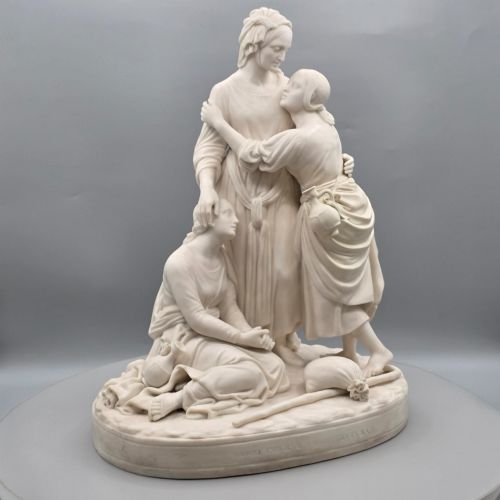
A mid victorian porcelain figure represents a sculptural ceramic form produced during the mid-nineteenth century, typically taking the shape of human subjects, animals, or classical scenes. These decorative ornaments serve primarily as mantel or display pieces rather than functional tableware.
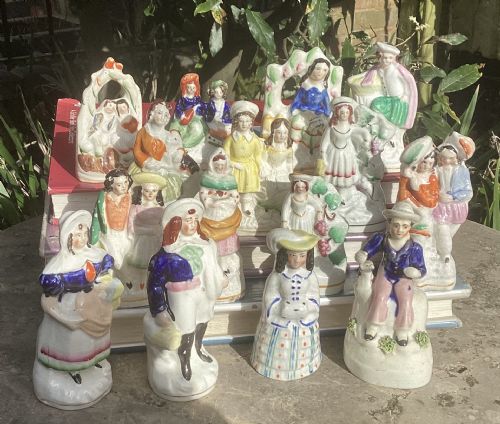
The selections available here range from detailed parian ware groups and Staffordshire greyhounds to classical figures and miniature studies. Many examples originate from renowned factories or regional potteries active across England during the Victorian era.
Materials and production methods
Makers utilised fine porcelain, bisque porcelain, and parian ware to achieve smooth, unglazed surfaces or delicate, detailed forms. Earthenware bodies also appear among regional Staffordshire productions, often paired with lead glaze and enamel paint for colour.
Moulding techniques allowed workshops to produce complex figure groups, quill holders, and lamps with consistent proportions. Artisans finished these pieces by hand, adding polychrome enamel details or leaving the white parian bodies to emulate classical marble.
Several listings feature dedicated greyhound quill holders, proving that Victorian writers required canine companionship on their writing desks.
Assessing craftsmanship and finish
Quality rests upon the crispness of the moulding and the sensitivity of the hand-finishing, particularly in facial expressions and drapery folds. Finer examples retain sharp detail without blurring across the surface.
The choice of material also dictates character, with high-grade parian porcelain offering a smooth, marble-like texture that distinguishes it from simpler earthenware productions. Subtle application of enamel paint adds depth to superior polychrome pieces.
Thomas Parr·Samuel Alcock
The Mid Victorian Porcelain Figure Glossary
- Parian Ware
- A fine-grained, unglazed porcelain developed in the nineteenth century to imitate white marble. It gained immense popularity for portrait busts and literary figures.
- Bisque Porcelain
- Unglazed fired porcelain that possesses a matte, porous surface resembling marble. It is frequently employed for detailed Victorian figures and neoclassical sculptures.
- Staffordshire Pottery
- Ceramics produced in the Staffordshire Potteries region of England, encompassing diverse wares from utilitarian figures to decorative greyhound models.
- Lead Glaze
- A shiny coating applied to earthenware bodies before firing to seal the porous clay and enrich the colours beneath. It creates a smooth, reflective surface finish.
Mid Victorian Porcelain Figure: Frequently Asked Questions
What are mid victorian porcelain figures made from?
These pieces are created using various ceramic bodies including standard porcelain, bisque porcelain, and parian ware, sometimes supplemented by earthenware. Enamel paint and lead glaze provide surface colour and sheen.
Manufacturers selected specific materials depending on whether they wanted a glossy finish or the matte, marble-like appearance typical of parian compositions.
How do I date a mid victorian porcelain figure?
Dating relies on stylistic clues, factory marks, and recorded working periods of specific potters such as Thomas Parr or the Kerr and Binns era of Royal Worcester. References to neoclassical and Greek revival styles also point to mid-nineteenth-century production.
Examining the base and the type of ceramic body helps narrow down whether a piece dates from the eighteen-fifties or sixties.
Where were these figures displayed originally?
Victorian households placed these decorative ornaments on mantelpieces, side tables, and within glass cabinets as focal points of polite interior decoration. Certain forms, such as greyhound quill holders or desk accessories, served a practical purpose alongside their ornamental appeal.
Smaller examples, including miniature Staffordshire pieces, offered versatile display options for crowded Victorian interiors.
What is the difference between parian ware and bisque?
Parian ware is a specific type of porcelain formulated with a high feldspar content that vitrifies at a lower temperature to resemble carved marble. Bisque porcelain is simply unglazed fired porcelain without that specific marble-mimicking composition.
Both materials yield a matte surface, but parian often exhibits a denser, heavier feel suited to classical figures.