
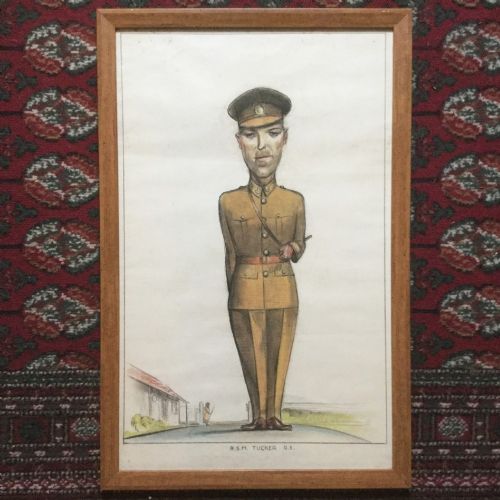


Mid Century Royal Portrait
A mid century royal portrait captures monarchs and military figures in oil and pastel from an era defined by formal service and royal duty.
Mid Century Royal Portrait
When you search for a mid century royal portrait, you encounter depictions of figures such as King George VI, Princess Elizabeth, and Prince Philip alongside military leaders. These works span the 1940s to the 1960s, recording senior officers and monarchs in naval uniforms or ceremonial dress.
The most common formats on this page are oil paintings on canvas or board and detailed pastel drawings. Alongside paintings of royalty, the selection includes related portraits of military personnel and historic Staffordshire figures from earlier centuries.
Makers represented include Royal Academy artists who documented both the royal family and high-ranking officials during and after the Second World War. Each piece reflects the formal portraiture traditions practiced by British artists of the period.
Materials and Techniques
These works rely primarily on oil paint applied to canvas or wood board, alongside pastel and gouache on paper. Artists utilised these traditional media to capture the texture of naval uniforms, medals, and rich fabrics.
Many of the oil paintings and pastels are housed within original gilt wood frames that complement the formal subject matter. The combination of oil on canvas with carved gilt framing defines the physical presence of these mid-century artworks.
A pottery emperor rubs shoulders with naval commanders and royal princesses in this eclectic gallery of mid-century faces.
Judging Quality in Portraiture
Quality rests upon the artist's ability to render likeness and character within the formal constraints of official portraiture. Works by recognised Royal Academy members demonstrate superior handling of light, expression, and uniform detail compared to anonymous sketches.
The significance of the sitter also influences distinction, with portraits of reigning monarchs and senior admirals holding greater historical weight. Additionally, the condition of the canvas and the preservation of the original gilt wood frame contribute to the overall integrity of the piece.
Ronald Ossory Dunlop·Arthur Todd·Roland Batchelor·Aubrey Sykes·Allan Gwynne Jones·John Laviers Wheatley·William Dring·Maurice Codner·Edward Bainbridge Copnall
The Mid Century Royal Portrait Glossary
- Royal Academy
- An institution in London whose members, denoted by the letters RA, exhibit prominent works of art. Many artists listed held this formal affiliation.
- Pastel
- A medium consisting of powdered pigment and a binder, used to create detailed drawings on paper. Several wartime portraits on this page employ pastel and gouache.
- Gilt Wood Frame
- A wooden picture frame coated with a thin layer of gold leaf or gilt. These frames frequently accompany mid-century oil paintings.
- Staffordshire Figure
- A ceramic figurine produced in Staffordshire potteries, representing historical or royal persons. An example depicting Napoleon III and Eugenie appears in the collection.
Mid Century Royal Portrait: Frequently Asked Questions
What periods do these portraits cover?
The works primarily date from the 1940s through to the 1960s, capturing the wartime and post-war eras of British art. Some pieces extend back to the Victorian period and Edwardian era.
This span includes mid-century modern realism alongside traditional portrait painting techniques practiced by Royal Academy artists.
Who are the subjects depicted?
Subjects include members of the royal family such as King George VI, Princess Elizabeth, and Prince Philip. Other portraits feature military officers, emperors, and naval commanders.
Artists also recorded civilian sitters and nude models within studio settings during the same decades.
How should I display a pastel portrait?
Pastel works on paper require framing behind glass to protect the delicate pigment from dust and physical contact. Keeping them away from direct sunlight prevents the colours from fading over time.
Oil paintings on canvas are more robust but benefit from stable room temperatures and low humidity.
Are all the paintings signed by the artist?
Many works on this page are attributed to listed Royal Academy artists and bear signatures or documented provenances. Attribution relies on artist records, exhibition history, and stylistic evidence.
Unsigned pieces are identified through wartime illustrations and period documentation.