


Mid Century Occasional Chairs
Mid century occasional chairs bring character and compact comfort to any room, offering versatile seating options for modern homes.
Mid Century Occasional Chairs
Mid century occasional chairs encompass a variety of seating forms from the nineteenth and early twentieth centuries, including art deco pieces, bridge chairs, and nursing chairs. Buyers searching for mid century occasional chairs will discover diverse examples spanning Victorian, art deco, and french riviera styles.
Most pieces date from the Victorian era up through the nineteen-thirties, showing influences from louis xvi revival to french art deco. Each piece provides a distinct historical profile suited to contemporary interior schemes.
How they were made
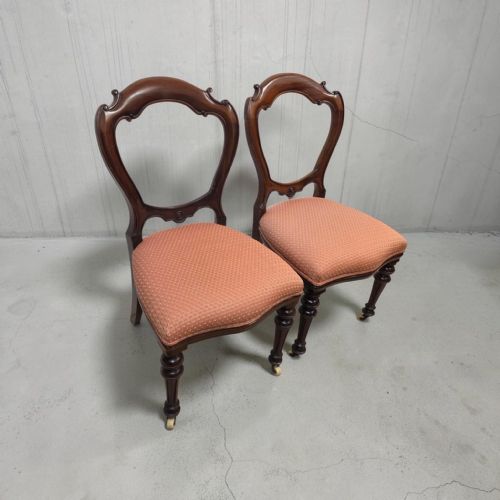
Construction relies heavily on traditional timber framing using mahogany, walnut, rosewood, and general hardwoods. Artisans shaped these woods into balloon backs, curved frames, and carved side structures.
Upholstery forms a core part of the manufacture, utilising fabric, velvet, leather, and brass detailing. Frames often combine exposed polished wood with sprung or padded seats.
Some chairs spent their early years holding card players' hands through tense matches long before finding modern living rooms.
What varies in quality
The refinement of timber carving and the integrity of the wooden frame dictate the baseline quality of each chair. Higher quality examples display crisp detail in mahogany or walnut alongside robust joinery.
The choice of covering materials, from standard fabric to fine leather or velvet, influences the tactile presence of the piece. Preservation of original woodwork and balanced proportions further distinguish superior specimens.
Hille
The Mid Century Occasional Chairs Glossary
- Occasional chair
- A movable, decorative seat designed for use in various rooms rather than as permanent primary seating. These chairs are easily repositioned according to need.
- Bridge chair
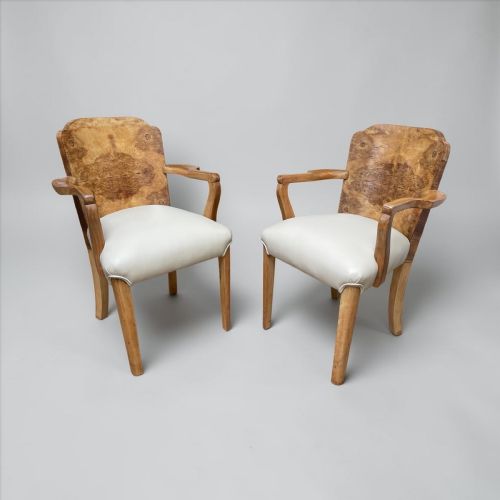
- A compact armchair originally designed for card games such as bridge. They feature supportive frames and modest proportions.
- Nursing chair
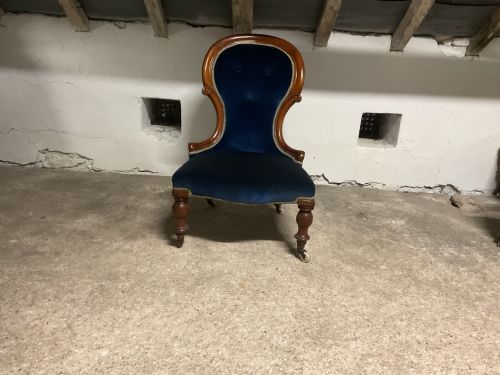
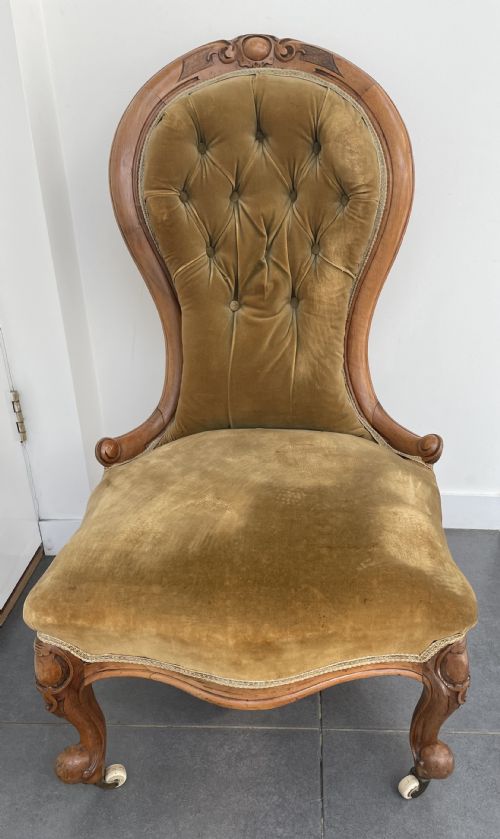
- A low-seated Victorian chair designed for comfort while nursing infants. The low profile allows the sitter to relax close to a hearth.
- Slipper chair
- An upholstered chair with very short legs sitting close to the floor. Originally used in bedrooms for dressing.
- Balloon back
- A rounded, oval-shaped wooden chair back resembling a balloon. This form is common in Victorian seating.
Mid Century Occasional Chairs: Frequently Asked Questions
Where should I place an occasional chair?
These compact chairs suit bedrooms, hallways, and corners of living rooms where extra seating is useful without overcrowding the floor plan. Their modest scale allows them to fit easily beside desks or dressing tables.
They also function well as accent pieces that complement larger sofas or primary armchairs.
How do I identify a Victorian chair?
Victorian chairs frequently utilise dark timbers such as mahogany and walnut, featuring curved elements like balloon backs or carved ornamentation. Upholstery methods from this period often incorporate sprung seats and patterned textiles.
Looking underneath the frame can reveal period construction techniques and wood ageing consistent with the nineteenth century.
What is a bridge chair?
A bridge chair is a small, sturdy armchair built for sitting comfortably during card games or casual gatherings. They emerged strongly in the early twentieth century, particularly in art deco designs.
Their compact footprint makes them practical for modern spaces requiring smaller scale seating.
Are these chairs comfortable for daily use?
Many of these chairs offer surprising support due to their padded seats and upright framing designed for reading or conversation. Their comfort depends largely on the quality of the upholstery and cushioning inside.
Adding a small cushion can further adapt vintage seating for contemporary lounging habits.