


Mid Century Military Art
Mid century military art captures the commanding figures and dramatic engagements of the era through canvas, paper, and oil paint.
Mid Century Military Art
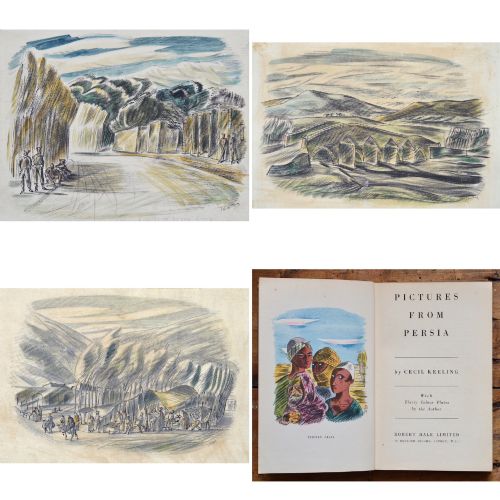
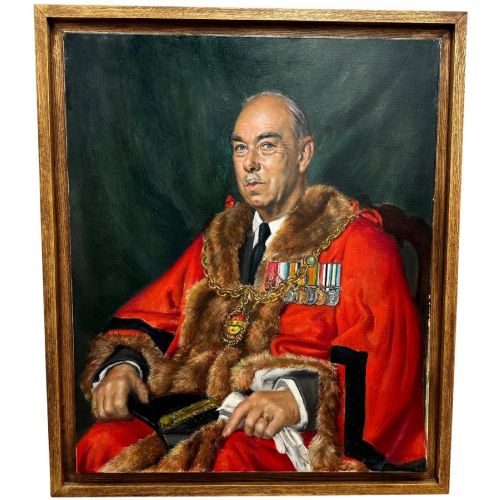
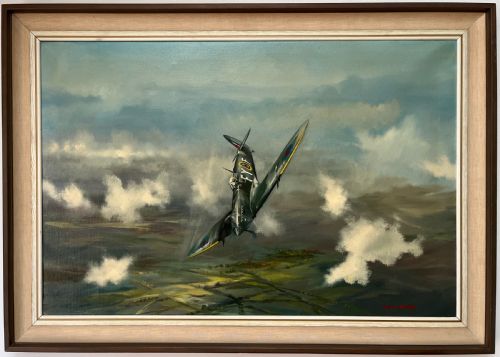
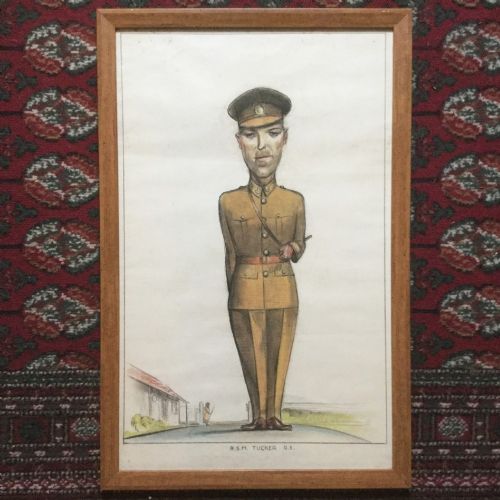
Mid century military art encompasses original oil paintings, pastel and gouache sketches, and framed artwork depicting service personnel, commanding officers, and wartime scenes. Buyers searching for mid century military art encounter portraits of naval commanders, mayors, and aviation figures alongside wartime illustrations.
The pieces on this page span the 1940s, 1950s, and 1960s, reflecting both active wartime documentation and postwar portraiture. Alongside mid-century modernist and realist works, collectors find unexpected touches of earlier periods including 17th-century style portraits and Georgian theatrical silkwork pictures.
Portraits dominate the selection, recording prominent individuals such as naval uniform wearers, decorated generals, and royalty in uniform. These original works offer a direct visual record of military personnel and historic figures through the medium of contemporary observation.
Assessing the quality of works
Quality in these pieces rests upon the surety of the draughtsmanship and the strength of character captured in the portraiture or scene. Works by established named artists display a more acute command of likeness and tone compared to anonymous school pieces.
The preservation of the medium, whether oil on canvas or pastel on paper, dictates the enduring clarity of the artwork. Original signed compositions retain greater visual impact than unsigned or secondary school examples.
Even mid-century fighter pilots and monarchs had to sit still for hours while artists captured their gold braid.
Cecil Keeling·Bernard Hailstone·Dion Pears·Baruch Shalom Oskotsky·Jean Sobieski·Donald Clifford Tyndall Bennett·Aubrey Sykes·Charles Andre Joseph Marie de Gaulle·John Laviers Wheatley·Maurice Codner
The Mid Century Military Art Glossary
- Gouache
- An opaque water-based paint that dries to a matte finish, frequently employed in wartime sketches for its rapid drying time and solid colour.
- Pastel
- A dry medium of powdered pigment bound into sticks, allowing artists to blend tones directly on paper for rapid portrait studies.
- Silkwork
- A textile art form utilising silk threads to create pictorial scenes, seen in historical framed works.
- Realism
- An artistic approach focusing on the accurate, unvarnished depiction of subjects as they appear in everyday life.
- Expressionism
- A modernist style where artists distort visual reality to evoke emotional responses rather than precise physical likeness.
Mid Century Military Art: Frequently Asked Questions
What subjects appear in mid century military art?
The selections focus heavily on portraits of military officers, naval commanders, royalty in uniform, and wartime scenes. Works record specific historical figures from the armed forces across the mid twentieth century.
Alongside formal portraiture, buyers encounter aviation sketches and wartime illustrations documenting the era's conflicts and personnel.
How do I display framed artwork safely?
Keep framed oil paintings and works on paper away from direct sunlight to prevent the fading of canvas, oil paint, and paper supports. Stable room temperatures protect wood frames and glass-fronted pieces from moisture damage.
Ensure wall fixings are adequate for the weight of solid wood frames and heavy oil on canvas compositions.
Are these works original pieces?
The listings consist of original artworks, including hand-painted oils, authenticated pastel sketches, and period textile art. Signatures by listed artists appear on numerous pieces.
Documentation often references contemporary books and exhibitions where specific wartime illustrations and portraits were first published.
What periods do these pieces date from?
The core of the material dates from the 1940s, 1950s, and 1960s, aligning with wartime production and postwar realism. Pieces capture the aesthetic of Mid-Century Modern and 20th Century Realism movements.
Occasional earlier stylistic influences, including Georgian silkwork and 18th-century German school portraits, also appear in the selection.