


French Military Oil Painting
A french military oil painting captures the uniforms, campaigns and portraits of armed forces history on canvas or panel.
French Military Oil Painting
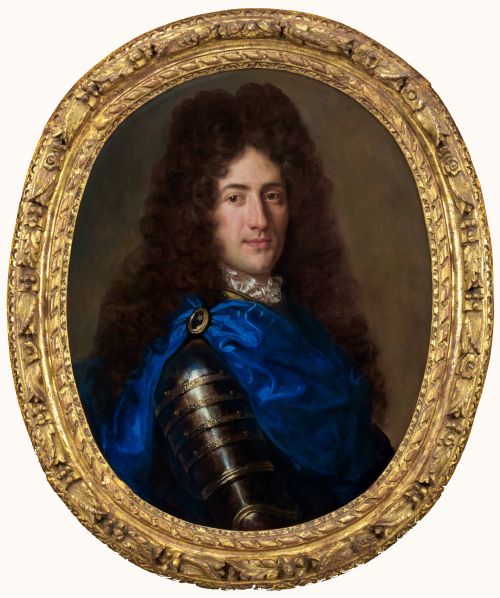
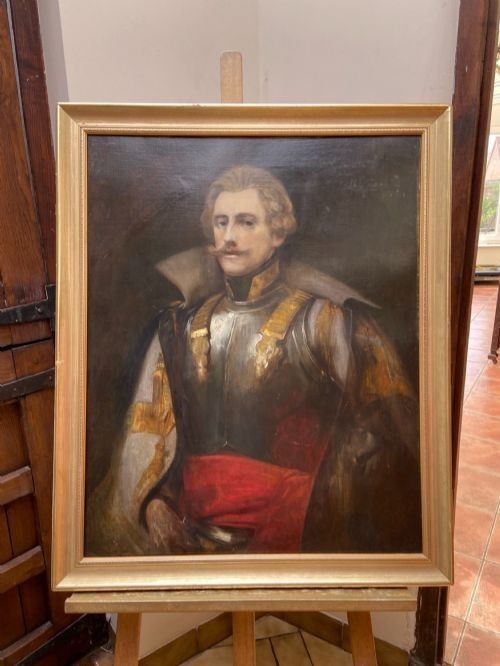
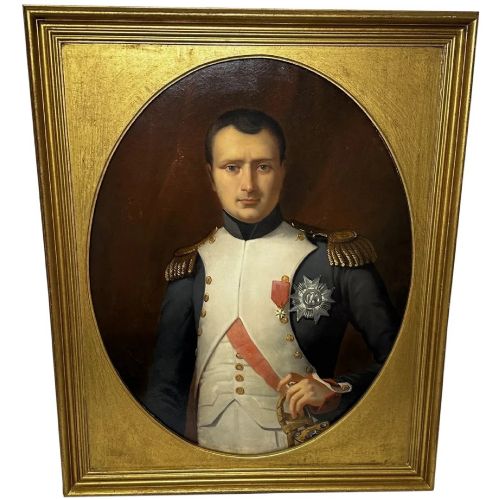
A french military oil painting depicts officers, soldiers, battles and cavalrymen from the eighteenth century through to the mid-twentieth century. These works take the form of framed portraits, miniature studies and campaign scenes executed in oil paint.
The subjects range from named figures such as Napoleon and General de Gaulle to anonymous cuirassiers, naval officers and pikemen. Most examples belong to the nineteenth century and eighteenth century, reflecting academic styles and the French School.
Materials and technique
These works utilise oil paint applied to canvas or panel supports, ranging from canvas stretches to wood boards. The paint layers capture fine details in uniforms, decorations and facial expressions.
Frames play a structural role in the presentation of these works, frequently constructed from wood with gesso and giltwood or gilt wood finishes.
Even a resting soldier needs a proper frame, preferably dripping in giltwood.
Separating top examples from standard works
Quality rests upon the precision of the brushwork in rendering facial likenesses, uniform insignia and military accoutrements. Works by recognised hands demonstrate superior anatomical control and compositional depth compared to standard decorative pieces.
The integrity of the original surface and the condition of the gilt wood or gesso frame influence the overall standard of the piece. Period frames that match the age of the canvas elevate the presentation.
Nicolas De Largillière·Jean Sobieski·PAUL LEON JAZET·Albert Ferdinand Le Dru·Donald Wood·Stephanus Chiantor·Jean-Baptiste Santerre·LOEWER
The French Military Oil Painting Glossary
- Oil on Canvas
- Pigments bound in a drying oil applied to a stretched woven fabric support. This combination forms the primary medium for the majority of the portraits.
- Oil on Panel
- Pigments bound in oil applied to a rigid wooden board. This support provides a smooth surface favoured for smaller or more detailed studies.
- Giltwood
- Wood carved and coated with gold leaf or a gold-coloured metallic finish. This material forms ornate frames designed to complement the paintings.
- Gesso
- A paint mixture consisting of a binder mixed with chalk, gypsum or pigment. It serves as a prepared base for wood frames before gilding.
- Miniature Painting
- A work executed on a small scale requiring fine detail. These pieces focus on compact portraits such as depictions of Napoleon Bonaparte.
French Military Oil Painting: Frequently Asked Questions
What periods do these paintings cover?
The available works span from the eighteenth century through the nineteenth century and into the mid-twentieth century. Dates range from early portraits around seventeen hundred to mid-century examples from nineteen fifty.
Most pieces cluster around the Napoleonic era and the nineteenth-century academic tradition. Specific dated examples include items from eighteen hundred three, eighteen seventy-four and nineteen forty.
How are these paintings framed?
The works are typically housed in wood frames featuring gesso and gilt wood or giltwood finishes. These period surrounds match the ornate aesthetic associated with French portraiture.
Many frames utilise traditional gilding techniques to highlight the visual weight of the military subject matter within. The combination of oil paint and gold-toned framing defines the presentation.
What subjects appear in the portraits?
Subjects include named historical figures such as Napoleon Bonaparte, Frédéric III de Saxe-Gotha-Altenbourg, Philippe II Duke of Orleans and General Charles de Gaulle. Other works depict specific ranks including cuirassiers, naval officers and national guard members.
Battle scenes and resting soldiers also feature among the compositions. These depictions record the uniforms, medals and orders of the French military across different centuries.
Are these works signed by artists?
Several pieces bear signatures or attributions to named painters such as Paul Leon Jazet, Albert Ferdinand Le Dru and Donald Wood. Other listings note circles of established artists or specific historical schools.
Attributions help contextualize the technique and period of the execution. Unsigned works are often attributed to the broader French School based on style and subject.