



Mid Century Marine Oil
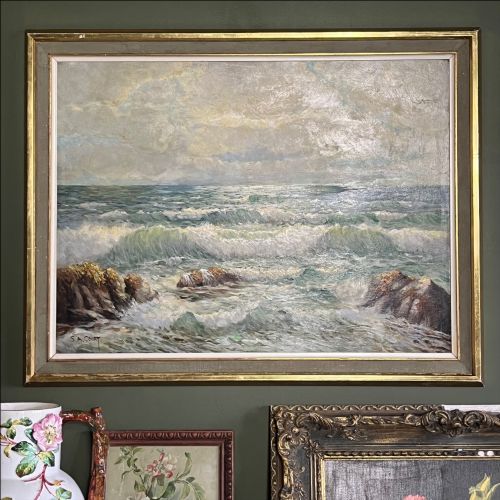
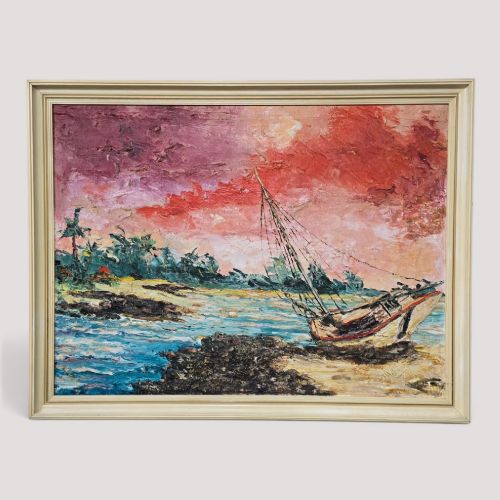
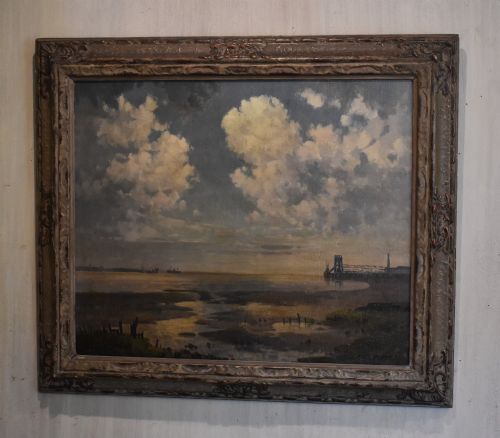
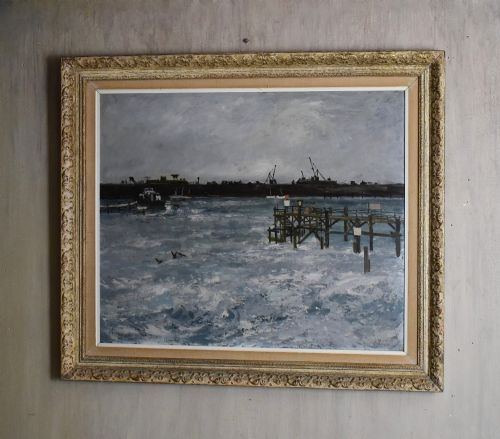
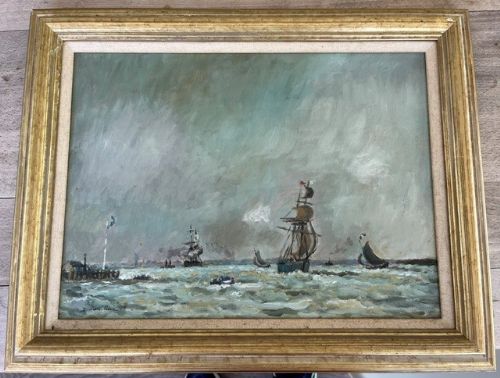
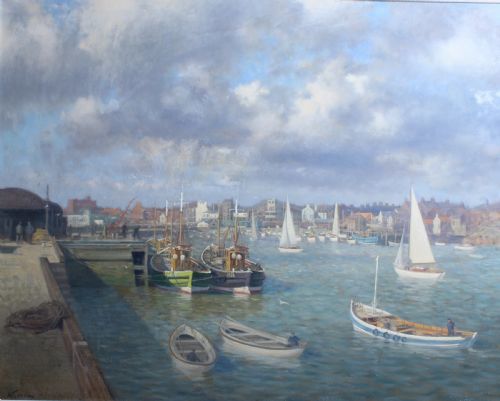
Mid century marine oil paintings capture harbour scenes, coastal views, and open water through the distinct lens of mid-century brushwork.
Mid Century Marine Oil
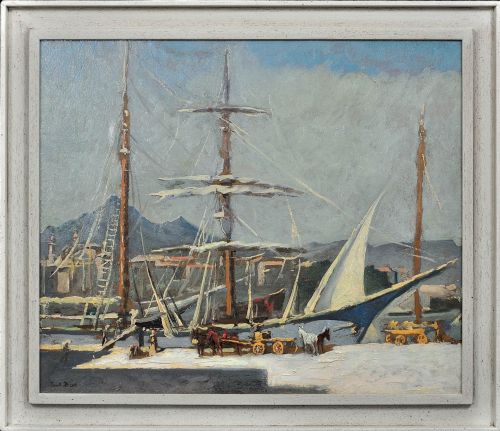
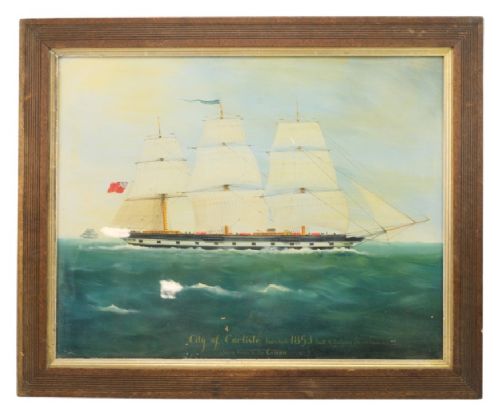
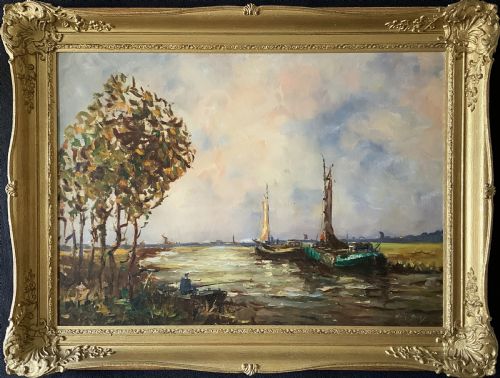
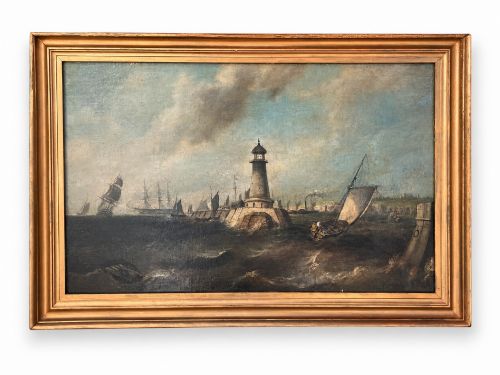
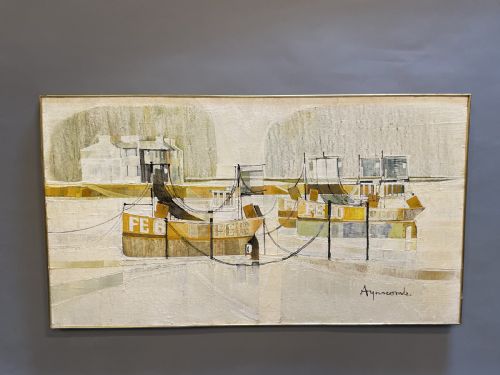
Mid century marine oil pieces focus predominantly on coastal landscapes, busy harbours, and working vessels rendered in styles ranging from British Impressionism to Mid-Century Modernism. The subjects span domestic ports in Cornwall and Wales alongside European and international waters.
Most examples originate from the middle decades of the twentieth century, though the selection reaches back through Victorian maritime traditions toward the eighteenth century.
Works appear on canvas, board, wood panel, and framed formats, capturing everything from quiet estuary waters to industrial shipping docks.
Materials and application
Artists relied on oil paint applied to prepared canvas, wooden boards, or panels, sometimes utilising thick impasto techniques to build texture in water and sky.
En plein air methods allowed painters to capture changing coastal light directly on site, leading to dynamic brushwork that defines the impressionist and modernist approaches seen across the selection.
One canvas preserves the quiet interior atmosphere of a liner's smokers' room.
Differentiating quality across the works
Quality rests upon the confidence of the brushwork, the handling of maritime light, and the compositional balance between land, water, and vessel.
Named artists with documented exhibition histories or distinctive regional movements command greater attention than anonymous works of the same era.
Kenneth Cozens·Sidney A Court·Clive Browne·Peter Brannan·Paul Bret·Willem Bos·Walter Goodin·Raymond Picque·James Fry·Fred Pailhes·Fernando Del Basso·George Shaw·Edward Seago·Roger de la Corbiere·Dion Pears·Sam Bough·Edward M Elliott·Jack R Mould·Antonio Godoy·Charles Cameron Baillie·Maurice Sijs
The Mid Century Marine Oil Glossary
- Impasto
- Paint applied thickly to a canvas or board, standing out in relief from the surface. This technique brings a tangible weight to crashing waves and harbour walls.
- En plein air
- The practice of painting outdoors directly from the subject. It ensures immediate observation of coastal weather and changing light.
- Board
- A rigid flat substrate used instead of stretched canvas. Artists frequently employed wooden panels or composition board for smaller plein air studies.
- Provenance
- The documented history of ownership or origin of a painting. It helps confirm attribution and dates for signed works.
Mid Century Marine Oil: Frequently Asked Questions
How do I care for a mid century oil painting?
Keep the painting away from direct sunlight and fluctuating humidity to protect the canvas and oil pigments.
Dust the surface gently with a dry, soft brush and avoid using any liquid cleaners on the paint.
Are these paintings original artworks?
Yes, the works listed are original oil paintings created by hand rather than mass-produced prints.
Many bear the original artist signature, studio inscriptions, or period framing.
How can I tell a mid-century piece from a Victorian one?
Mid-century marine works typically feature looser impressionist or modernist brushwork and brighter palettes compared to the darker, tightly detailed realism of Victorian maritime art.
Subject matter also shifts from formal naval battles toward everyday harbour life, working fishing boats, and coastal scenery.
What subjects are most common in these marine oils?
Harbour scenes, moored fishing vessels, and estuary views dominate the subjects, reflecting the mid-century fascination with coastal working ports.
Scenes range from British fishing villages like Polperro to European harbours in France, Italy, and the Netherlands.