

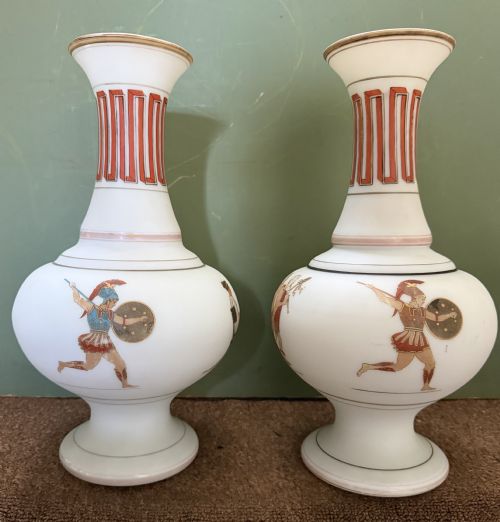
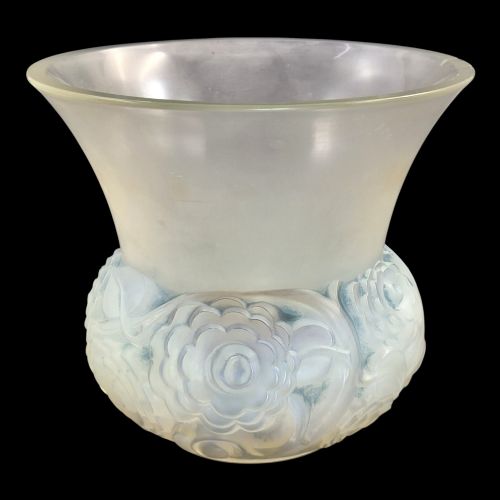


Mid Century Glass Vase
These mid century glass vase pieces bring distinct colour and form to a room, ranging from bold Murano works to delicate Victorian examples.

Mid Century Glass Vase
When you search for a mid century glass vase, you encounter a variety of sculptural forms created across different decades and artistic movements. The selection on this page includes items spanning from nineteenth-century Victorian production up to twentieth-century Mid-Century Modern and Art Deco designs.
While the phrase directs attention to the middle decades of the twentieth century, the physical evidence shows a broader sweep of glassmaking traditions. Buyers frequently find pieces originating from British and continental European makers, encompassing both utilitarian vessels and purely decorative art glass.
Alongside actual glass vessels, the listings capture related objects and paintings that share the aesthetic context of these periods. Vases dominate the selection, appearing individually and in pairs alongside complementary artistic works.
How they were made
Makers utilised hand-blown glass, crystal, opalescent glass, and latticinio filigree techniques to achieve varied optical effects within the material. Some pieces employ double-walled construction or silvered finishes to manipulate light and colour.
Production methods range from free-blown studio work to mould-blown commercial output, often incorporating applied gilding or internal threads of coloured glass. The manipulation of molten material requires precise temperature control and skilled tool work by the blower.
Mid Century Glass Vase Retail Price Guide 2026
Typical asking prices for mid century glass vase among the pieces listed under this phrase on Sellingantiques today, from the lower quarter to the upper quarter. They describe what is for sale here now, not the wider market.
One piece doubles as a lucky charm featuring lily of the valley flowers for a token of friendship.
What varies in quality
Quality rests upon the skill evident in the manipulation of the molten material, the purity of the glass formula, and the sophistication of the design. Fulvio Bianconi for Venini and Lalique demonstrate the level of execution that distinguishes master workshop production from standard commercial output.
The crispness of moulded details, the intentional control of wall thickness, and the harmonious distribution of colour determine the aesthetic success of a piece. Historical examples reveal greater complexity in surface treatment and decorative motifs, whereas later modernist works rely on purity of line and form.
Fulvio Bianconi for Venini·Paul Heller for Booms glass·Stuart Armfield·AVEM
The Mid Century Glass Vase Glossary
- Opalescent Glass
- Glass that diffuses light with a milky or pearlescent appearance, often showing translucent highlights when held to the light. This effect is achieved through the addition of specific chemical agents during the melt.
- Latticinio Filigree Glass
- A Venetian technique incorporating fine opaque white or coloured glass threads embedded within clear glass. These threads twist in regular patterns to create intricate optical designs.
- Hyalite Glass
- An opaque black or coloured glass developed during the nineteenth century, resembling obsidian in its deep dark tone. It provides a solid ground for applied enamel or gilt decoration.
- Glass Lustres
- Ornamental mantelpiece vases hung with cut glass prisms that refract light. They were popular in the nineteenth century and often feature hand-painted highlights or gilding.
- Soda Glass
- Glass produced using sodium carbonate as a primary flux, common in historical manufacturing before the widespread adoption of lead crystal. It yields a lighter vessel with characteristic handling properties.
Mid Century Glass Vase: Frequently Asked Questions
How do I identify a mid-century piece?
Mid-century pieces typically exhibit bold organic silhouettes, asymmetrical forms, or clean modernist lines influenced by post-war design movements. Examining the material weight and surface finish helps distinguish these twentieth-century items from earlier Victorian glassware.
Makers working in this era often employed new colour palettes, such as bright turquoise or vibrant green, alongside experimental blowing techniques that prioritized sculptural presence over traditional symmetry.
Are these glass vases signed?
Some pieces bear signatures, factory marks, or paper labels applied by the workshop or individual designer at the time of production. Marked examples provide clear attribution to specific makers like Venini or Lalique.
Many high-quality art glass items remain unsigned, requiring stylistic analysis of the glass body, pontil mark, and colour application to determine their origin and period.
How should I display a glass vase?
Placement near natural light allows transparent and opalescent glass to reveal its full range of colour and internal detail. Positioning pieces on stable surfaces away from heavy foot traffic protects delicate rims and handles.
Pairs of vases work well when balanced on mantelpieces or sideboards, while larger sculptural single vessels serve as focal points in a room.
What is Murano glass?
Murano glass refers to vessels and decorative objects produced on the Venetian island of Murano, a historic centre of European glassmaking. Artisans there developed advanced techniques like a ritorti and handkerchief folding.
Pieces originating from this tradition often display exceptional dexterity in handling hot glass, resulting in expressive forms and vibrant chromatic combinations.