




Vintage Murano Art Glass
These vintage murano art glass pieces are mouth-blown Italian works from lagoon furnaces, prized for vibrant colour and tactile weight.

Vintage Murano Art Glass
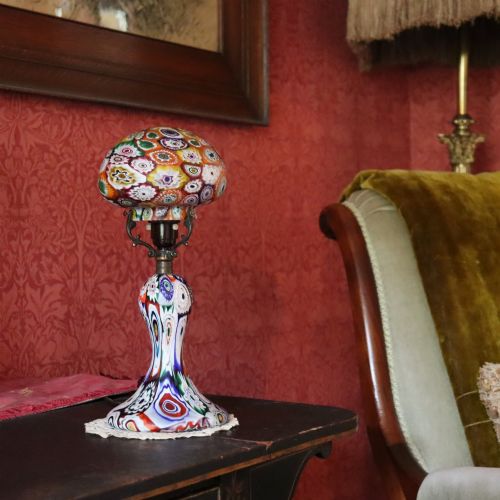
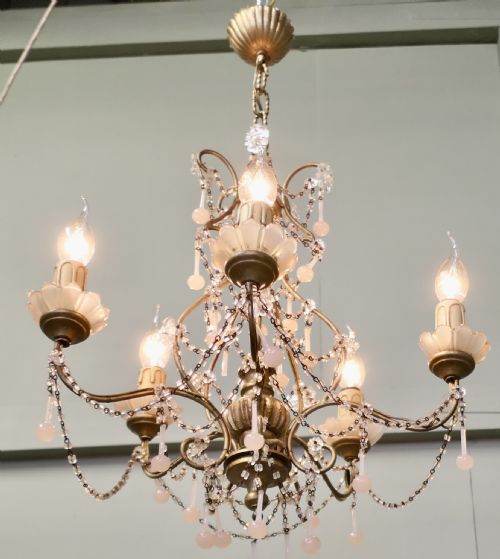
When you search for vintage murano art glass, you enter a world of mid-century and earlier Venetian production spanning paperweights, lamps, bowls, and vases. The items appearing on this page range from Victorian-era grape lamps and early twentieth-century chandeliers to distinct mid-century sculptural forms.
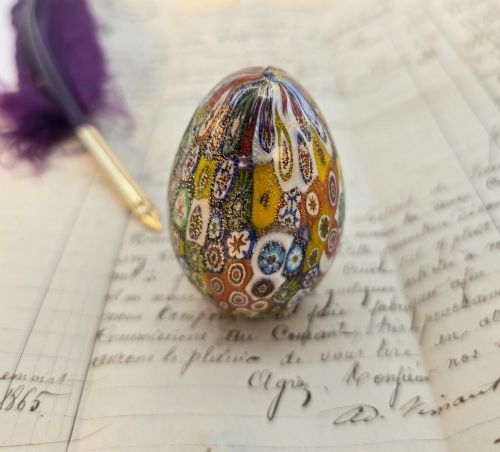
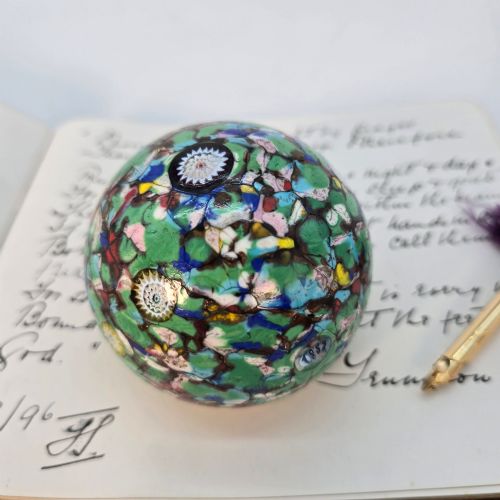
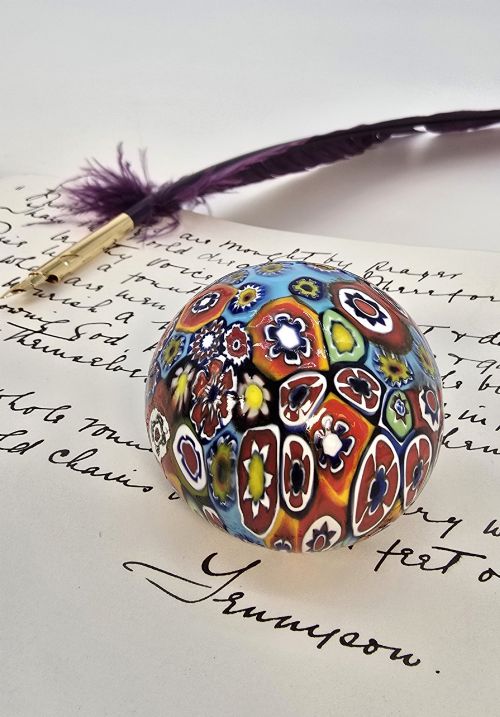
The most common examples you are likely to encounter here include millefiori paperweights and decorative bowls, often originating from the 1930s. These pieces demonstrate the enduring versatility of Italian glassmaking traditions across multiple decades.
How they were made
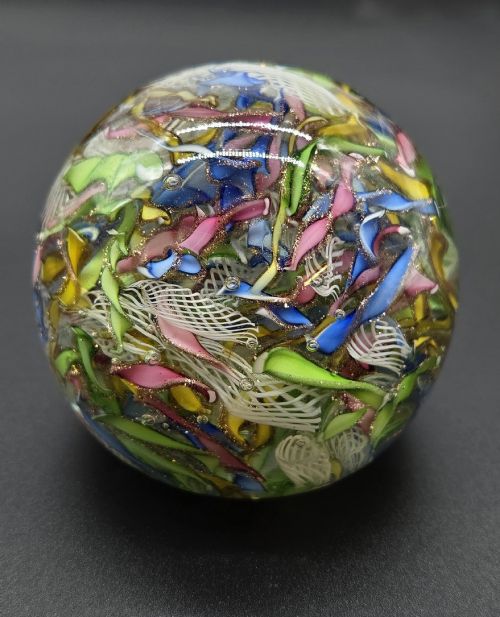
The makers relied on traditional blowing techniques alongside specialised glass formulations involving gold aventurine and millefiori canes. Workers manipulated molten material to create intricate internal patterns, scrambled designs, and delicate latticinio bands.
Secondary elements such as brass mountings occasionally complement the blown glass components in lamps and decorative objects. Craftsmen shaped handkerchief vases and animal sculptures while the material remained pliable at high temperatures.
Vintage Murano Art Glass Retail Price Guide 2026
Typical asking prices for vintage murano art glass among the pieces listed under this phrase on Sellingantiques today, from the lower quarter to the upper quarter. They describe what is for sale here now, not the wider market.
At least one piece on this page takes the form of an ibex, proving that Venetian glassmakers loved a mountain goat challenge.
What varies in quality
Quality rests upon the precision of the cane work, the clarity of the crystal, and the sophistication of the colour distribution. Pieces associated with notable designers and workshops demonstrate superior control over complex thermal techniques.
The weight and balance of a paperweight or the symmetry of a multi-branch chandelier reveal the maker's discipline. Simpler moulded items differ distinctly from those requiring advanced free-blown manipulation.
Fratelli Toso·Venini·Fulvio Bianconi·Napoleone Martinuzzi·Pauly·Vittorio Zecchin·AVEM
The Vintage Murano Art Glass Glossary
- Millefiori
- Glasswork produced by heating bundled glass rods and slicing them to reveal multicoloured floral cross-sections. This technique appears frequently in decorative paperweights and bowls.
- Aventurine
- Glass containing suspended metallic particles that glitter when caught by light. Gold aventurine provides a warm metallic shimmer within the transparent matrix.
- Latticinio
- White or coloured opaque glass threads encased within clear glass to form delicate net patterns. Venetian artisans applied this method to decanters and vessels.
- Handkerchief vase
- A vessel shaped while hot to resemble a suspended fabric square with folded corners. Fulvio Bianconi utilised this form for Venini.
Vintage Murano Art Glass: Frequently Asked Questions
How do I identify a Murano paperweight?
Look closely at the internal cane work and the finish of the pontil mark on the base. Many early examples feature dense millefiori arrangements or scrambled glass.
Examine the weight and clarity of the crystal, as genuine Venetian pieces display substantial heft and refined optical qualities.
What periods do these glass pieces cover?
The inventory spans from Victorian interpretations through to the mid-century modern era. Pieces frequently date from the 1920s, 1930s, and 1950s.
Design styles shift from ornate Victorian lamps to sleek Art Deco vessels and mid-century Italian sculptural forms.
How should I clean Murano glass lamps?
Dust the glass surfaces gently with a dry, soft microfibre cloth to prevent scratching the polished material. Avoid harsh chemical cleaners that might damage brass components.
Keep electrical lamps away from excessive moisture and handle heavy multi-branch chandeliers with professional assistance.
Are all Murano pieces signed?
Many historical pieces from the early decades rely on documented attributions rather than engraved signatures. Master glassmakers often left works unmarked during the 1920s and 1930s.
Specific design traits, colour palettes, and blowing techniques help associate items with workshops like Venini or AVEM.