



Mid Century Glass Cabinet
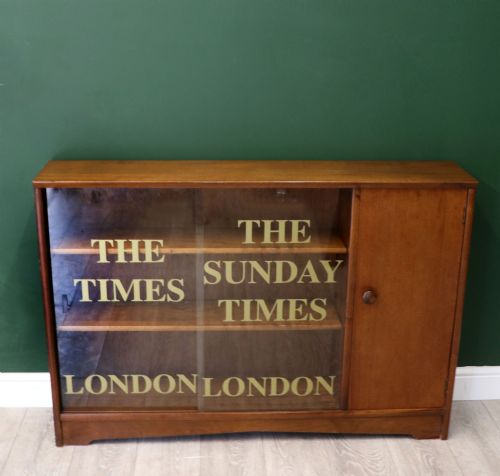
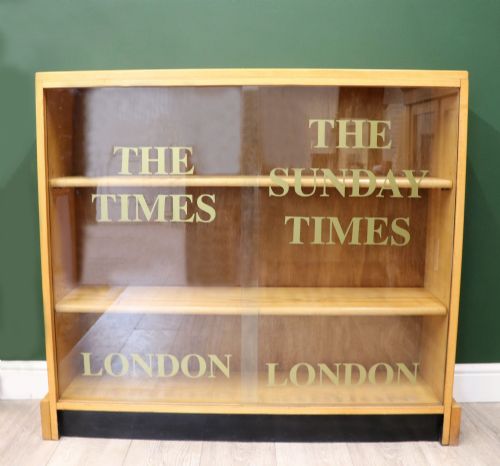
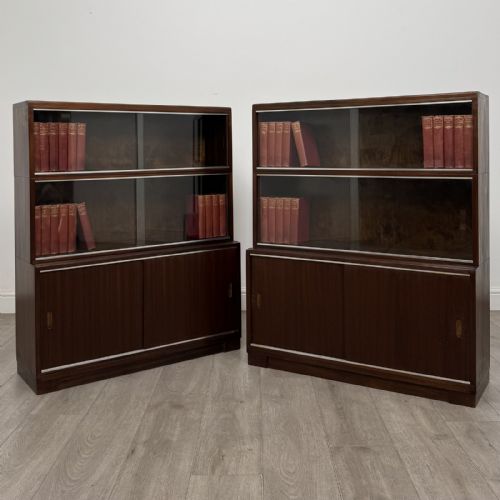
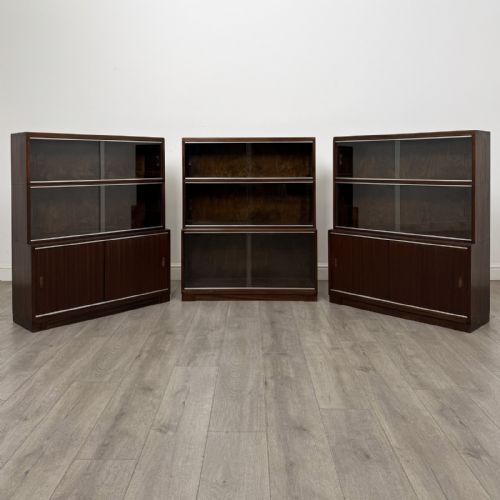
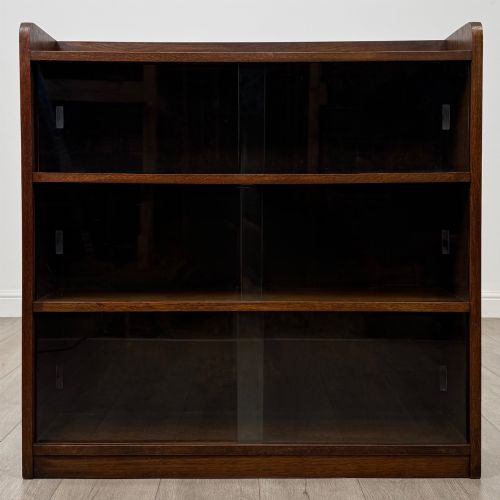
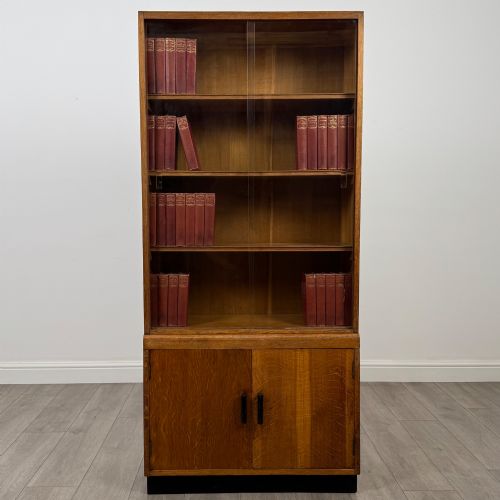
These mid century glass cabinet designs bring together timber frames and glazed fronts to display china, books and collected objects.
Mid Century Glass Cabinet
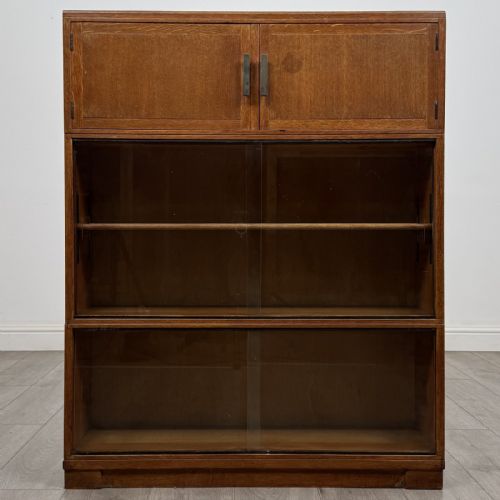
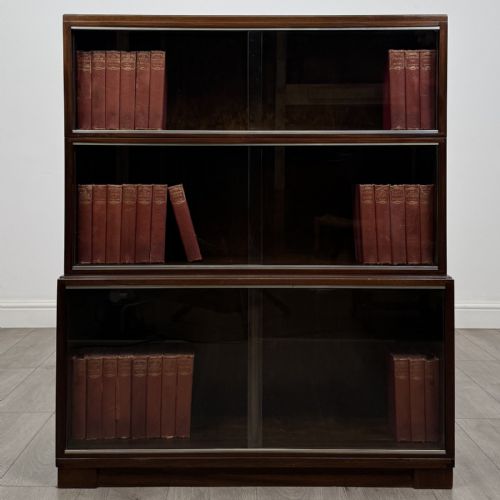
A mid century glass cabinet serves to house and show books, ceramics or ornaments behind transparent doors, spanning utilitarian stacking bookcases and refined display pieces. When exploring a mid century glass cabinet, buyers encounter forms ranging from 1950s teak living room units and Art Deco oak bookcases to earlier Victorian walnut credenzas and Edwardian glazed china cabinets.
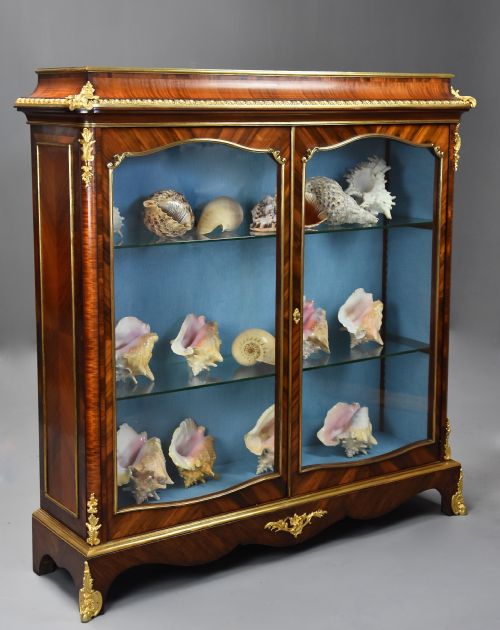
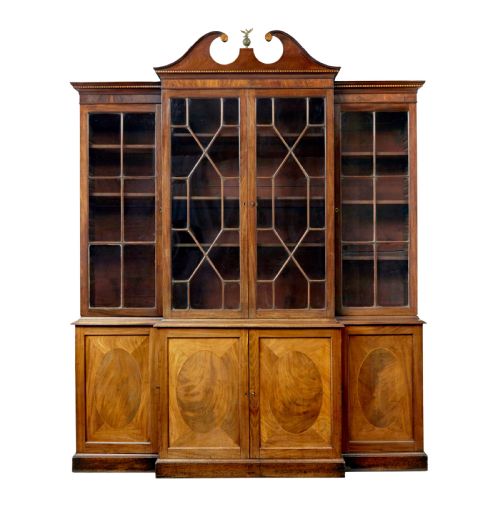
The selection includes tall library bookcases, low side cabinets, pier cabinets, and tiered brass display stands alongside French kingwood vitrines mounted in ormolu. Mid-Century Modern and 20th Century British examples sit alongside pieces from the Victorian, Edwardian and 1930s periods.
Makers such as Minty of Oxford, Heals, Druce & Co, Phoenix Gallery, Arthur Reynolds of Ludlow and Jaeger Le Coultre appear across the listings, alongside French kingwood and walnut pieces.
Evaluating quality and finish
Quality rests on the selection of timber veneers and solids, such as figured walnut, kingwood and mahogany, matched with precise cabinet joinery. The crispness of ormolu mounts, the smoothness of sliding glass mechanisms, and the integrity of inlaid decoration distinguish finer pieces.
Proportion and scale dictate the visual weight of a cabinet, where balanced proportions and well-executed secondary timbers elevate a piece from standard utilitarian storage to refined craftsmanship.
Mid Century Glass Cabinet Retail Price Guide 2026
Typical asking prices for mid century glass cabinet among the pieces listed under this phrase on Sellingantiques today, from the lower quarter to the upper quarter. They describe what is for sale here now, not the wider market.
Listings feature periods from the 19th century, Victorian era, and 1920s to 1960, utilising oak, mahogany, walnut, and teak.
Minty of Oxford·Heals·Druce & Co·Phoenix Gallery·Arthur Reynolds Of Ludlow·Jaeger Le Coultre
The Mid Century Glass Cabinet Glossary
- Vitrine
- A glass-fronted cabinet or display case designed specifically for showing porcelain and small decorative objects. These often feature ormolu mounts and fine wood veneers.
- Credenza
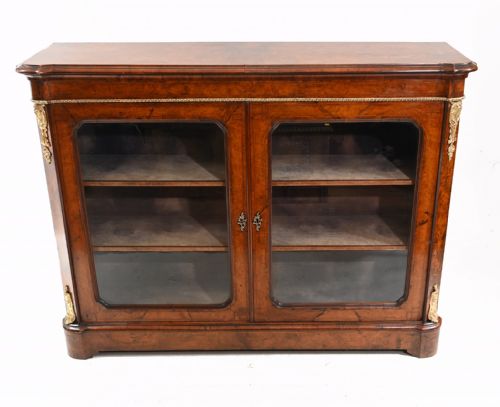
- A low cabinet or sideboard, frequently standing on short legs and featuring glazed or panelled doors. Mid-19th century examples often showcase rich walnut and marquetry.
- Pier Cabinet
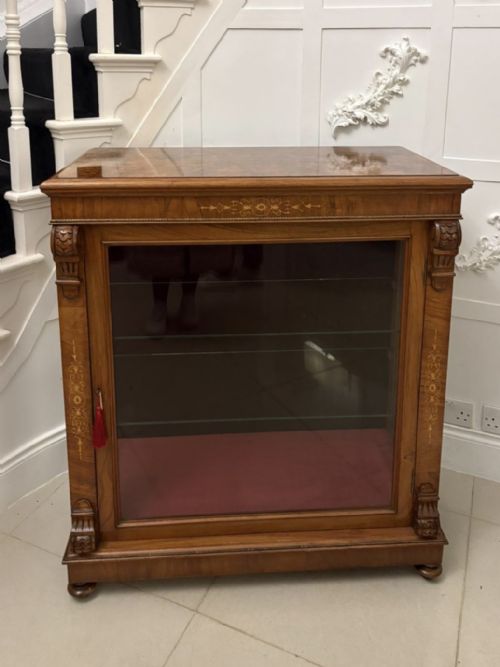
- A narrow display cabinet built to fit the wall space between windows. Victorian examples commonly incorporate walnut and glazed doors.
- Ormolu
- Gilded bronze used for decorative mounts on furniture, particularly associated with French 19th-century pieces. It provides metallic contrast to dark woods like kingwood.
- Stacking Bookcase
- Modular shelving units with glass doors that lift and slide into the cabinet. Minty of Oxford popularised this form in oak during the early 20th century.
Mid Century Glass Cabinet: Frequently Asked Questions
What is a mid century glass cabinet?
A mid century glass cabinet is a storage and display piece featuring transparent glass doors or panels, designed to hold books, china, or decorative items while protecting them from dust.
These pieces span utilitarian oak stacking bookcases, Art Deco designs, and refined French kingwood vitrines with ormolu mounts.
How do I style a glass cabinet?
Glass cabinets suit living rooms, dining spaces, and libraries where you want to keep collections visible yet organised. Group items by colour or material to create visual balance behind the glass.
Ensure items do not crowd the shelves, allowing light to pass through the glazed doors and illuminate the interior.
How do I date an antique cabinet?
Dating relies on observing construction techniques, timber choices, hardware, and stylistic markers such as Victorian revival details or 1950s retro teak forms.
Makers' marks, labels, or stamps from firms like Minty of Oxford or Druce & Co also help confirm the period of manufacture.
What woods were used in these cabinets?
Cabinetmakers utilised a variety of hardwoods including oak, mahogany, walnut, rosewood, kingwood, and teak. Finer pieces often display figured veneers and inlaid details.
Secondary woods and metal accents such as brass and ormolu further characterise the construction of different periods.