





Mid Century French Landscape
When you search for mid century french landscape, you open a window to coastal harbours, sunlit streets, and quiet rivers captured across the middle decades of the twentieth century.
Mid Century French Landscape
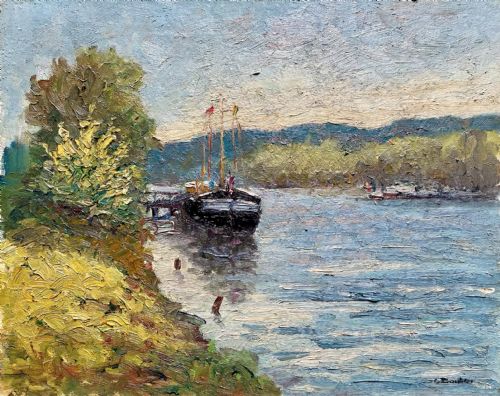
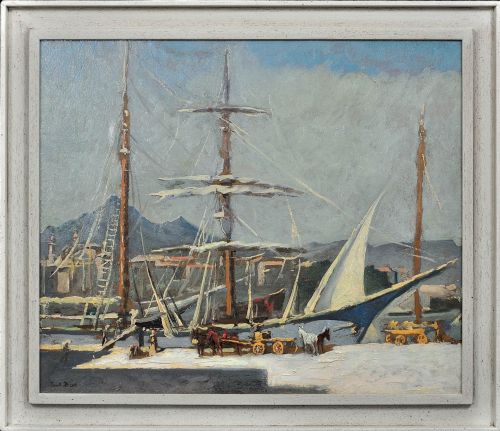
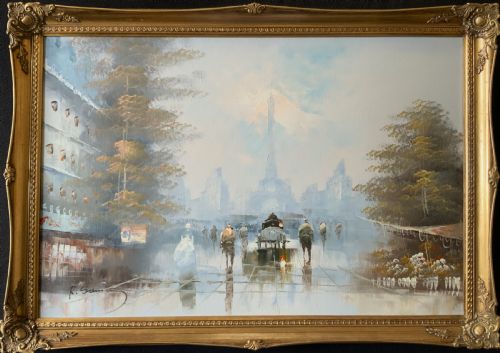
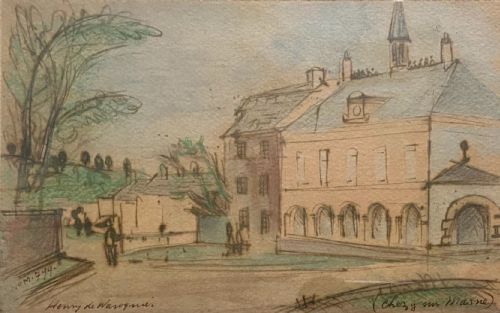
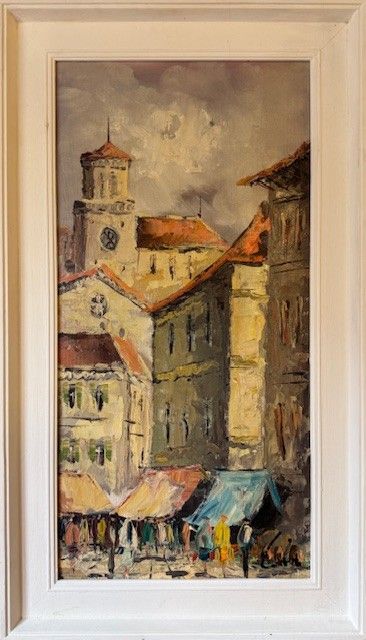
A mid century french landscape captures the topography, rural life, and urban scenes of France through the lens of twentieth-century painting movements. These works range from vibrant Mediterranean coastal views in Provence and the Côte d'Azur to quiet Parisian street scenes and riverbanks along the Seine.
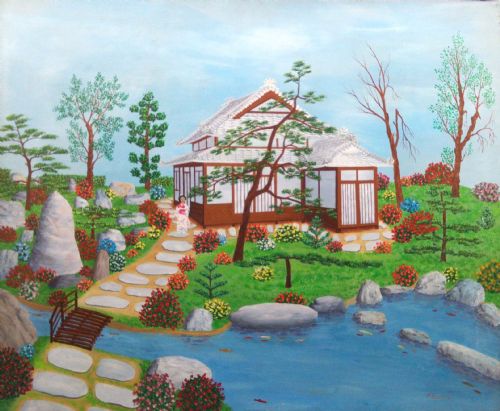
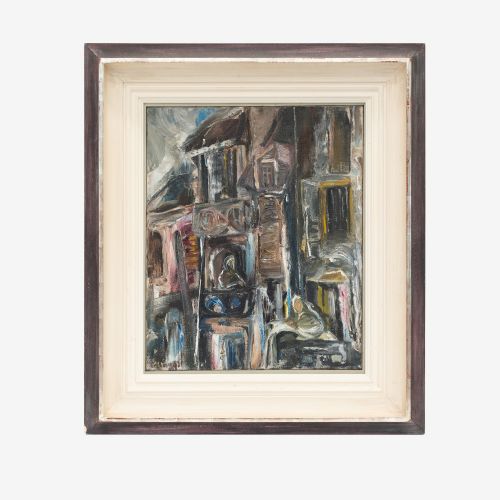
The pieces appearing most frequently on this page are oil paintings on canvas, alongside mixed media drawings and watercolours on paper. They span styles from Post-Impressionism and French Expressionism to naive outsider art and abstract impressionism.
Originating predominantly from the decades between the 1920s and the 1960s, these artworks often sit inside vintage wood or gilt frames that complement their mid-century palettes. Collectors seek them for their evocative atmospheres and the historical texture of mid-twentieth-century European art.
How they were made
Artists working on a mid century french landscape typically employed oil paint on stretched canvas or board, building texture with loaded brushes and palette knives. This technique created the thick, impasto surfaces seen in coastal and urban views from the period.
Works on paper utilise watercolour, gouache, and ink, often combining media to sketch rapid impressions of harbour life or architectural scenes. These water-based compositions rely on swift brushwork and paper grounds rather than heavy canvas layers.
The supporting frames are predominantly carved or moulded wood, sometimes finished in gilt or painted surfaces that reflect the decorative tastes of the mid-twentieth century.
Several canvases manage to smell faintly of old linseed oil and French tobacco, as if they just stepped out of a Parisian garret.
What varies in quality
The strength of a mid century french landscape rests upon the confidence of the brushwork and the clarity of the composition. Stronger examples demonstrate deliberate mark-making and a coherent tonal balance that anchors the viewer within the scene.
Provenance and attribution elevate certain works, particularly those tied to documented painters or founders of regional art groups. Unsigned or anonymous pieces rely entirely on the visual vigor of the paint application and the harmony of the palette.
Paul Bret·Henry de Waroquier·Lilian Colbourn·Caroline Burnett·Paul-Jean Anderbouhr·Raymond Picque·Fred Pailhes·Gabriel Dauchot·Mario Pinetti·Ron Folland·Mercedes Legrand·Claude Jousset·Roger de la Corbiere
The Mid Century French Landscape Glossary
- Impressionism
- A style of painting emphasising small, thin yet visible brush strokes and accurate depiction of light. It emerged in France during the nineteenth century and deeply influenced later mid-century artists.
- Impasto
- A technique where paint is laid on an area of surface very thickly, usually thick enough that the brush or painting-knife strokes are visible. This method adds tactile three-dimensional quality to canvas works.
- Gouache
- A water-based paint consisting of pigment and other materials designed to be used in an opaque painting method. It offers flat, vibrant areas of colour on paper supports.
- Post-Impressionism
- A predominantly French art movement that developed from about 1886 to 1905, extending Impressionism while rejecting its limitations. Artists sought greater emotional resonance and structural clarity in their subjects.
- Provenance
- The chronology of the ownership or location of a historical object. A documented history can significantly support the background of a mid-century painting.
Mid Century French Landscape: Frequently Asked Questions
What defines a mid century french landscape?
These artworks are paintings and works on paper depicting French urban, rural, and coastal scenery created between the 1920s and 1960s. They capture subjects such as Parisian streets, Mediterranean harbours, and Provençal farmhouses through various modernist lenses.
The category encompasses diverse stylistic approaches, ranging from impressionistic interpretations of light to bold expressionist and naive renderings. Each piece reflects the artistic climate of twentieth-century France.
How should I display a vintage painting?
Display your artwork on a wall away from direct sunlight and excessive humidity to protect the canvas and oil pigments. Many of these pieces come in their original wood or gilt frames, which should be secured firmly with appropriate picture-hanging hardware.
Consider the lighting of your room, as directional picture lights can enhance the textured impasto surfaces of mid-century canvases. Keeping the environment stable preserves both the paint layer and the wooden support over time.
Were these painted on location?
Many mid-century artists worked plein air, setting up easels outdoors to capture natural light along the Seine, the Riviera, or provincial market squares. This direct observation accounts for the lively, immediate quality found in coastal and street scenes.
Other compositions were developed in studios using preliminary sketches and watercolours drawn on site. Both methods resulted in the vibrant atmospheric depictions characteristic of the era.
How can I tell the period of a painting?
Dating relies on stylistic clues, framing materials, and artist signatures or biographical records. Mid-century works often feature distinct modernist palettes, flattened perspectives, or expressive brushwork tied to specific decades between the 1920s and 1960s.
Examining the reverse of the canvas or board can also reveal gallery stamps, old labels, or handwritten inscriptions from the period. These physical details help connect the artwork to its historical context.