
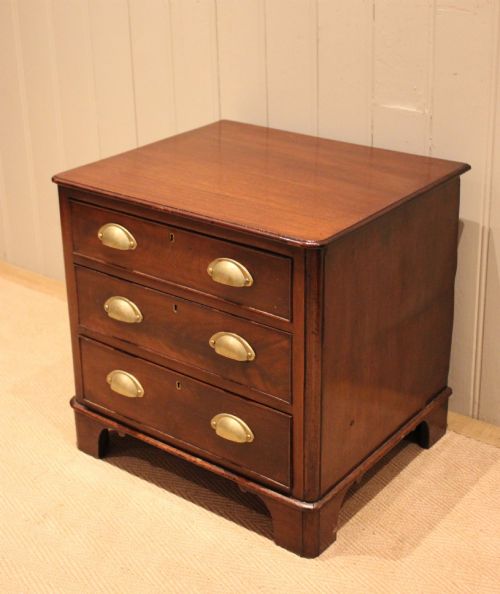
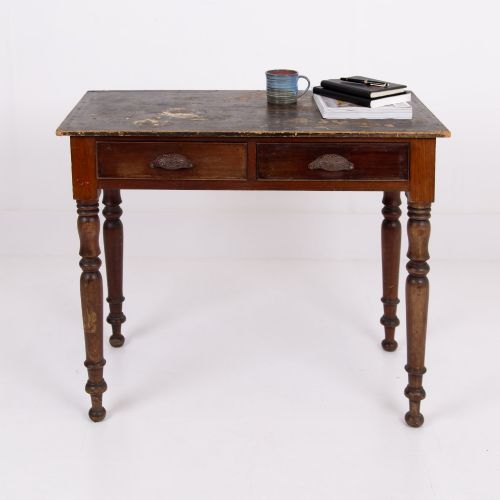
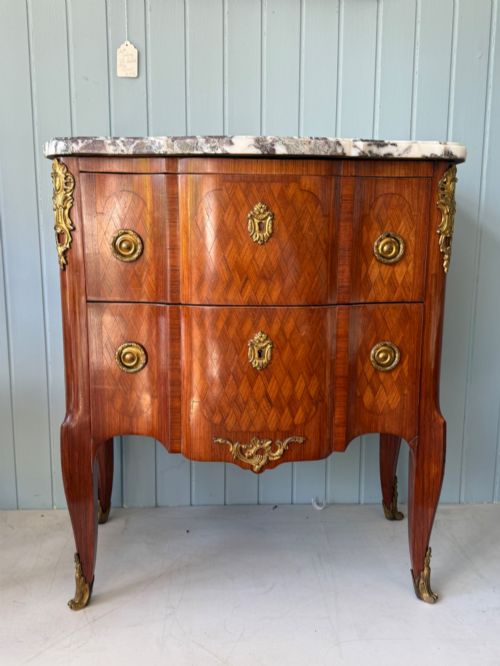
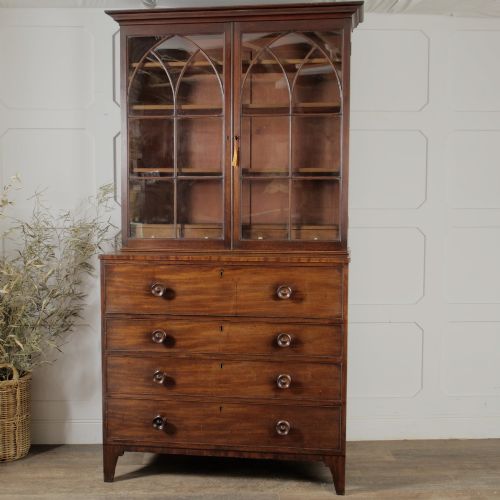
Mid 19th Century Drawers
Mid 19th century drawers encompass practical storage and writing pieces shaped by Victorian and continental cabinetmakers.
Mid 19th Century Drawers
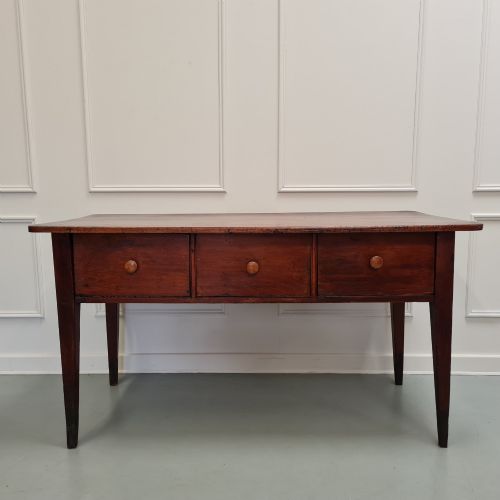
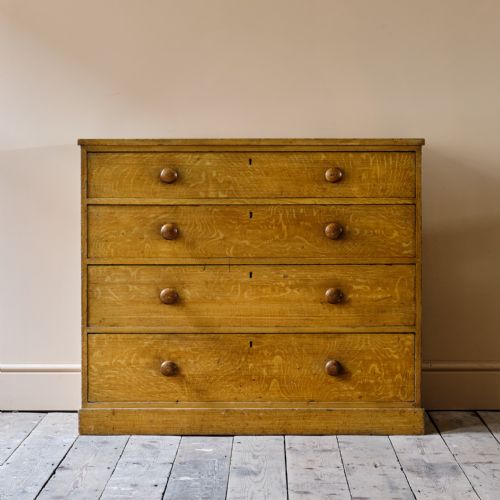
Mid 19th century drawers primarily comprise chests of drawers, writing desks, and cabinets designed for domestic and official storage.
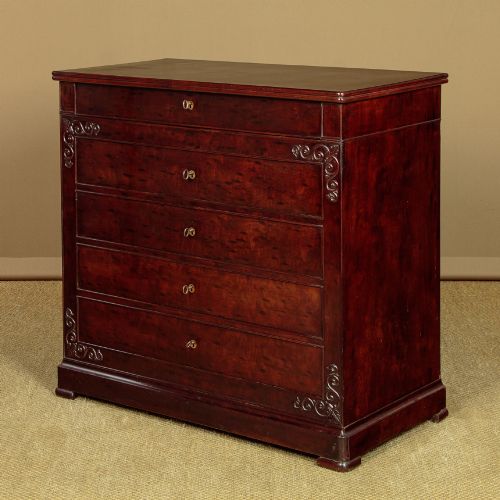
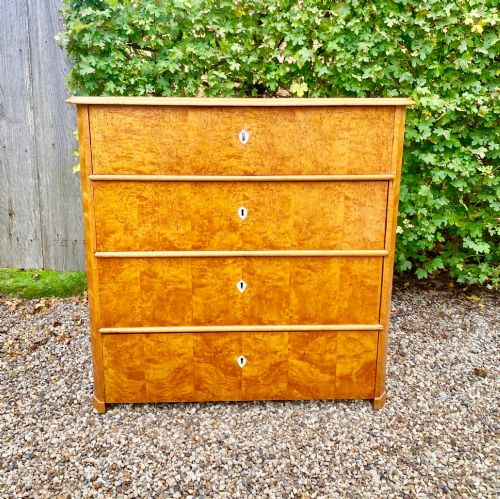
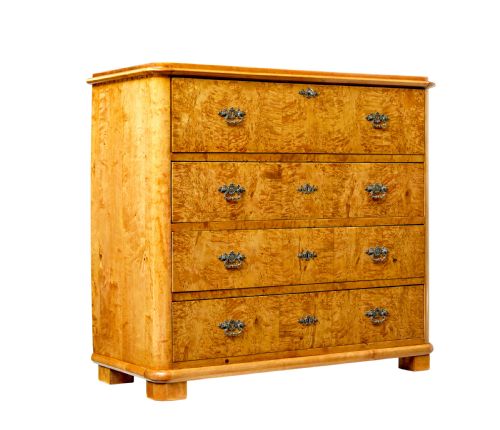
The selections span English mahogany pieces, French commodes, and Scandinavian birch or elm designs reflecting Victorian and Biedermeier influences.
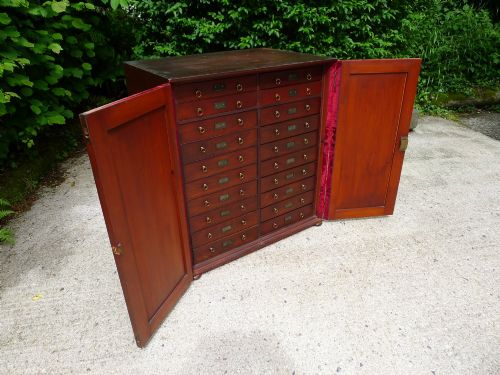
Buyers encounter everything from campaign chests and Wellington chests to miniature models and serving tables fitted with functional storage.
How they were made
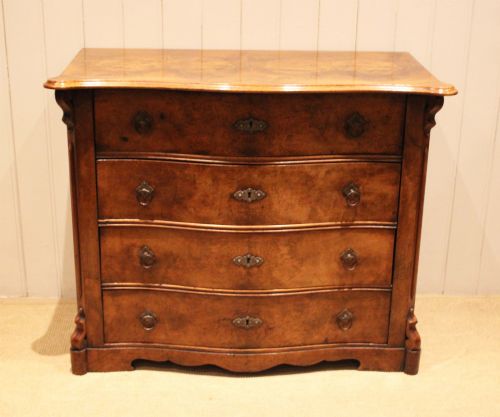
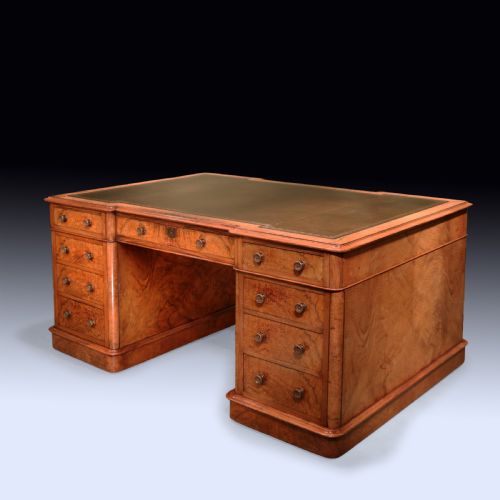
Cabinetmakers utilised dense timbers such as mahogany, walnut, and pine, frequently selecting burr veneers and flame mahogany for decorative surfaces.
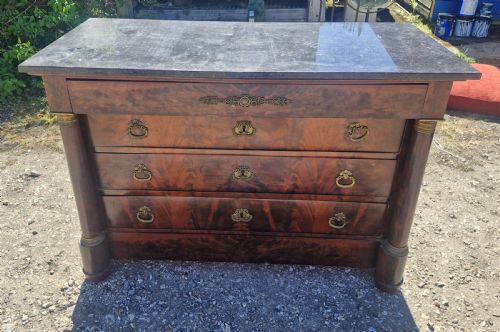
Hardware additions included brass handles, campaign mounts, and ormolu details, while marble slabs topped specific French and walnut pieces.
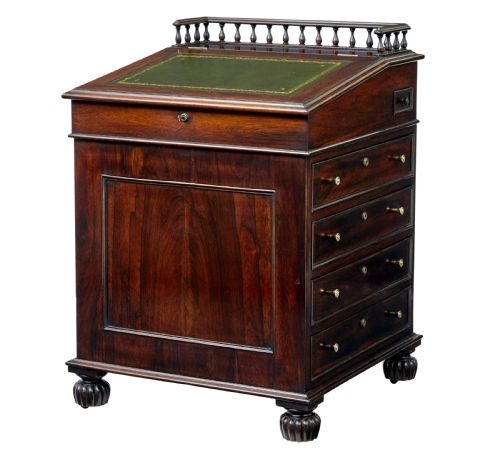
Construction methods involved dovetailed drawer boxes, original paint applications, and specialised writing compartments integrated into pedestals and davenports.
Childs Wellington chests offer miniature proportions built with the exact same locking mechanisms as full-sized furniture.
What varies in quality
Quality rests upon the selection of timber grain, such as figured mahogany or burr walnut, and the precision of the veneer matching across drawer fronts.
Structural refinement shows in the choice of secondary woods, the execution of dovetailed joints, and the retention of original brass or ormolu mounts.
The integrity of surfaces, from polished patinas to untouched original paint finishes, dictates the distinction between standard utilitarian items and finer examples.
The Mid 19th Century Drawers Glossary
- Wellington chest
- A tall, narrow chest of drawers secured by a locking side flap that fastens over the drawer edges.
- Campaign chest
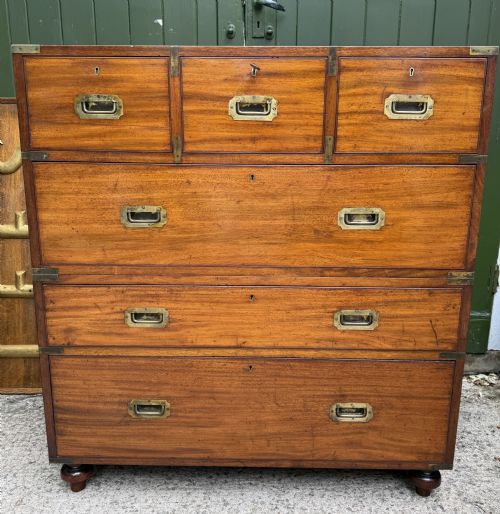
- A portable storage chest made in separate sections with recessed brass handles for transport by military officers.
- Davenport desk
- A compact Victorian writing desk featuring a sloping top above a bank of side drawers.
- Commode
- A low French chest of drawers, frequently finished with a marble top and decorative ormolu mounts.
- Secretaire
- A cabinet or chest incorporating a pull-down writing flap revealing inner compartments and small drawers.
- Patina
- The surface sheen and mellowing developed by wood over decades through handling and polishing.
Mid 19th Century Drawers: Frequently Asked Questions
How do I identify a campaign chest?
Campaign chests are built in two separate stacking sections equipped with recessed brass handles and corner brackets designed for military transport.
They utilise sturdy timbers like mahogany or teak to withstand travel and feature flush hardware so units pack tightly together.
What is a Wellington chest?
A Wellington chest is a tall, slender set of drawers distinguished by a hinged locking stile on the right side.
This vertical locking bar fastens over the drawer margins to secure all drawers simultaneously with a single key.
Where were these pieces made?
The pieces originate primarily from British workshops, French cabinetmakers, and Scandinavian regions including Sweden and Denmark.
English pieces favour mahogany and oak, while continental examples frequently showcase birch, elm, and Biedermeier styling.
How should I care for marble-topped chests?
Marble tops require gentle cleaning with mild, pH-neutral soap and water to avoid damaging the polished stone surface.
Protect the slab from acidic liquids and spills to preserve the natural finish of the marble.