


Metal Tea Samovar
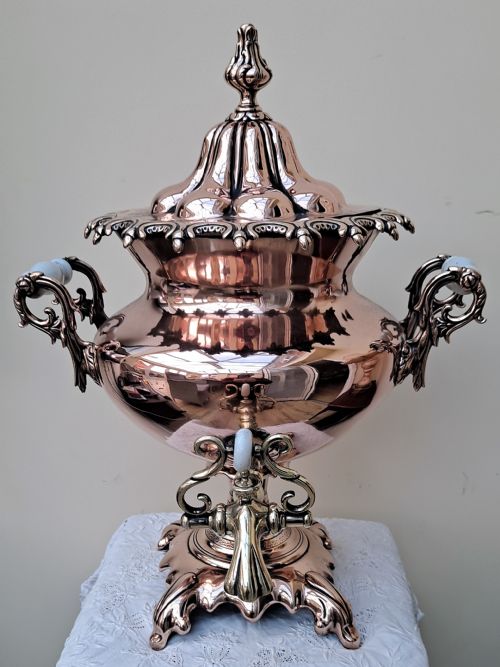
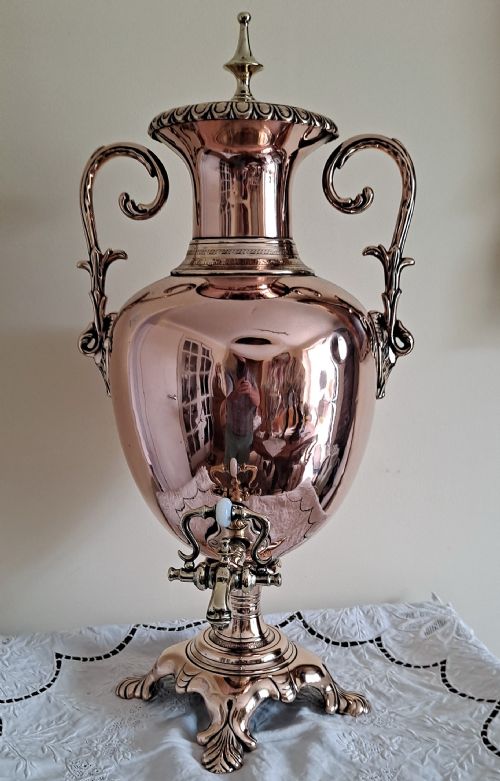
These metal tea samovar pieces are functional vessels designed to heat water for tea, offering period charm and decorative presence.
Metal Tea Samovar
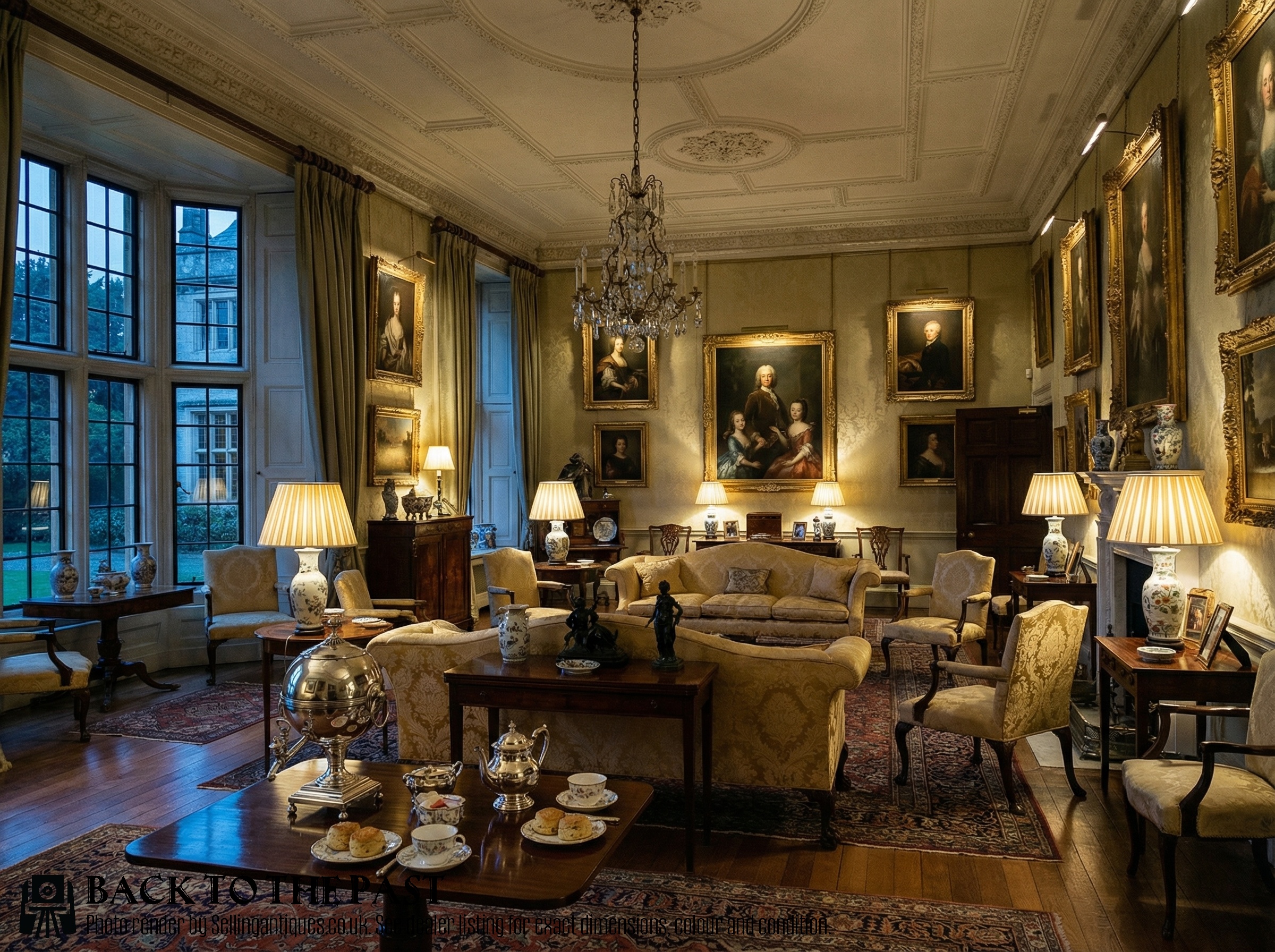
A metal tea samovar is a heated vessel used historically for boiling water to make tea, taking forms such as tea urns, coffee urns, water urns, and spirit kettles. When you search for this phrase, you find items spanning the Georgian, Regency, and Victorian periods.
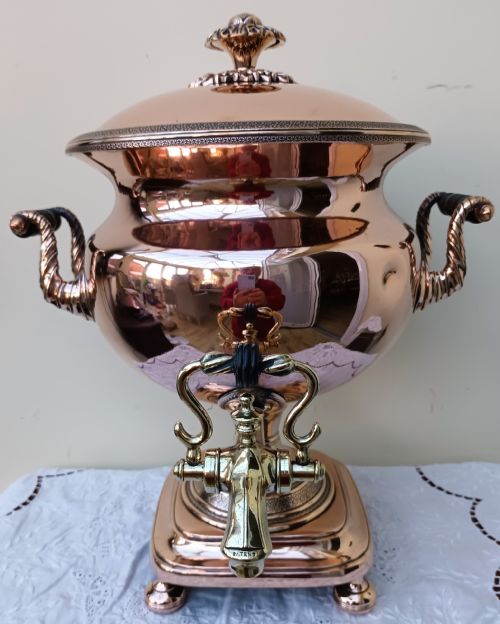
The version you are most likely to meet on this page is a Victorian copper samovar, often paired with brass fittings or taps. These pieces range from compact tabletop models to large hanging water urns.
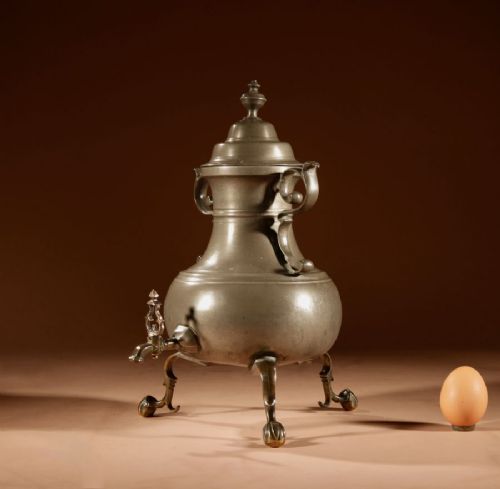
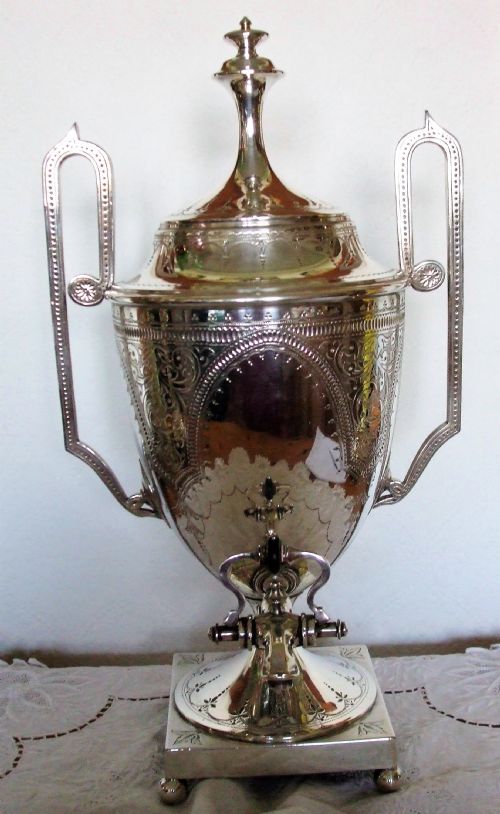
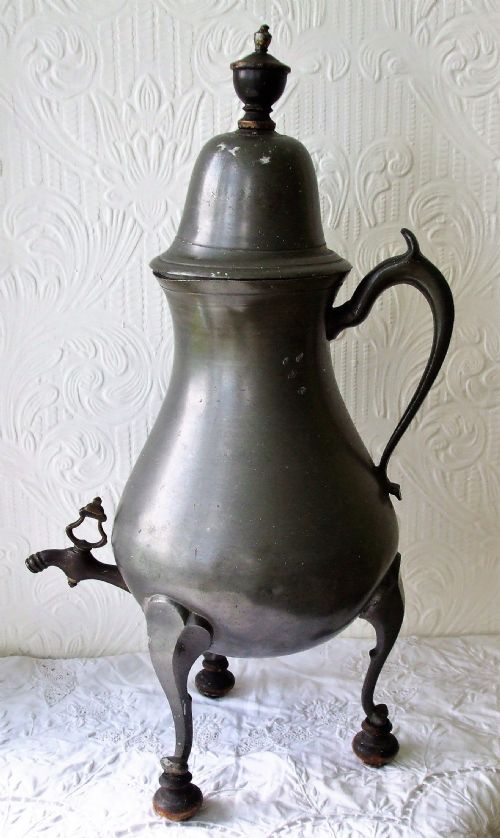
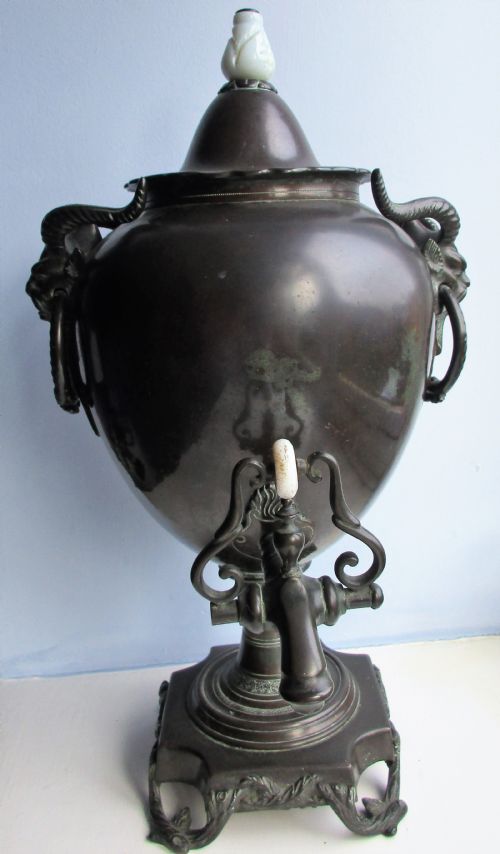
The selection also includes Dutch pewter and bronze kraantjeskan examples alongside Edwardian and George III silver plated tea urns. Each object reflects the domestic habits of its period.
How metal tea samovars were made
These vessels rely primarily on copper, brass, and pewter, shaped by hand or machine into urn bodies and fitted with taps. Many incorporate contrasting materials such as wood, bone, and ebonised wood for handles and insulators.
Silver plating and japanned finishes appear on pieces associated with makers like Walker & Hall and Benetfink & Co of London. Pontypool ware techniques provide distinct surface treatments on specific Victorian examples.
Periods represented on this page span from the 18th century through the Edwardian era, including Georgian and Regency styles.
What varies in quality
The distinction between standard examples and the finest items rests on the presence of original fittings, taps, and internal heating components. Pieces retaining their complete hardware demonstrate higher integrity.
Ornate detailing, such as bronze mounts and bell metal construction, separates standard utility vessels from high quality George III and Victorian display pieces. The weight and gauge of the copper or silver plate further define the grade of the object.
Walker & Hall·Benetfink & Co
The Metal Tea Samovar Glossary
- Kraantjeskan
- A traditional Dutch vessel equipped with a tap, often functioning as a coffee or tea urn. These typically combine pewter and bronze.
- Spirit kettle
- A kettle mounted on a stand with an underlying spirit burner to keep water hot. These appear in brass and other metals.
- Bell metal
- An alloy of copper and tin traditionally used for bells, utilised here in durable vessel construction. It yields a resonant quality.
- Tea urn
- A large metal vessel designed to hold and dispense hot water for tea service. They are frequently rendered in copper or silver plate.
Metal Tea Samovar: Frequently Asked Questions
What is a metal tea samovar used for?
These vessels were historically used to heat and maintain the temperature of water for tea service in domestic settings. They sat on tables or sideboards during formal meals and gatherings.
Today, buyers primarily collect them as decorative antiques or display pieces for period interiors. Their distinctive metal forms bring historical character to a room.
How do I identify a Georgian samovar?
Georgian samovars often display neoclassical styling with copper bodies, brass accents, and restrained decorative motifs. They date from the period between 1714 and 1830.
Makers of this era favoured substantial copper and bell metal construction. The presence of original taps and fittings helps confirm the period.
What materials are common in these urns?
Copper is the most prevalent material, frequently paired with brass for taps, handles, and feet. Pewter, bronze, and silver plate also appear across different regional styles.
Secondary materials like wood, bone, and ebonised wood serve as heat insulators on handles and knobs. Japanned finishes provide dark, lacquered surface decoration on specific items.
Are spirit kettles the same as samovars?
Spirit kettles are smaller vessels mounted on dedicated stands that incorporate a burner underneath. They perform a similar heating function to larger urns.
Samovars are typically larger, self-contained urns with internal heating chambers or taps. Both categories fall under the broader heading of heated tea vessels.