

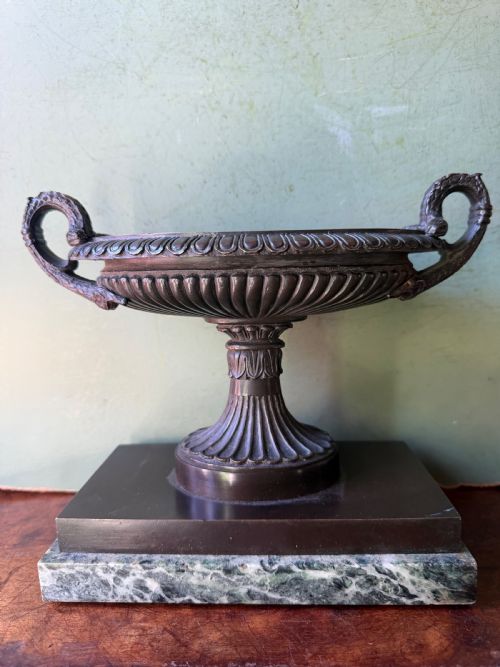


Metal Tazza Bowls
Metal tazza bowls are elevated footed vessels designed to command attention on a table, prized for combining sculptural metalwork with classical poise.
Metal Tazza Bowls
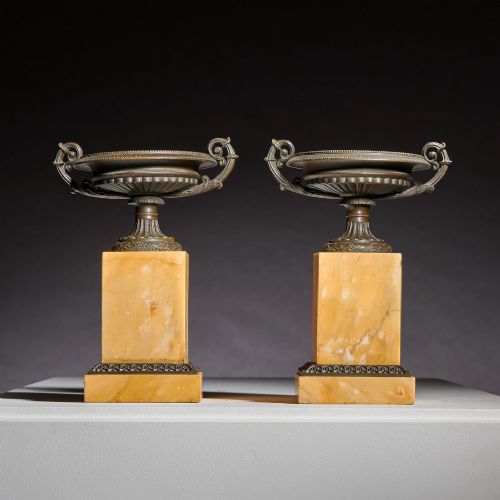
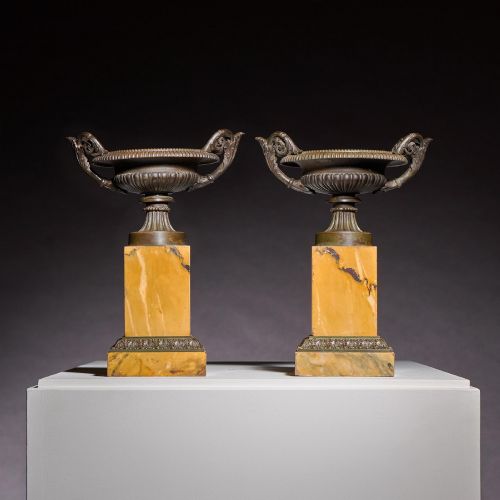
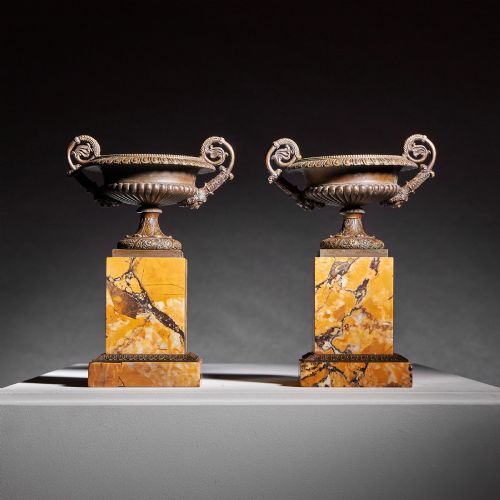
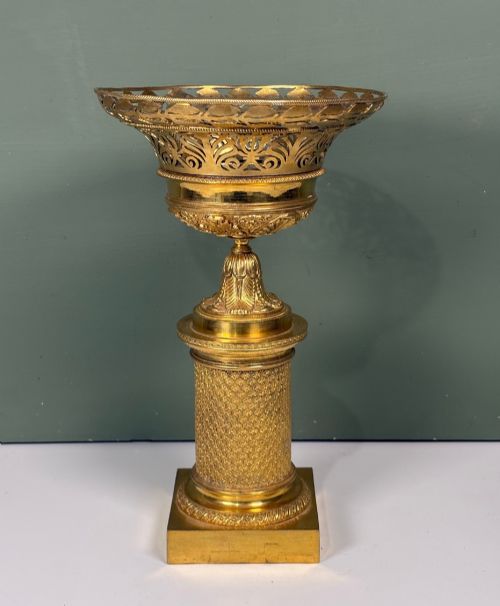
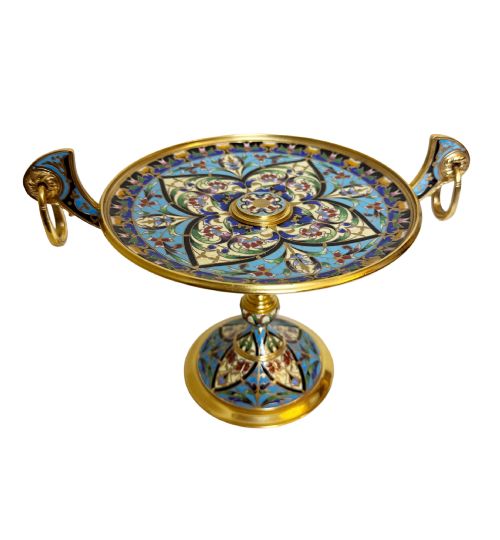
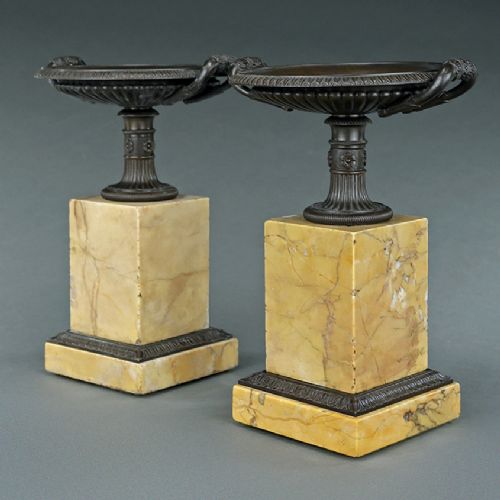
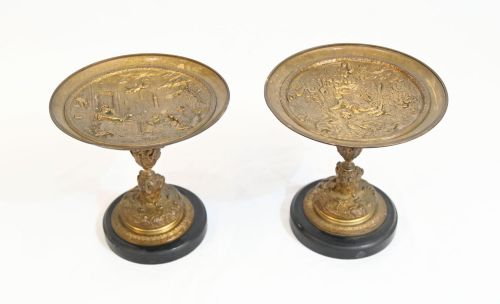
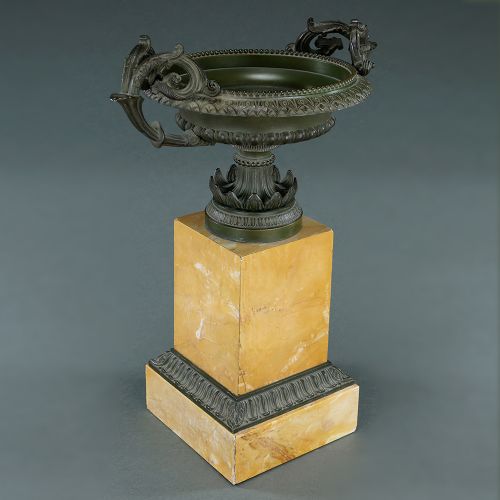
Metal tazza bowls combine a shallow circular dish raised upon a central stem and foot, functioning historically as centrepieces, comports, and display dishes. When searching for metal tazza bowls, the most common examples encountered on this page originate from nineteenth-century French workshops, often adhering to Grand Tour, Neoclassical, or French Empire styles.
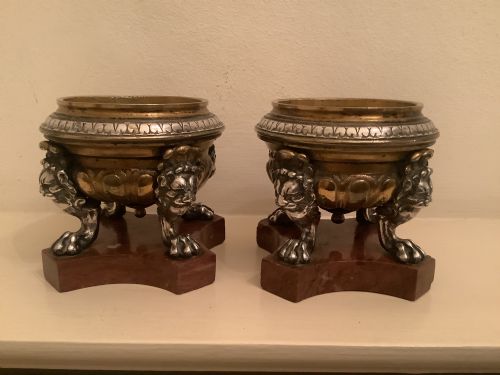
Many specimens pair patinated or gilded bronze with bases carved from Siena or rouge griotte marble. Variants stretch from heavy decorative vessels set with agate cabochons and Limoges enamel plaques to later copper and enamelled pedestal dishes produced during the Arts and Crafts movement.
Materials and construction
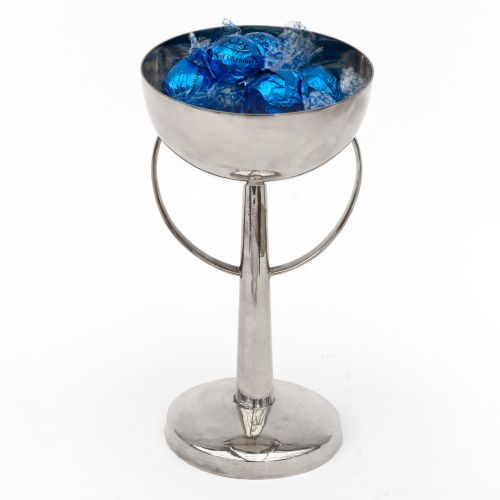
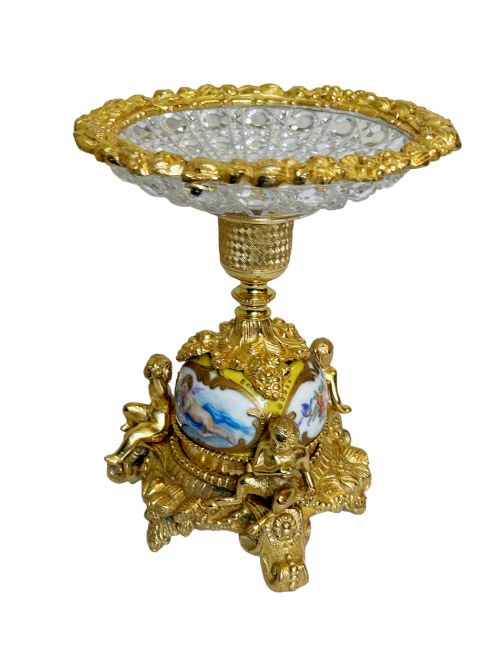
Combining mixed media was standard practice, mounting cast metal bowls onto turned marble plinths or integrating cut crystal dishes, enamel work, and set cabochons. Later Art Nouveau and Art Deco pieces incorporated pewter, chrome, and copper, reflecting shifts toward new alloys and hammered surfaces.
Metal Tazza Bowls Retail Price Guide 2026
Typical asking prices for metal tazza bowls among the pieces listed under this phrase on Sellingantiques today, from the lower quarter to the upper quarter. They describe what is for sale here now, not the wider market.
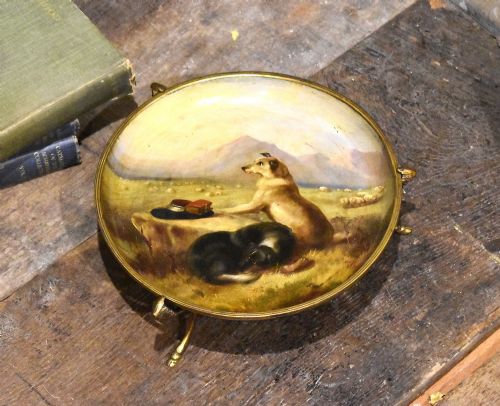
Victorian artisans occasionally added sculpted dogs to papier-mâché comports, ensuring your fruit bowl came with canine company.
Judging quality and execution
The distinction between ordinary and exceptional examples rests upon the crispness of the metal chasing and the depth of the casting. Superior pieces display sharply rendered details on figures and foliage without softness or blurry edges.
Material selection and structural harmony also dictate worth, distinguishing heavy integrated marble bases and finely hand-applied enamels from simpler plated items. A balanced proportion between the dish and the pedestal marks the better-resolved designs.
Christofle Paris·WMF·Orivit
The Metal Tazza Bowls Glossary
- Tazza
- An Italian term for a shallow bowl or cup mounted on a stem and foot. It serves primarily for display or serving fruit.
- Ormolu
- Gilded bronze produced by applying a mercury and gold amalgam to a bronze base. This technique creates a rich golden finish characteristic of French decorative arts.
- Champlevé
- An enamelling technique where troughs are dug into a metal surface and filled with vitreous enamel before firing. The surrounding metal lines frame the coloured design.
- Grand Tour
- A cultural journey undertaken by wealthy young Europeans in the eighteenth and nineteenth centuries. Souvenirs included miniature bronzes and classical tazzas modelled after ancient ruins.
- Comport
- A decorative stand or elevated dish used historically for serving dessert at the table. It shares a similar pedestal form to the tazza.
Metal Tazza Bowls: Frequently Asked Questions
What were metal tazza bowls used for?
Historically, these footed vessels functioned as table centrepieces for serving fruit, sweetmeats, or bonbons during formal meals. They also served purely decorative purposes on sideboards and libraries.
Over time, their elevated stature made them focal points in domestic interior displays, highlighting the craftsmanship of the metalworker.
How do I identify a Grand Tour tazza?
Grand Tour tazzas typically date from the nineteenth century and draw direct inspiration from classical Greek or Roman antiquities. They frequently combine patinated bronze with coloured marble bases.
These souvenir pieces were brought back by travellers visiting archaeological sites in Italy and often reflect neoclassical architectural motifs.
Are these pieces made of solid gold or bronze?
Standard metal tazza bowls are cast in bronze, brass, copper, or pewter rather than precious solid metals. Many bronze examples feature fire gilding or ormolu finishes.
Silver-plated and gilded surfaces provide the appearance of precious metal while maintaining the structural rigidity required for a heavy pedestal bowl.
How should I clean my metal tazza?
Maintenance depends entirely on the specific metal and finish of the bowl. Gilt bronze and patinated surfaces require only a gentle dusting with a soft dry cloth.
Harsh chemical polishes must be avoided, as they can strip away original gilding, patination, or delicate enamel work.