





Metal Shop Counter
These metal shop counter items are practical containers and implements from past retail environments, offering robust utility and characterful period presence for contemporary interiors.
Metal Shop Counter
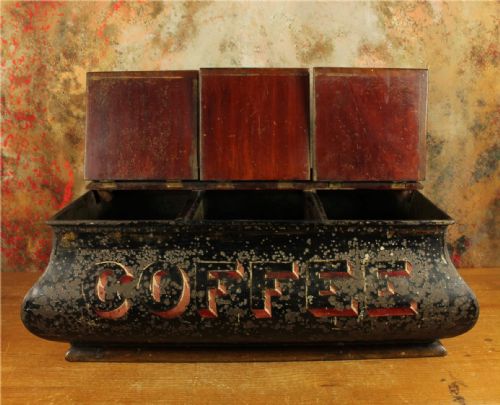
When searching for a metal shop counter, buyers encounter a diverse selection of mercantile fixtures and storage containers spanning the nineteenth and twentieth centuries. These pieces originate from various commercial settings, including traditional grocery stores, cafes, and tobacconists, reflecting the practical needs of past retail trade.
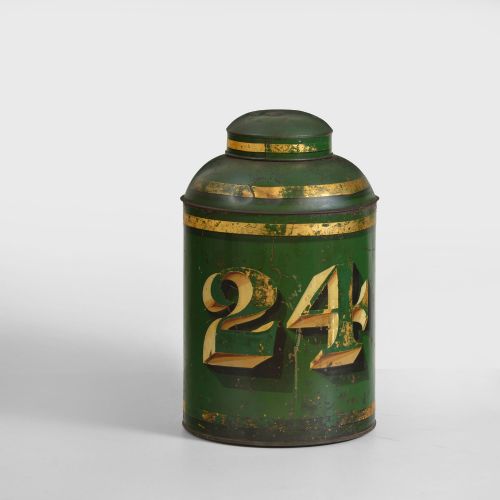
The items found within this category range from large display counters with aluminium frames to smaller utilitarian accessories such as tea canisters, storage boxes, weighing scales, and cash registers. Among these, storage tins, tea canisters, and shopkeeper scales appear most frequently in the current selection.
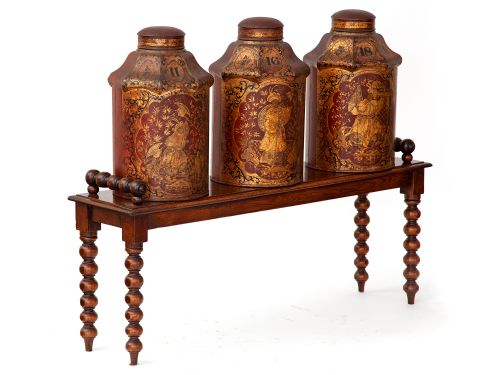
Stylistic influences vary significantly, touching upon Victorian taste, Edwardian design, Art Deco, and French industrial aesthetics. Certain pieces also incorporate decorative elements like Chinoiserie motifs or pagodas, demonstrating how commercial equipment often combined utility with visual appeal.
Materials and construction methods
Construction relies heavily on durable metals such as iron, brass, aluminium, and tinplate, frequently paired with secondary materials like wood and glass. Toleware items employ painted or japanned metal surfaces, sometimes embellished with gold leaf decoration to simulate lacquerwork.
Functional hardware and structural elements utilise cast iron, chrome, and copper, particularly evident in balance scales and cash registers. Surface finishes include original painted decoration, patinated brass rims, and metallic plating suited to heavy daily use in retail premises.
Metal Shop Counter Retail Price Guide 2026
Typical asking prices for metal shop counter among the pieces listed under this phrase on Sellingantiques today, from the lower quarter to the upper quarter. They describe what is for sale here now, not the wider market.
Listings feature materials spanning toleware, tinplate, aluminium, brass, copper, and glass, alongside nineteenth and twentieth-century periods.
Distinguishing quality in mercantile pieces
Quality in these items rests upon the survival of original surface decoration, such as hand-applied gilt Chinoiserie motifs or period painted finishes, alongside the integrity of the base metal. Pieces retaining their authentic patination and maker markings command greater interest than those with compromised surfaces.
Mechanical and structural soundness also defines the better examples, whether concerning the precision of balance scales, the smooth operation of cash register mechanisms, or the solid construction of frames and storage compartments.
The Metal Shop Counter Glossary
- Toleware
- Painted or japanned metalware, usually tinplate, often decorated in imitation of Asian lacquer. This technique was widely utilised for decorative storage boxes and tea canisters.
- Tinplate
- Iron or steel sheet coated with tin to prevent rusting. It served as the primary material for durable shop storage tins and containers.
- Japanning
- A type of European finish that emulated Japanese lacquer by applying layers of dark varnish and gold leaf. It is frequently seen on nineteenth-century shop canisters.
- Chinoiserie
- The European interpretation and imitation of Chinese and East Asian artistic traditions. This style appears on tea canisters through painted landscapes and figures in gold.
- Balance scales
- Weighing devices operating with a fulcrum and two pans. Shopkeeper examples often feature robust brass and iron construction for commercial precision.
Metal Shop Counter: Frequently Asked Questions
What were metal shop counter items used for?
Merchants utilised these objects for storing dry goods like tea and tobacco, weighing produce for customers, and transacting sales at the till. They formed the everyday working infrastructure of nineteenth and early twentieth-century shops.
Over time, these functional items transitioned from active commercial use into decorative and practical pieces suitable for modern domestic storage and display.
How do I identify a Victorian piece?
Victorian items often display traditional materials such as heavy brass, iron, and hand-decorated toleware with gilt Chinoiserie motifs. Stylistic cues draw heavily on nineteenth-century manufacturing techniques and classical or ornate retail designs.
Examining the construction methods, fasteners, and wear patterns helps confirm the nineteenth-century origin of scales, canisters, and storage boxes.
How do I clean and care for painted toleware?
Painted toleware requires gentle maintenance using a dry or barely damp soft cloth to preserve the delicate surface decoration and gold leaf. Avoid abrasive cleaners and excessive moisture, which can damage the historic paint layers.
Keeping these pieces away from direct sunlight and humidity ensures the original finishes remain stable for years to come.
How can I tell Art Deco items apart?
Art Deco pieces from the twentieth century typically feature streamlined metallic frames, chrome plating, and geometric forms. Items such as cash registers and display counters from the nineteen-thirties showcase this modern industrial shift.
In contrast to nineteenth-century ornamentation, Deco design prioritises clean metallic lines, smooth operation, and functional symmetry.