


Metal Reading Stand
These metal reading stand pieces bring practical height and adjustable utility to daily book use, offering sturdy construction.
Metal Reading Stand
A metal reading stand covers a range of adjustable floor lamps, standard lamps, book stands, and lecterns encountered across nineteenth-century and early twentieth-century periods. Buyers searching for a metal reading stand typically find adjustable floor-standing designs, reading lamps, and occasional book holders produced in varied revival and modernist styles.
The selection on this page draws heavily from Victorian, Edwardian, and Art Deco eras, alongside Arts and Crafts and Gothic Revival aesthetics. Forms vary from telescopic oil lamps and scroll-arm floor lights to revolving magazine racks, bookends, and continental lecterns.
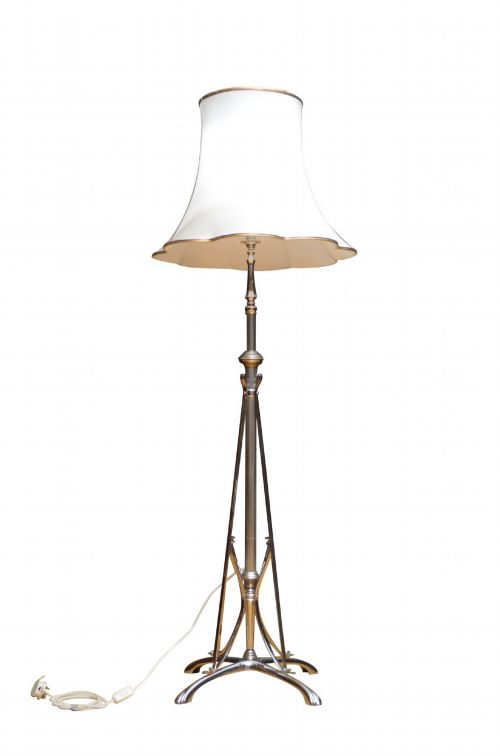
Origin details span British workshop creations to Swedish neoclassical pieces and continental European examples. The predominant forms utilise telescopic mechanisms or adjustable arms designed for targeted illumination or holding volumes at comfortable reading angles.
How they were made
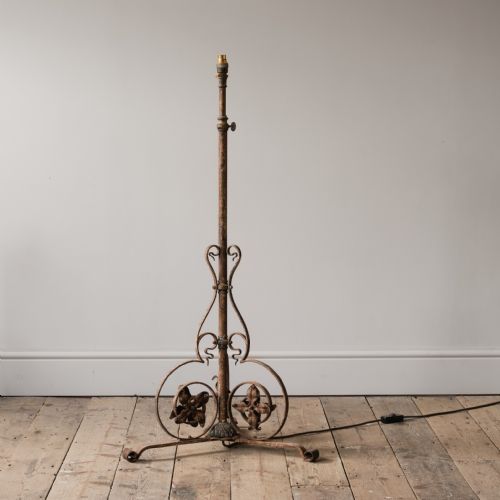
Makers utilised durable metals such as brass, copper, cast iron, and wrought iron, often combining metals to achieve structural strength and decorative contrast. Blacksmith-made pieces demonstrate hand-forged iron work with mechanical adjustment screws.
Foundry techniques allowed for the creation of heavy cast iron bases and solid brass mountings, while bronzed finishes and polished surfaces provided aesthetic appeal. Wiring and electrical conversion appeared later in pieces originally designed as telescopic oil lamps.
Materials across these listings include brass, wrought iron, copper, bronze, cast iron, and chrome, paired occasionally with alabaster and onyx.
What varies in quality
Quality rests in the precision of the mechanical adjustments, the weight and stability of the base, and the integrity of the metal joints. Superior examples feature smooth telescopic action, well-cast brass elements, and substantial wrought iron or cast iron foundations that support heavy arms without listing.
Finishes also separate standard production from finer workshop output, where hand-beaten copper, careful patination, and combined materials like onyx or alabaster indicate higher ambition.
The Metal Reading Stand Glossary
- Telescopic
- An adjustable mechanism allowing vertical height extension through nested sliding tubes. This permits the lamp or stand to be raised or lowered depending on the user's seating arrangement.
- Scroll arm
- A curved decorative metal bracket shaped like a scroll, often supporting a light fitting or reading attachment. It adds ornamental fluidity to rigid metal structures.
- Lectern
- A slanted reading desk or stand designed to hold books or notes at an ergonomic angle for a standing speaker or reader. They appear in brass, iron, and wood across various periods.
- Arts and Crafts
- A design movement prioritising traditional craftsmanship, visible construction, and honest materials over mass-produced ornamentation. Pieces from this style often display straightforward hand-finished metalwork.
- Gothic Revival
- An architectural and decorative style drawing inspiration from medieval forms, featuring pointed arches, heavy ironwork, and structural solemnity. It heavily influenced nineteenth-century metalwork.
Metal Reading Stand: Frequently Asked Questions
What is a metal reading stand?
A metal reading stand generally refers to adjustable floor lamps, book stands, and lecterns designed to hold reading material or provide directional light.
These pieces combine functional mechanics like telescopic stems with durable materials such as brass, iron, and copper.
How do I adjust the height?
Many of these pieces utilise a telescopic mechanism or an adjustable arm held by a thumbscrew or collar.
Loosening the fastener allows the upper shaft to slide vertically before securing it at the desired reading height.
Were these originally electric?
Earlier examples, particularly nineteenth-century telescopic standards, were originally built as oil lamps before being converted to electricity later.
Later Edwardian and Art Deco pieces were frequently manufactured specifically for electric illumination.
Where were they used?
These stands found placement in libraries, studies, and drawing rooms where adjustable lighting or book support was required.
Heavier lecterns and book stands served institutional or domestic reading purposes alike.
How do I date a metal stand?
Dating relies on stylistic markers such as Art Nouveau curves, Victorian brass casting techniques, or Arts and Crafts forging methods.
Mechanical construction details and material combinations also help place a piece within the nineteenth or early twentieth century.