
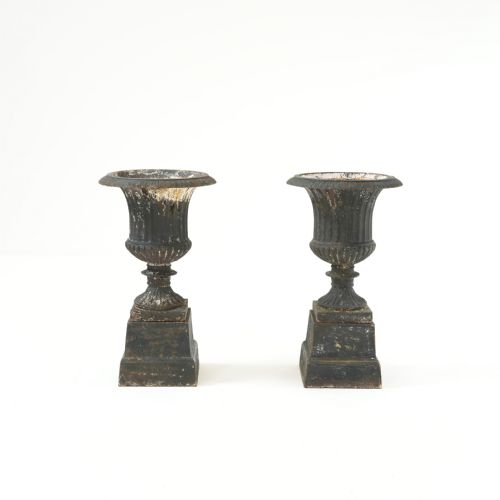


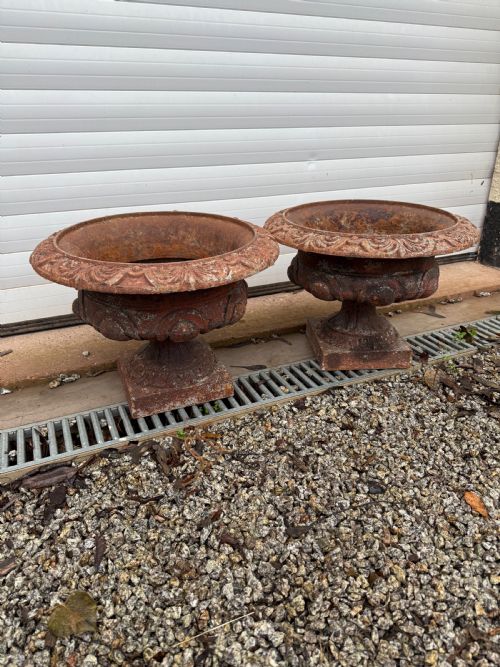


Metal Plant Pot Pair
These matching pairs of metal plant pots bring instant symmetry and architectural structure to an interior or a garden.
Metal Plant Pot Pair
A metal plant pot pair comprises two matching vessels designed to hold greenery, spanning forms from classic garden urns and campana shapes to domestic cachepots and jardinières. These twin containers originate across the nineteenth and twentieth centuries, taking influence from Victorian, Edwardian, and Neoclassical aesthetics.
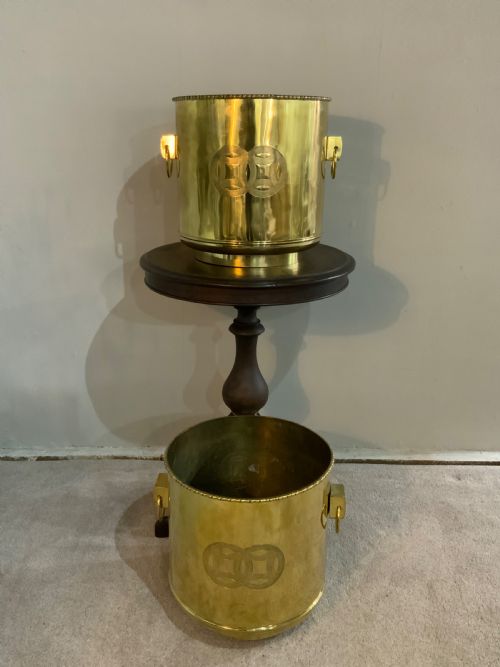
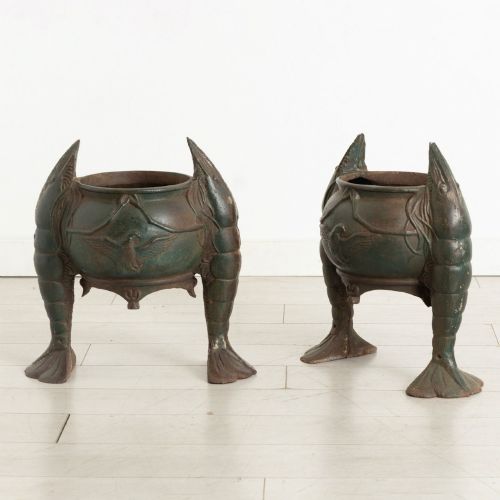
The domestic interior welcomes polished brass vessels and embossed dinanderie, while outdoor spaces lean towards heavy cast iron urns and zinc planters. Buyers seeking balance often select these paired objects to flank a doorway, fireplace, or garden path.
Originating from diverse stylistic traditions including Chinese export, French baroque, and Arts and Crafts movements, these objects demonstrate functional horticulture intersecting with decorative design. Each matched set provides coordinated visual weight for displaying plants and floral arrangements.
How they were made
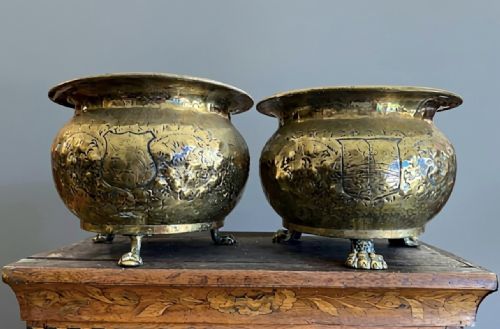
Foundry workers shaped heavy metals like cast iron and bronze using traditional moulds, producing robust urns and garden planters with crisp relief details. Artisans also hammered and embossed sheets of brass and copper, employing techniques such as dinanderie to create detailed surface patterns.
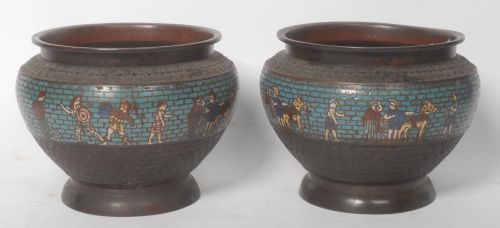
Makers combined mixed media by mounting brass vessels on marble bases or pairing wrought iron strapwork with copper bodies. Surface finishes varied from polished brass to champlevé enamel and gilt bronze or ormolu applications.
A pair of nineteenth-century watering cans stands ready, proving that even utilitarian garden tools occasionally deserve to be matched.
What varies in quality
Superior examples display crisp casting and deliberate chasing that keep decorative motifs sharp, whereas inferior pieces present softened details and blurred edges from worn moulds. The thickness and purity of the metal dictate the longevity and heft of the vessel.
Mastery of construction appears in the seamless joining of structural elements, robust handles, and stable bases that support heavy soil and plant loads without tipping.
The Metal Plant Pot Pair Glossary
- Cachepot
- An ornamental container designed to hold a plain flowerpot and catch drainage water. This French term translates literally as hide-pot.
- Campana urn
- A bell-shaped garden vessel with a flared rim and pedestal base. Originating in classical antiquity, this form became popular in nineteenth-century cast iron.
- Dinanderie
- Metalware made from beaten brass, copper, or bronze, often decorated with engraved or inlaid patterns. The name derives from the Belgian town of Dinant, a historic centre for brass founding.
- Jardiniere
- A large ornamental pot or stand for holding plants or flowers. These vessels sit on floors or tables to display interior greenery.
- Champleve enamel
- A technique where troughs or cells are carved into a metal surface and filled with vitreous enamel before firing. This method creates rich, colourful decorative patterns on bronze objects.
Metal Plant Pot Pair: Frequently Asked Questions
Can these metal plant pots stay outside year round?
Cast iron, zinc, and wrought iron withstand outdoor elements when properly maintained, though freezing water can crack saturated containers.
Brass, copper, and enamel pieces suit indoor settings or sheltered porches to protect their delicate finishes from weathering.
How do I clean brass and copper pots?
Dust regularly with a soft cloth and avoid abrasive scouring pads that strip away historic patinas. Warm soapy water removes dirt, while specialised metal cleaners restore brightness if desired.
Many collectors prefer leaving natural oxidation undisturbed on older garden pieces.
Do these planters have drainage holes?
Many interior cachepots and jardinières lack drainage holes to protect indoor furniture surfaces from water damage.
Garden urns and heavier outdoor planters often feature drainage openings to prevent waterlogging plant roots.
How do I tell Victorian cast iron from later pieces?
Victorian cast iron displays heavier metal gauges, deeper relief casting, and construction methods characteristic of nineteenth-century foundries. Surface textures and oxidation patterns provide further clues to age.
Later twentieth-century reproductions often feature simplified detailing and lighter weight construction.
What is the best way to style a pair?
Placing matching vessels symmetrically creates formal balance at focal points like entranceways, hearths, or garden gates. Using identical plants in both pots emphasises the coordinated design.
Staggering plant heights within matched containers adds visual depth while maintaining architectural symmetry.