



Metal Plant Container
A metal plant container brings texture and weight to a room, holding green foliage in vessels shaped by Victorian, Edwardian, and Arts and Crafts hands.
Metal Plant Container
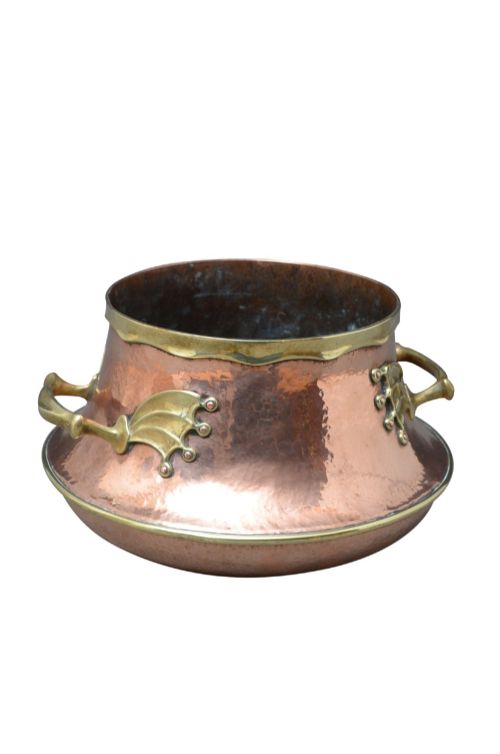
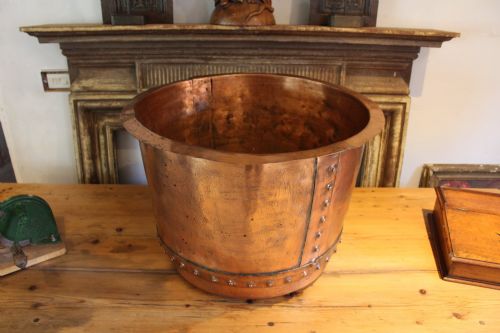
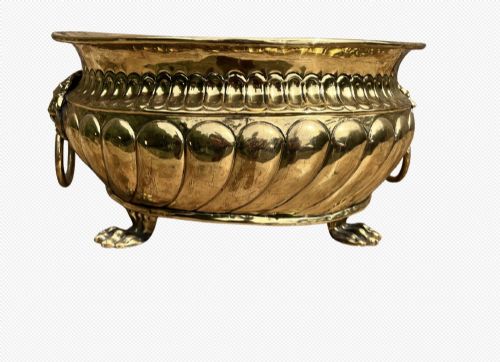
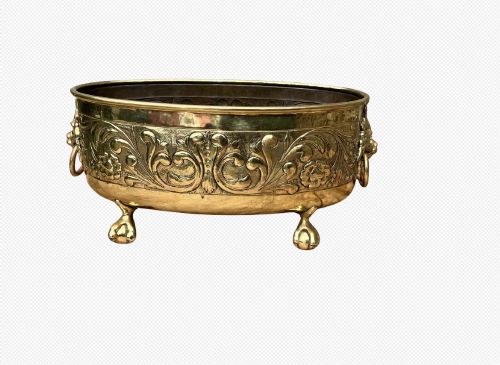
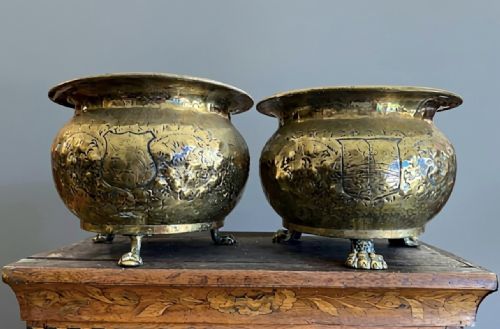
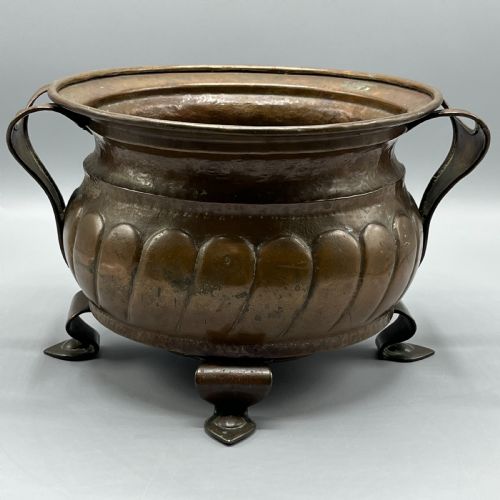
A metal plant container serves as a watertight or decorative vessel for greenery, appearing on this page most frequently as a brass or copper jardiniere from the Victorian and Edwardian eras. These pieces range from simple nineteenth-century copper pots and cauldrons to heavy bronze examples and decorative French or Dutch designs.
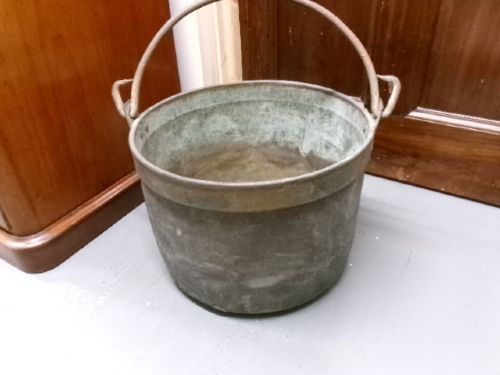
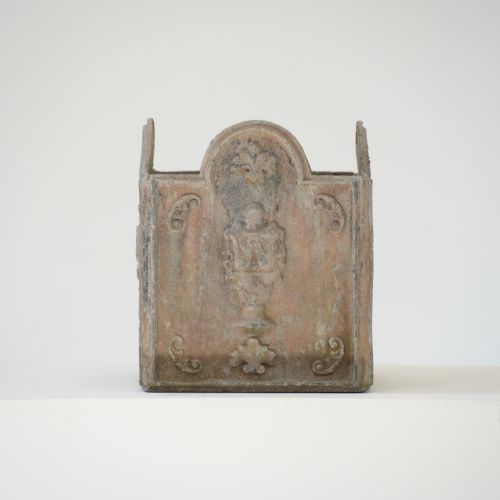
The forms span footed jardiniere vessels, coal buckets adapted for foliage, and heavy lead or zinc planters intended for interior or garden use. Makers applied styles from the Arts and Crafts and Art Nouveau movements, utilising fretwork, repoussé work, and animal mask handles to finish the bodies.
Materials and Construction
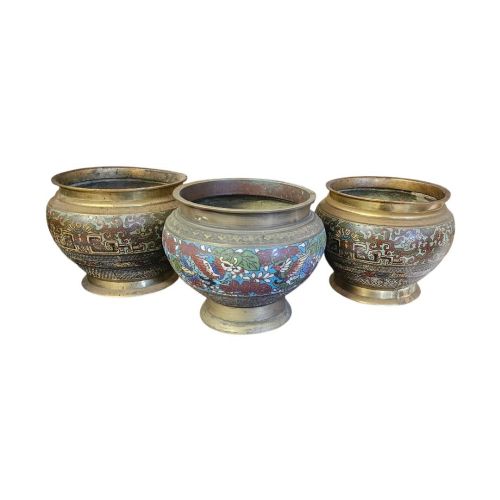
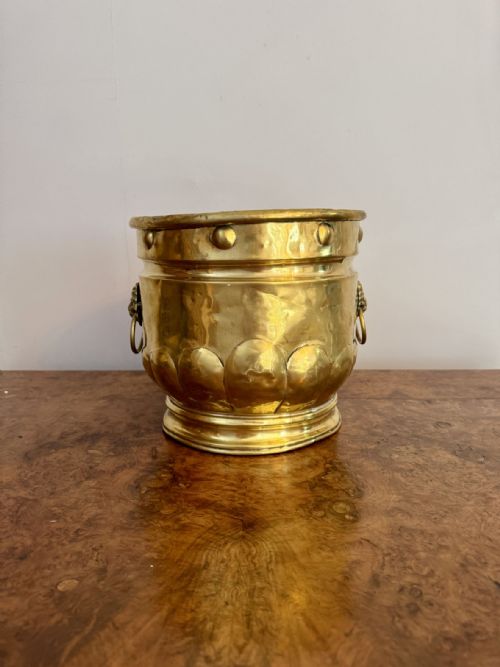
Craftsmen shaped sheet brass and solid copper by hand, joining seams with rivets or solder and often incorporating swing handles of iron or brass. Surface ornamentation relied on repoussé techniques, pressing designs outward from the reverse, alongside champleve enamel work and applied cast bronze elements.
Heavier outdoor and utilitarian pieces employed cast lead, zinc, and wrought iron strapwork, offering structural rigidity against damp soil and plant growth. Workshops also combined materials, pairing copper bodies with brass feet or handles to create contrast.
Listings feature brass, copper, bronze, zinc, and lead, spanning periods from Georgian and Victorian to Edwardian and the nineteen-thirties.
Evaluating Quality
Quality rests upon the thickness of the metal gauge and the crispness of any repoussé or fretwork decoration, distinguishing workshop pieces from mass production. Heavier brass and copper retain their structural integrity better over decades of holding damp earth and water.
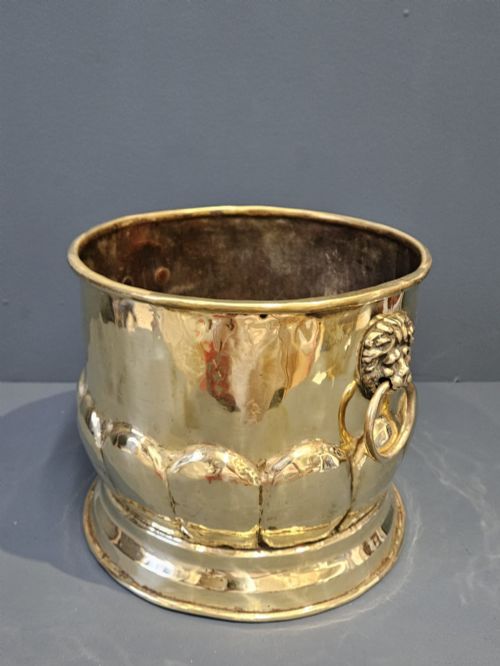
Attention to detail in handles, feet, and rim mounts elevates certain jardinieres, particularly where cast bronze lion masks or intricate strapwork are securely integrated. The harmony of the design and the integrity of the joins separate standard utility items from decorative examples.
J Sankey and Sons
The Metal Plant Container Glossary
- Jardiniere
- A decorative pot or stand for holding flowers or plants, usually designed for interior display. These ceramic or metal vessels often feature footed bases and decorative handles.
- Reprepousse
- A metalworking technique where the artisan hammers the metal from the reverse side to form a raised design on the front. This method creates textured surface patterns on copper and brass planters.
- Champleve
- An enamelling technique where troughs or cells are carved into the surface of a bronze object and filled with enamel powder before firing. Chinese bronze vessels frequently employ this decorative method.
- Fretwork
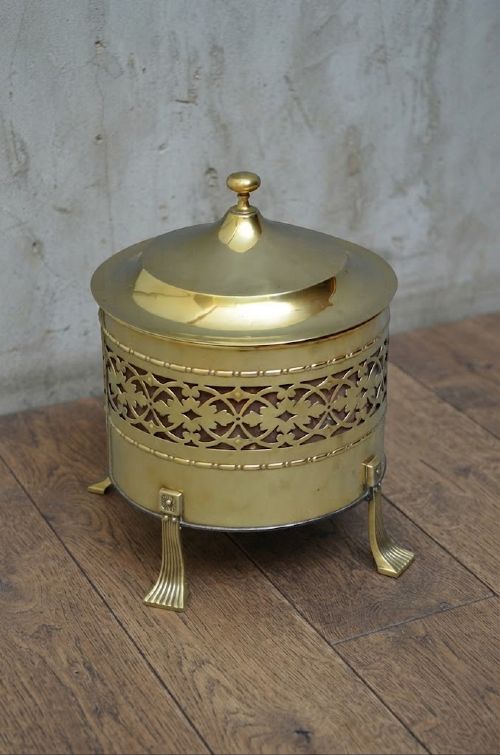
- An ornamental design created by piercing or perforating sheet metal or wood with intricate geometric patterns. Edwardian planters often utilise this openwork technique around the upper rim.
- Strapwork
- Flat bands of metal arranged in ornamental interlaced patterns across the exterior of a container. Wrought iron versions of this technique support heavy garden planters.
Metal Plant Container: Frequently Asked Questions
How do I clean a brass planter?
Wash the surface gently with warm soapy water and a soft cloth to remove dust and accumulated soil without damaging the underlying metal.
Avoid harsh chemical dips that strip away the aged patina built up over decades of handling.
Are these planters waterproof?
Many metal jardinieres were originally made to hold potted plants inside a secondary liner rather than direct soil and water.
Check the base and seams for soldered seals before placing damp earth directly into older copper or brass vessels.
How do I date a copper container?
Examine the construction marks, handle attachments, and the style of decoration, such as Art Nouveau floral motifs or Arts and Crafts hand-beating.
Nineteenth-century examples often feature hand-cut dovetail joints or heavy riveted seams rather than modern machine welding.
Can I use these containers outdoors?
Zinc, lead, and heavy wrought iron containers withstand outdoor conditions well and develop a stable weathering layer over time.
Brass and fine copper items suit sheltered interior spaces better to protect thin metal walls from frost and permanent corrosion.