

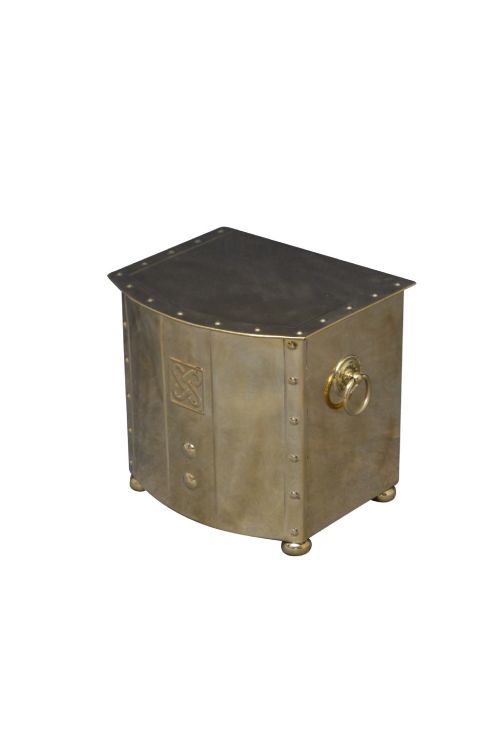


Metal Log Store
A metal log store brings sturdy utility and rich patinated metal into the hearth space, holding fuel with understated strength.
Metal Log Store
A metal log store serves as a practical vessel for hearth fuel while doubling as a striking decorative object. When browsing this selection, buyers encounter forms that span utilitarian containers, coal buckets, and repurposed agricultural or industrial vessels.
The objects listed range from Victorian and Edwardian periods through to the 1930s, encompassing styles such as Arts and Crafts, Industrial, and Rustic Farmhouse. These domestic and utilitarian items were originally designed for holding coal or grain before finding new life as fireside fuel stores.
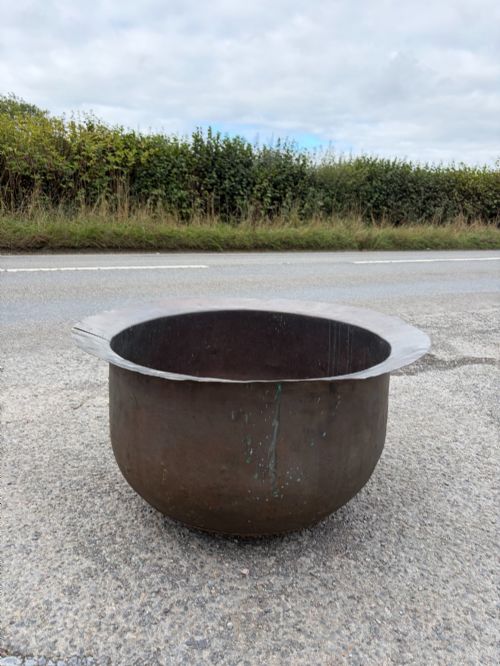
Most pieces originate from the nineteenth and early twentieth centuries, featuring robust construction meant to withstand heavy daily use. Alongside dedicated log bins and coal scuttles, buyers also find large copper pots, boilers, and planters utilised for holding wood.
Materials and Construction
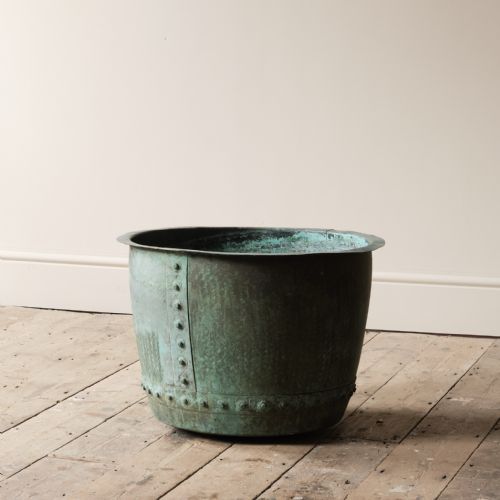
Makers relied primarily on copper, brass, iron, and wrought iron, often combining metals to achieve both structural strength and visual contrast. Rivets feature prominently across many pieces, joining heavy copper sheets and iron bands with visible, honest craftsmanship.
Working methods involved hand-beaming, panel-coopering, and riveting, producing thick-walled vessels designed to endure constant loading and movement. Galvanised steel and cast iron appear in more utilitarian or industrial examples, offering straightforward durability without decorative flourish.
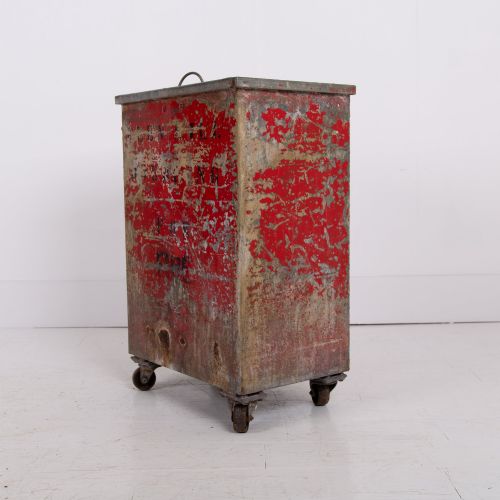
Object forms include coal bins, log baskets, fire bins on wheels, grain measures, cooking vessels, and converted garden planters.
Assessing Quality
Quality reveals itself in the thickness of the metal gauge and the integrity of the construction. Heavy-gauge copper and solid brass maintain their structural form under heavy loads of logs, whereas thinner metals tend to buckle or dent over time.
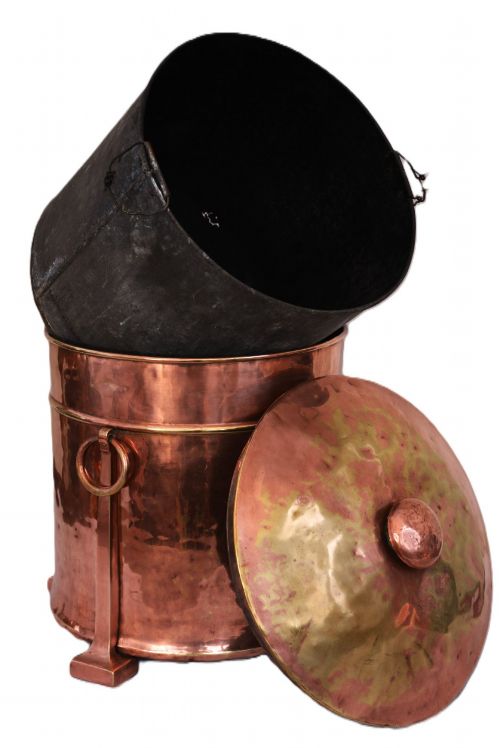
Artistry in hand-detailing separates standard utility items from finer examples. Hand-beaten surfaces, robust riveted seams, and well-integrated swing handles or wheeled bases demonstrate superior manufacturing standards from periods like the Arts and Crafts movement.
Richard Arkwright Masson Mills
The Metal Log Store Glossary
- Riveted
- Joined together using metal bolts hammered flat at the ends. This technique provides immense structural strength and creates a distinct decorative pattern along the seams of copper and iron vessels.
- Coal scuttle
- A traditional household container designed specifically for carrying and storing coal. Many antique examples now serve effectively as log stores by the hearth.
- Arts and Crafts
- A design movement valuing hand-craftsmanship and honest materials over mass production. Pieces from this style often display visible hammer marks and thoughtful metalwork.
- Toleware
- Japanned or enamelled metalware often decorated with painted folk art designs. These colourful containers add distinctive pattern and colour to a fireside setting.
- Planter
- A deep horticultural vessel used for growing plants. Large metal examples frequently find a second life indoors as spacious log baskets.
Metal Log Store: Frequently Asked Questions
What is a metal log store used for?
These pieces serve as functional containers for logs, kindling, and hearth fuel, keeping fireside debris contained while sitting neatly beside a fireplace.
Beyond pure utility, their patinated copper, brass, and iron surfaces introduce industrial texture and historic character into living spaces.
How do I clean an antique copper log bin?
Maintenance requires little more than dusting with a dry cloth and occasional gentle cleaning to preserve the natural patina built up over decades.
Harsh metal polishes should be avoided unless a bright finish is specifically desired, as collectors generally value the aged, darkened surface of old metal.
Are these pieces waterproof for outdoor use?
Many copper, brass, and galvanised steel vessels naturally resist rust and moisture, making them suitable for garden settings or covered porches.
Iron and wrought iron pieces require protection from continuous damp weather to prevent corrosion and preserve their structural integrity.
How can I tell a Victorian log store apart from an Edwardian one?
Victorian pieces often feature heavier cast construction and ornate riveted details, reflecting the robust manufacturing priorities of the nineteenth century.
Edwardian and later Arts and Crafts examples frequently showcase cleaner lines, hand-beaten surfaces, and lighter forms influenced by modernist design movements.