

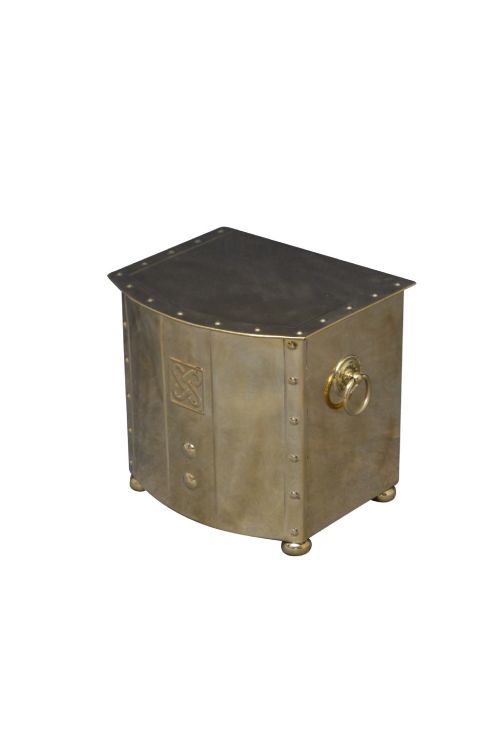


Arts and Crafts Log Bin
An arts and crafts log bin brings solid fireside utility together with hand-wrought metalwork from the turn of the twentieth century.
Arts and Crafts Log Bin
When you search for an arts and crafts log bin, you encounter fireside containers made to hold fuel next to an open hearth. These functional domestic vessels span the late nineteenth century through to the Edwardian period, often crossing over with coal boxes and umbrella stands in their form.
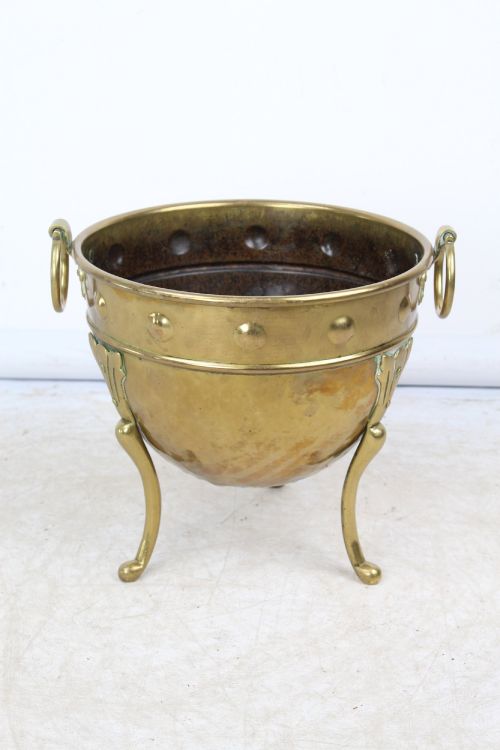
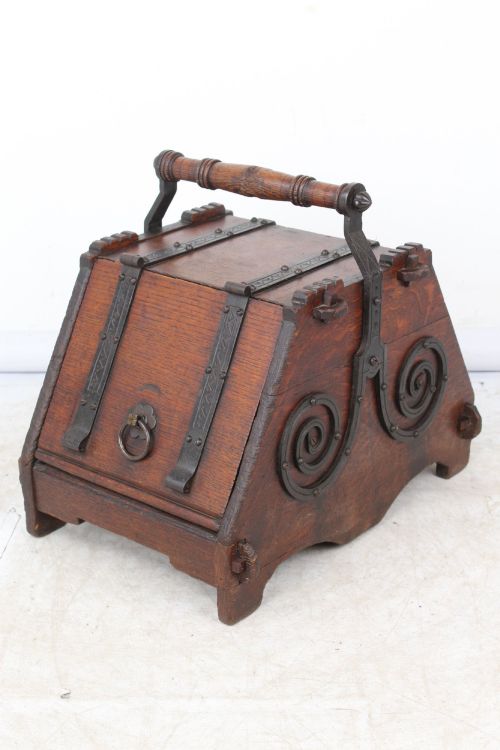
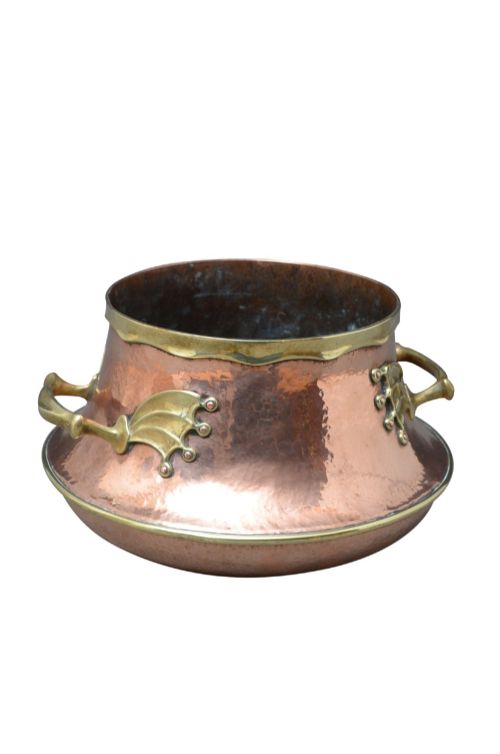
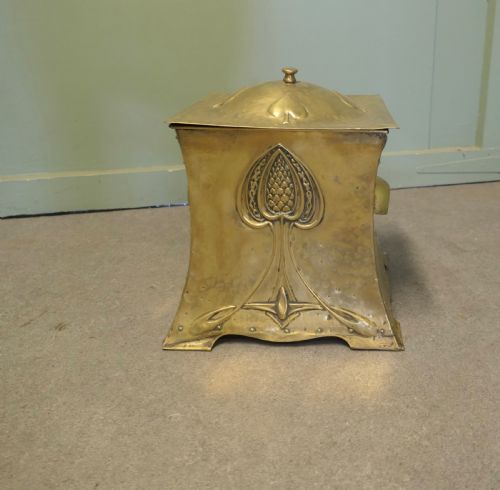
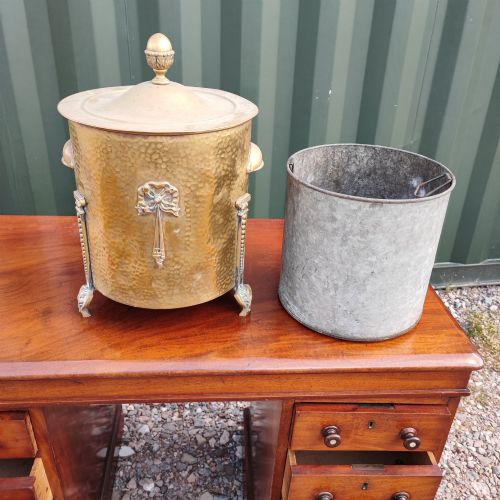
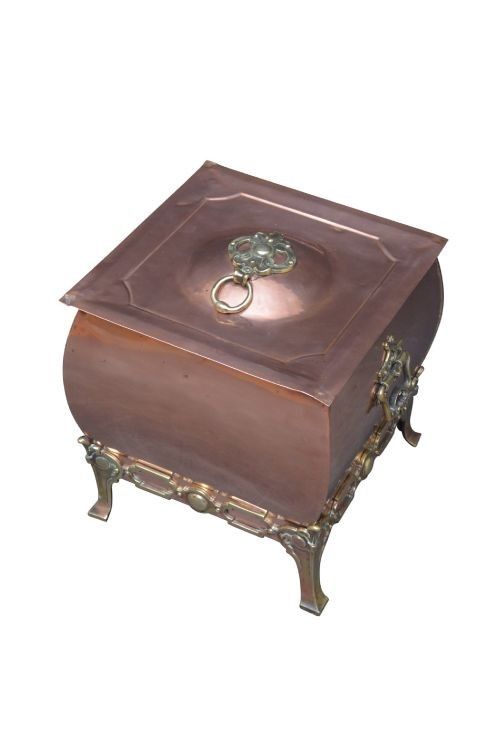
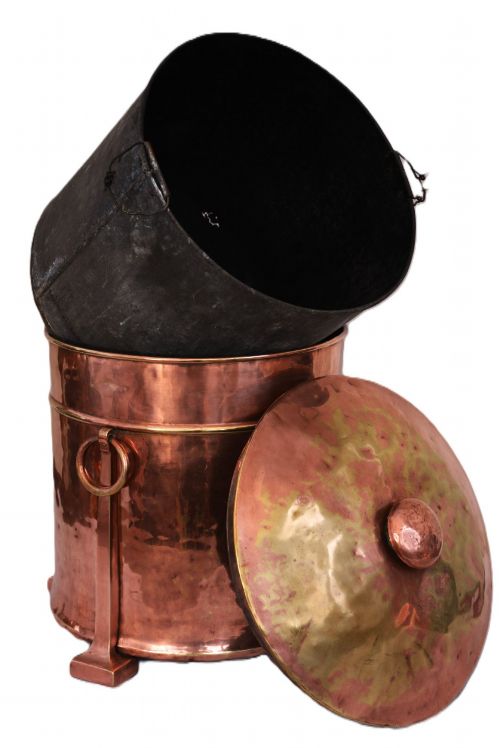
The versions most commonly met on this page are constructed from beaten copper and brass, frequently paired with iron stands or wooden bodies. They appear in circular bucket shapes, helmet forms, and lidded boxes, reflecting the domestic needs of period parlours.
Materials and Techniques
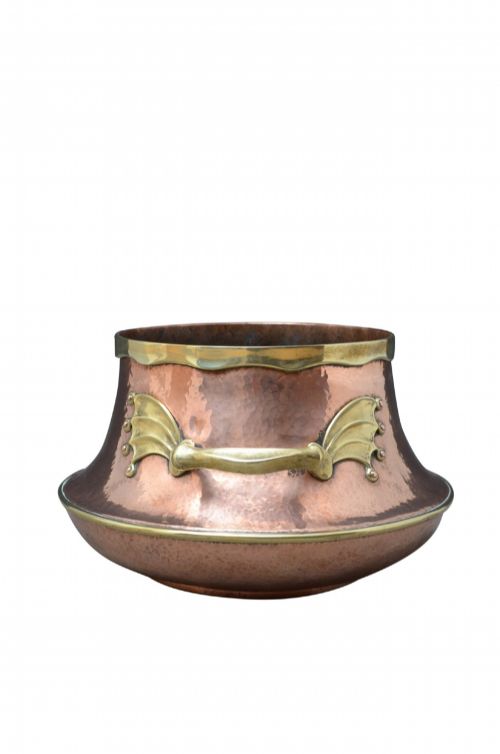
Makers shaped sheet copper and brass by hand, applying a hammer-beaten or planished finish that caught the fireside light. These metal bodies were often mounted into sturdy wrought iron frames or riveted together with visible joints that showed the work of the hand.
Oak and other timbers appear combined with metal panels, particularly in box forms where wooden carcases provide internal strength while decorative copper plates wrap the exterior with repoussé or stamped designs.
Assessing Quality
Quality rests upon the weight of the metal and the crispness of the hand-hammered surface. Substantial gauge copper and secure riveted or joined construction distinguish sturdy vessels from lighter, thinner containers.
Detailing on the metal panels, such as well-defined repoussé work, tavern scenes, or galleon motifs, elevates a standard container into a piece of decorative art. The integration of original iron frames and matching brass handles also marks out a superior example.
Henry Loveridge·Christopher Dresser·Liberty London
The Arts and Crafts Log Bin Glossary
- Repoussé
- A metalworking technique where the design is hammered into relief from the reverse side. This method allowed craftsmen to create raised floral, figurative, or geometric motifs on copper panels.
- Planished
- A surface finish achieved by hammering metal with a smooth-faced tool to harden it and leave a pattern of subtle facets. It gives hand-wrought copper its characteristic texture.
- Purdonium
- A specific type of coal box or bin, typically featuring a sloping front door and a shovel kept in a compartment at the side. They were designed to sit neatly by a Victorian fireplace.
- Jardiniere
- An ornamental pot or stand for plants and flowers. Many pieces originally made for this purpose share identical construction with log bins and are frequently used for storing wood today.
- Wrought Iron
- Iron that has been heated and worked with tools by a blacksmith rather than cast in a mould. It provides sturdy structural frames for heavy copper and brass vessels.
Arts and Crafts Log Bin: Frequently Asked Questions
What is an arts and crafts log bin used for?
These vessels were originally manufactured to store firewood, coal, or peat near an open hearth in a Victorian or Edwardian home. They kept fuel tidy and accessible while adding a decorative element to the fireside.
Today, they serve the same practical purpose beside wood-burning stoves, or function equally well as umbrella stands and indoor plant holders.
How do I clean a copper log bin?
Copper requires gentle maintenance to preserve its patination and character. Warm soapy water and a soft cloth remove everyday dust without disturbing the aged surface.
Avoid harsh abrasive cleaners or wire wool, as these strip away the historical finish and leave bright, unnatural scratches on the metal.
Are these bins waterproof?
Many metal bins feature riveted or soldered seams that hold dry logs, but older joints can develop minor gaps over decades of use. If you intend to use a metal bucket as a plant planter, check the interior first.
Placing a modern plastic liner inside prevents moisture from contacting the historic base and stops any residual soot from marking your floors.
How do I date an arts and crafts log bin?
Dating relies upon observing the construction methods, materials, and stylistic cues present in the piece. Pieces from the late nineteenth century often display Gothic Revival influences or heavy riveted construction.
Edwardian and later examples from around nineteen-ten frequently adopt simpler Art Nouveau or industrial aesthetics, sometimes marked by makers or retailers on the base.