






Oak Wood Log Bin
An oak wood log bin stands ready by the hearth to keep fuel dry and orderly, combining utilitarian timber with centuries of fireside craftsmanship.
Oak Wood Log Bin
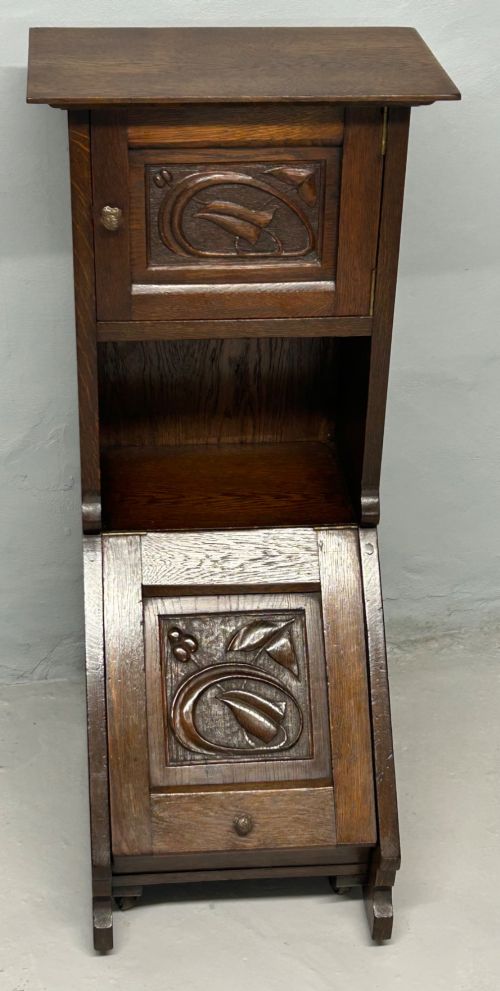
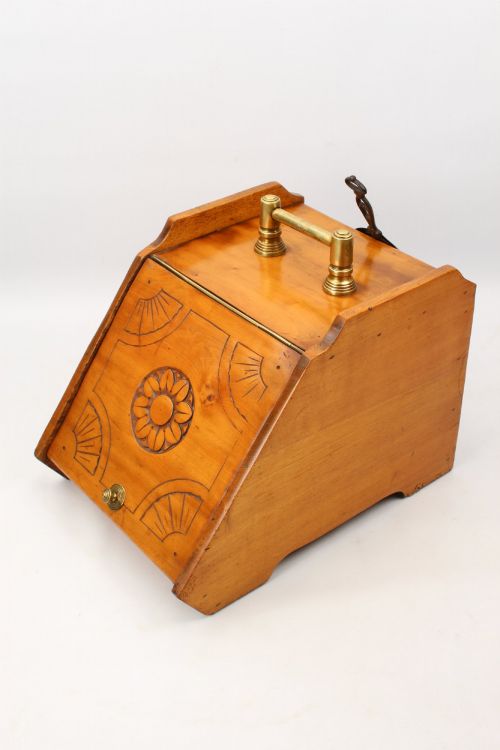
An oak wood log bin provides sturdy fireside storage for wood, peat, and coal, taking forms from coopered buckets to carved boxes. When searching for an oak wood log bin, a buyer encounters practical vessels dating from the eighteenth century through the Edwardian era, reflecting both rustic country traditions and formal domestic interior styles.
The pieces available span various regional origins and workshops, including English, Scottish, and French examples. Traditional fireside accessories range from simple lidded waste bins and chests repurposed for fuel storage to purpose-built coal scuttles and purdoniums.
Materials and construction
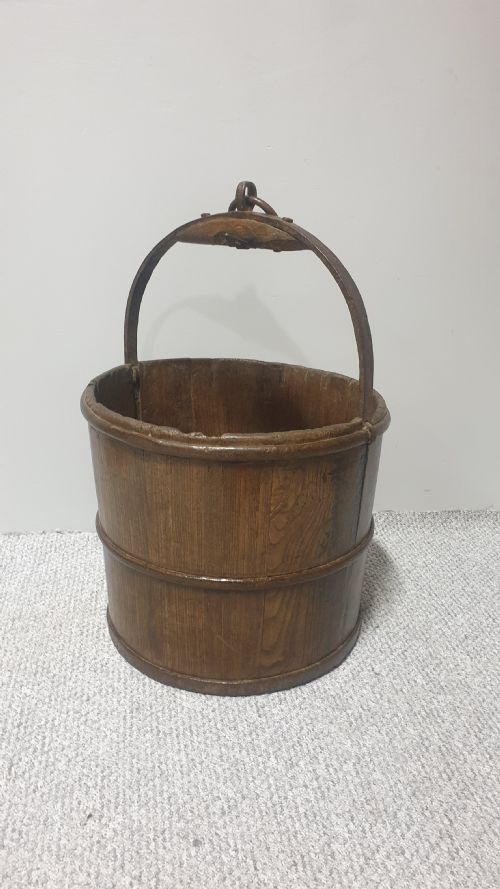
Makers constructed these fireside containers primarily from solid oak, sometimes combining fruitwood or mahogany accents to enrich the timber grain. Coopered construction appears frequently, using tightly fitted wooden staves bound by hoops of brass or iron to contain heavy loads of fuel safely.
Traditional joinery techniques including dovetailing and pegged joints give these boxes and chests their structural resilience. Metal components such as brass handles and iron bands provide reinforcement and easy lifting points for heavy loads of logs or coal.
Oak Wood Log Bin Retail Price Guide 2026
Typical asking prices for oak wood log bin among the pieces listed under this phrase on Sellingantiques today, from the lower quarter to the upper quarter. They describe what is for sale here now, not the wider market.
The listings on this site encompass Victorian, Georgian, and Edwardian periods, utilising oak alongside fruitwood, brass, and iron.
Evaluating craftsmanship and condition
Quality in an oak wood log bin rests upon the integrity of the timber selection and the precision of the joinery or cooperage. Finely fitted staves, secure metal banding, and robust handles indicate superior workshop standards designed to withstand heavy daily use by the hearth.
The depth of the timber's natural grain and the retention of original hardware distinguish more refined examples from simpler utility pieces. Patina accumulated through decades of domestic service further enhances the visual depth of the wood.
Liberty London
The Oak Wood Log Bin Glossary
- Coopered
- Constructed from curved wooden staves joined side by side and bound with metal hoops, much like a traditional barrel. This method creates strong, watertight, or dust-tight cylindrical vessels.
- Purdonium
- A specialised coal box or scuttle, typically featuring a sloping front lid and designed to hold household coal near the fireplace. These often incorporate a matching shovel stored within a side or back compartment.
- Fruitwood
- Dense timber harvested from fruit-bearing trees such as pear or apple, utilised by makers for contrasting details or smaller turned components. Its fine grain complements heavier oak structures.
- Patina
- The surface sheen and mellow coloration developed by wood and metal over long periods of handling and exposure to hearthside conditions. It serves as an indicator of age and genuine use.
Oak Wood Log Bin: Frequently Asked Questions
What is a coopered log bin?
A coopered log bin is built using curved wooden staves held together by tight metal bands, similar to barrel-making techniques. This construction provides exceptional strength for holding heavy loads of timber.
Such vessels often take cylindrical or tapered forms and typically feature sturdy handles to assist with carrying fuel to the hearth.
How do I date an antique log box?
Dating relies on examining the construction methods, tool marks left on the timber, and the style of any metal fittings or brass banding. Eighteenth-century and Victorian examples exhibit different joinery standards and wear patterns.
Hardware styles and wood preparation techniques further help distinguish Georgian pieces from later Edwardian or rustic country productions.
Were these bins used for coal or wood?
Fireside containers served multiple purposes depending on their internal capacity and whether they included liners or shovels. Some housed larger logs, while others functioned as coal scuttles and purdoniums.
Many designs accommodated whatever fuel was prevalent in the household, ranging from cut logs and blocks to peat and coal.