



Metal Jardiniere Container
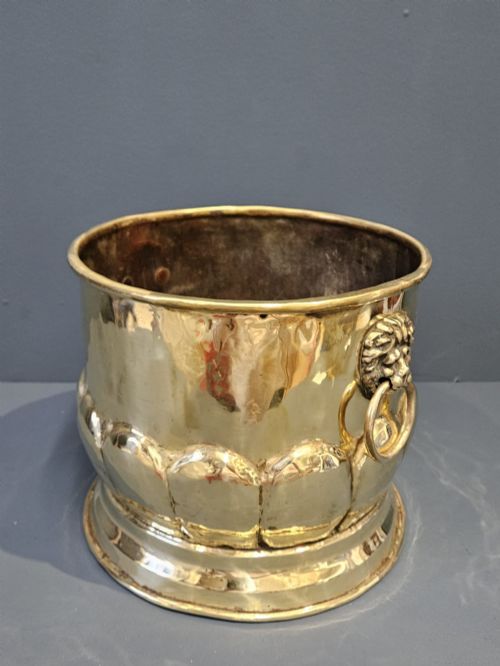
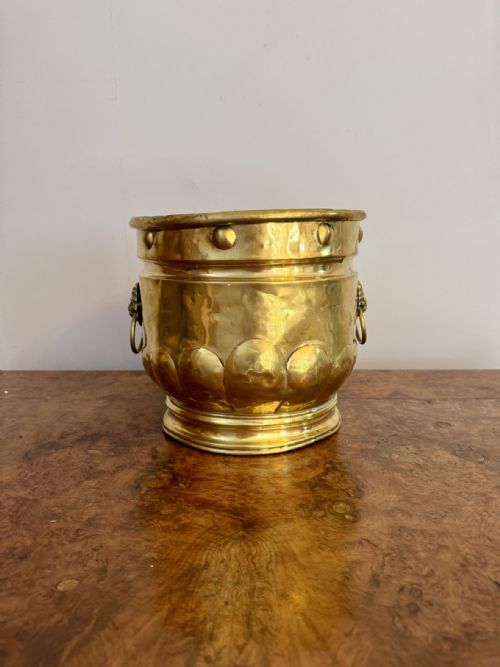
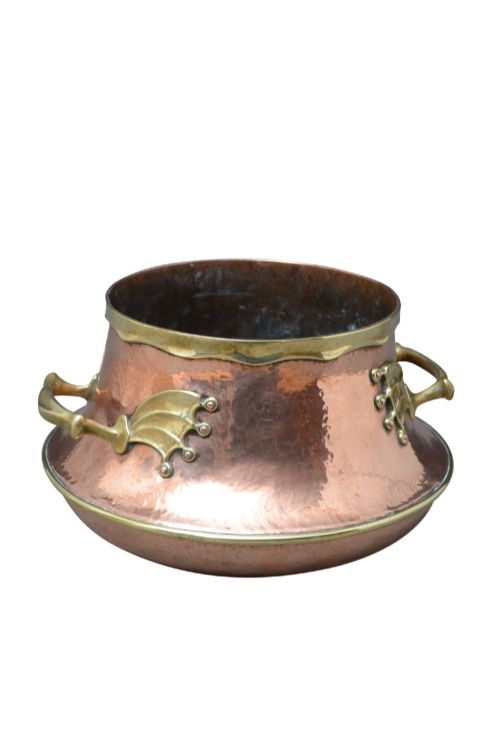
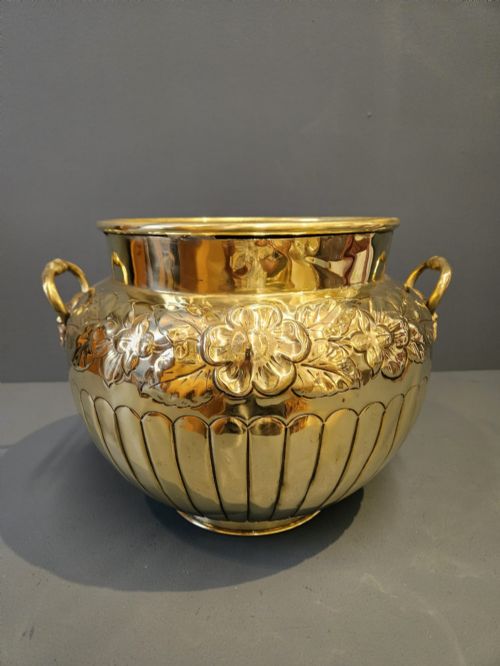
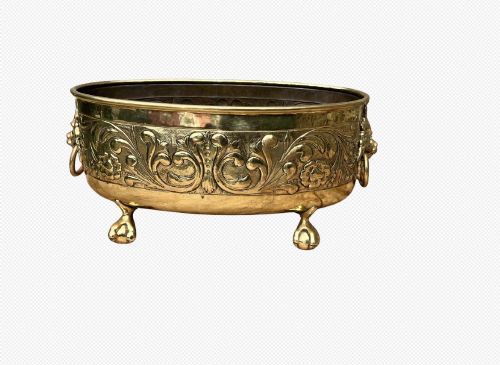
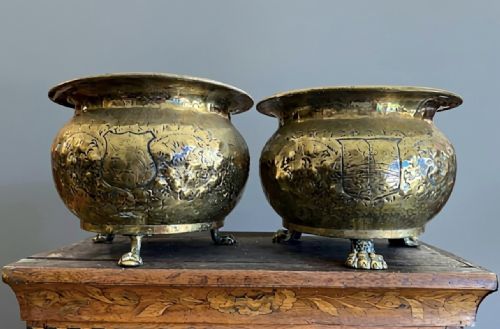
These metal jardiniere container pieces range from heavy Victorian brass vessels to hammered copper examples made to display indoor plants with distinction.
Metal Jardiniere Container
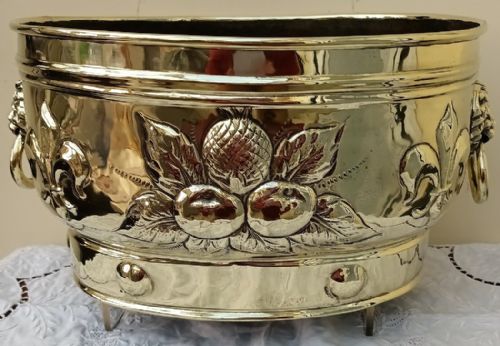
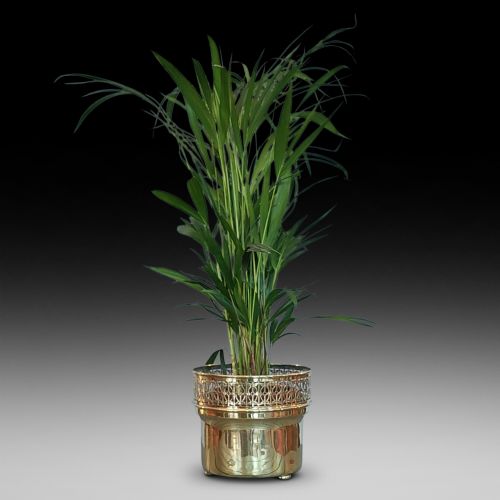
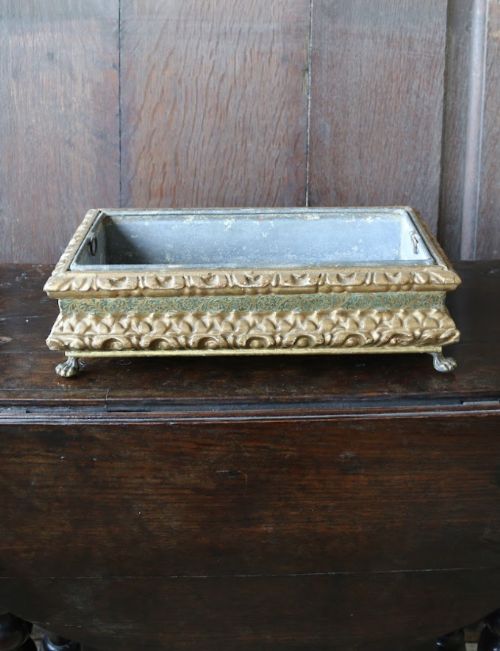
A metal jardiniere container serves as an ornamental vessel designed to hold potted plants and flowers within domestic interiors. The examples found here span centuries of metalwork, taking forms such as cylindrical planters, large log buckets, and decorative bowls.
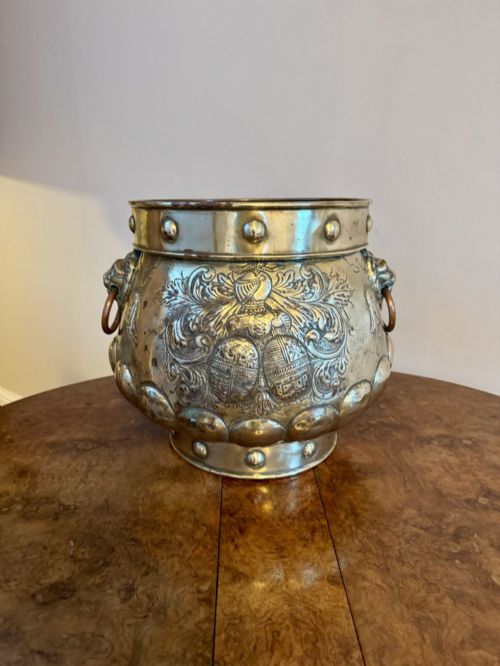
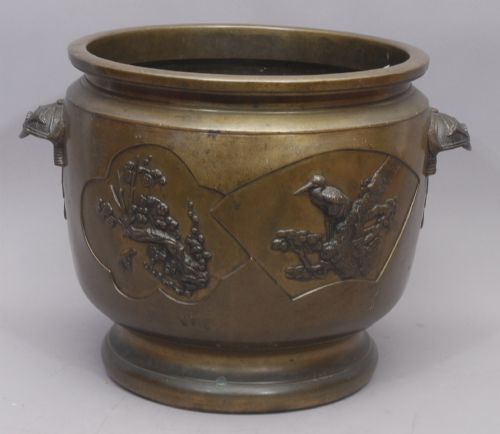
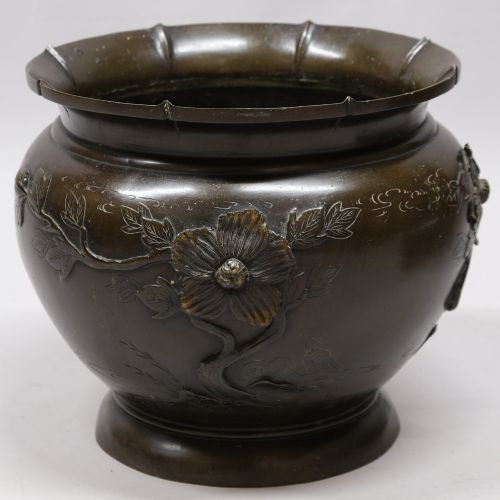
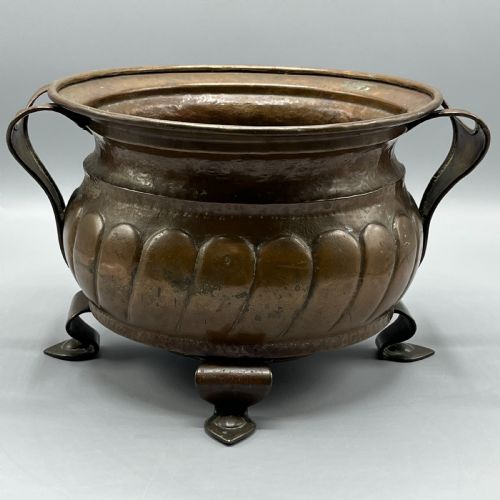
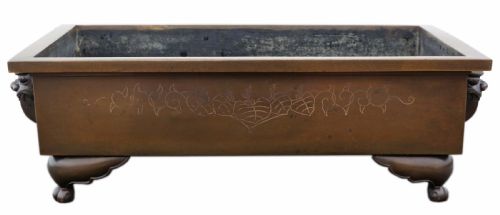
Victorian brass and copper iterations dominate the selection, often shaped with substantial handles or repoussé surface decoration. Alongside these British pieces, buyers encounter Japanese bronze vessels, Dutch brass planters, and Chinese champlevé enamel pieces.
While primarily created to house greenery, many of these containers double as decorative objects or log bins. Their sturdy construction in bronze, tin, and zinc allowed them to withstand moisture and heavy use across generations.
How they were made
Artisans constructed these vessels using sheet metal techniques, hammering copper and brass into cylindrical or rounded forms with joined seams. Workshops utilised heavy casting for bronze components like lion mask handles, feet, and decorative rims.
Surface ornamentation relied on repoussé and chasing, where metalworkers pushed and punched patterns from the reverse side to create raised motifs. Enamelling and pierced metalwork also appear, adding texture and colour contrast to the metallic bodies.
Metal Jardiniere Container Retail Price Guide 2026
Typical asking prices for metal jardiniere container among the pieces listed under this phrase on Sellingantiques today, from the lower quarter to the upper quarter. They describe what is for sale here now, not the wider market.
What varies in quality
The weight of the metal and the thickness of the walls dictate the structural integrity of each vessel. Finer items display crisp, deeply worked repoussé details rather than shallow, machine-pressed impressions.
The sophistication of the handles, feet, and decorative mounts distinguishes standard production items from masterwork creations. Patina and the preservation of original surfaces also influence the character of each piece.
J Sankey and Sons
The Metal Jardiniere Container Glossary
- Repoussé
- A metalworking technique where the artisan hammers the metal from the reverse side to form a raised design on the front. This method creates tactile, dimensional patterns across brass and copper surfaces.
- Champlevé
- An enamelling technique where troughs or cells are carved into the surface of a bronze base and filled with vitreous enamel powder before firing. The resulting coloured designs sit flush with the surrounding metal.
- Dinanderie
- A term describing medieval and later decorative brass, copper, and bronze objects originating from the Meuse Valley in Belgium and France. These items often include domestic vessels, cauldrons, and large bins.
- Suiban
- A shallow Japanese ceramic or bronze tray used to display stones or arrangement plants in water. These pieces often feature fine casting work characteristic of Japanese metalcraft.
- Planter
- A container used specifically for holding growing plants, distinct from a cut-flower vase. In metalwork, these often include inner liners or waterproof bases to protect the floor or furniture.
Metal Jardiniere Container: Frequently Asked Questions
What is a metal jardiniere container used for?
These vessels function primarily as decorative pots to hold indoor plants, ferns, or floral arrangements. Their waterproof metal construction protects household surfaces from moisture.
Historically, larger versions also served as log or peat bins beside fireplaces. Today, many owners use them empty as sculptural objects in hallways or living rooms.
How can I tell Victorian pieces apart from Arts and Crafts examples?
Victorian brass containers often feature ornate repoussé patterns, lion mask handles, and polished surfaces designed for formal parlours. They lean towards classical or revival motifs.
Arts and Crafts items, by contrast, emphasise the hand of the maker with visible hammer marks on solid copper bodies. Their designs are simpler, focusing on form and material honesty rather than excessive ornamentation.
Were these containers made to sit on the floor or tables?
Smaller cylindrical and footed vessels were designed for windowsills, tabletops, or mantelpieces. They held modest potted ferns and flowering plants.
Larger variations, including log buckets and heavy bronze bowls, sat directly on the floor beside hearths or in entrance halls to display substantial palms.