




Metal Hearth Surround
A metal hearth surround frames the fireplace neatly while protecting the room from stray embers, bringing both function and period character to a chimney breast.
Metal Hearth Surround
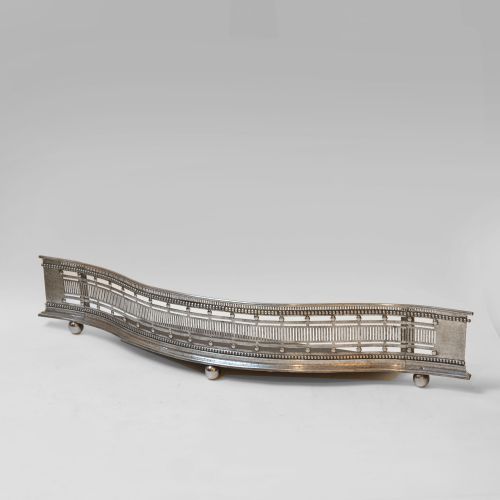
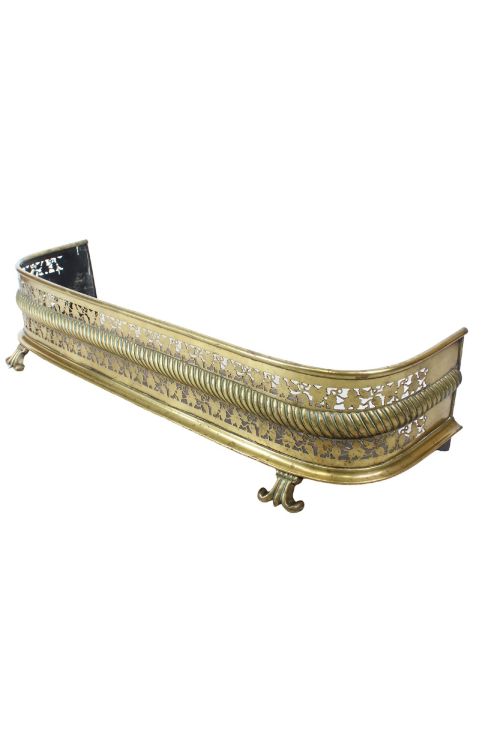
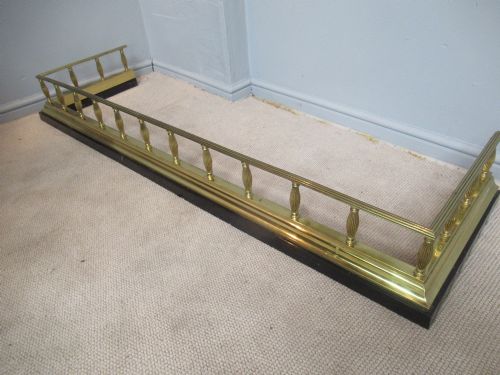
A metal hearth surround typically takes the form of a fender, curb, or fire front placed directly on the floor around the opening of a fireplace. When you search for a metal hearth surround, you encounter sturdy brass, steel, and iron barriers designed to contain logs and coal.
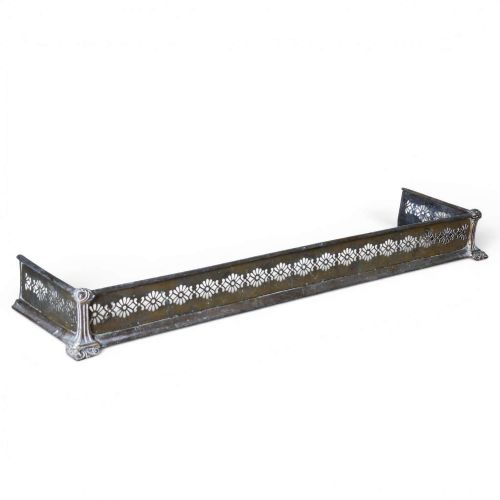
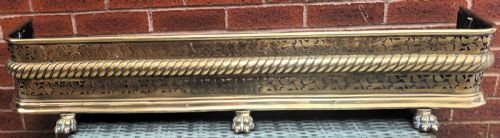
The selections span multiple eras, most notably the Georgian, Victorian, and Edwardian periods, alongside early twentieth-century designs. You will frequently find pierced brass frameworks, heavy steel curbs, and low club fenders topped with padded leather seats.
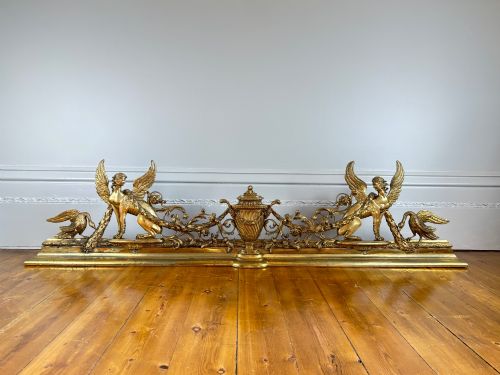
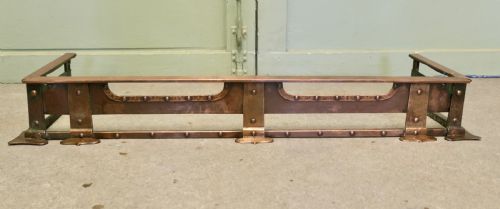
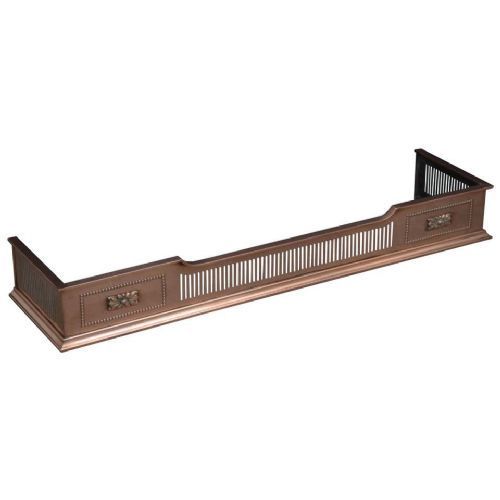
Many examples incorporate distinct stylistic movements such as Arts and Crafts beaten copper, Art Nouveau floral motifs, and Neoclassical revival symmetry. These items originate from country houses and town residences, serving as practical boundaries for open fires.
How they were made
Blacksmiths and metalworkers shaped these pieces using traditional methods of casting, forging, and hand-beating. Steel and wrought iron provided structural strength for heavy frames, while softer metals like brass and copper allowed for intricate piercing and embossing.
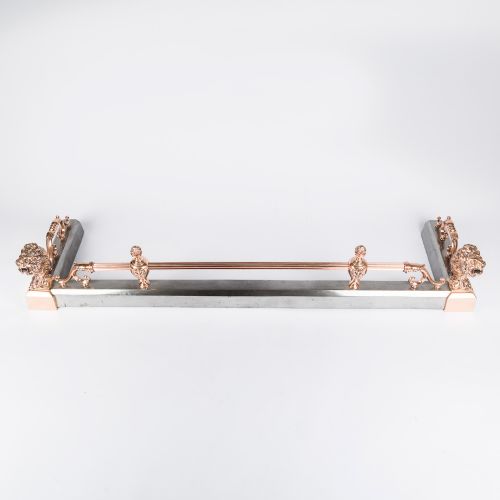
Decorative details such as flower pateras, dragons, and lions were cast separately or chased by hand before being affixed to the main body. Leather upholstery on club fenders was traditionally stitched and studded to the steel frame to create low fireside seating.
Some nineteenth-century club fenders were built extra long so gentlemen could warm their coat tails without blocking the entire fire.
What varies in quality
The distinction between standard production and exceptional work lies in the weight of the metal and the crispness of the hand-finishing. Thicker gauge steel, heavier cast brass, and deep, hand-punched copper work indicate superior craftsmanship.
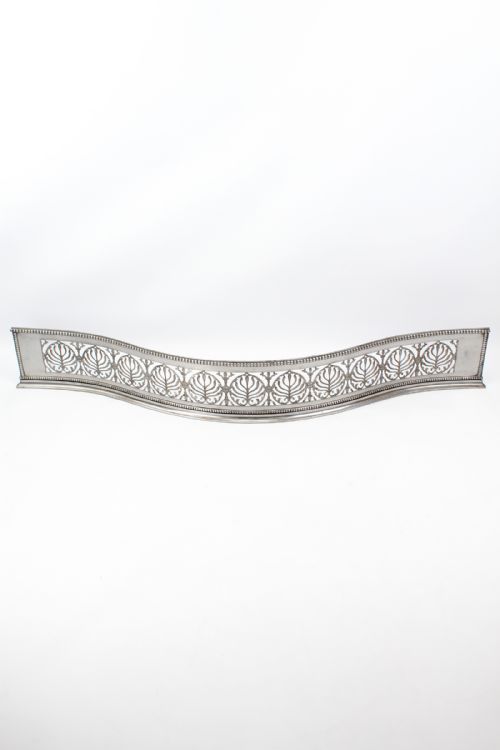
Artistry in the decorative elements separates ordinary hearth furniture from finer pieces. Sharply defined engravings, well-modelled cast mounts, and carefully proportioned bowfront or serpentine shapes demonstrate the maker's skill.
E F Caldwell New York·George Bullock
The Metal Hearth Surround Glossary
- Fender
- A low metal guard placed around the hearth to keep burning coals and ash from spilling onto the floor.
- Club fender
- A low, U-shaped hearth guard featuring upholstered leather seats on either side of the fireplace opening.
- Serpentine
- A curved shape curving outward in the centre and inward at the ends, often seen on Georgian steel curbs.
- Patera
- A circular ornamental disk carved or cast in relief to resemble a classical libation dish.
- Pierced brass
- Sheet brass that has been perforated with repetitive geometric or floral patterns to allow light through.
Metal Hearth Surround: Frequently Asked Questions
What is a club fender?
A club fender is a low hearth guard equipped with cushioned leather seats running along the sides. It allowed Victorians and Edwardians to sit comfortably right next to the warmth of the fire.
These pieces combine steel or brass frames with padded upholstery, often in shades of green or brown leather. They serve both as a protective barrier and as functional fireside seating.
How do I date a metal hearth surround?
Dating relies on identifying the prevailing decorative style, construction techniques, and materials used in the frame. Georgian pieces often feature polished steel serpentine curves, while Victorian examples frequently show pierced brass or heavy cast iron.
Arts and Crafts pieces from around nineteen hundred typically display hand-beaten copper with rivets. Edwardian and later pieces introduce simpler wire mesh designs or heavier industrial steel constructions.
Are these surrounds suitable for modern fireplaces?
Most antique fenders and curbs fit standard hearth dimensions, but measuring the depth and width of your floor space is essential. They sit directly on the floor around the hearth without permanent installation.
Whether used with a working open fire or an empty decorative grate, they anchor the fireplace visually. Ensure the internal dimensions match your hearth's footprint before placing one.
What is the difference between a fender and a curb?
The terms are often used interchangeably to describe low barriers placed around a hearth. Strictly speaking, a curb refers to the low stone or metal border defining the edge of the hearth.
A fender is typically a freestanding metal structure that sits within or just outside that border. Both serve the primary purpose of containing embers and defining the fireplace zone.