




Metal Coffer Storage
Metal coffer storage unites security and utility, offering robust historical chests that transform practical organisation.
Metal Coffer Storage
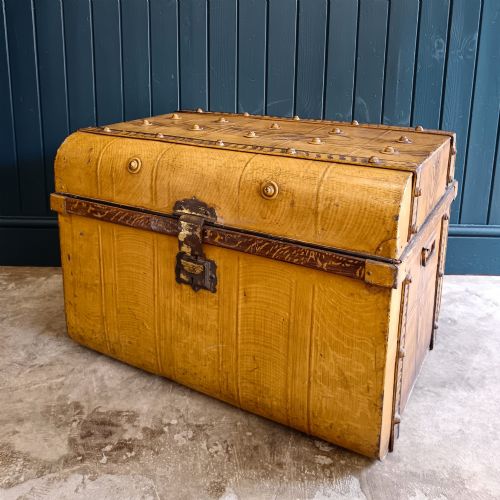
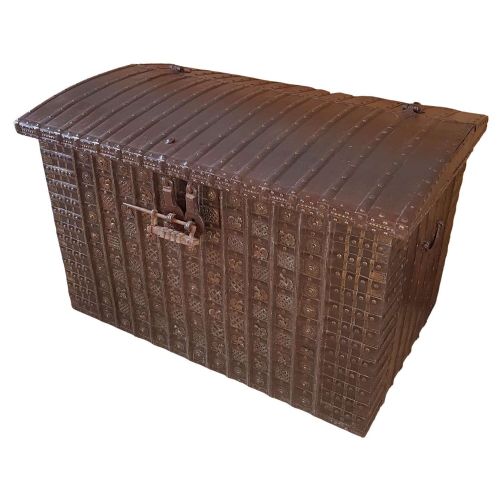
Metal coffer storage encompasses heavy-duty trunks, deed boxes, silver chests, and dome-top coffers built to protect valuables during transit and domestic storage. You will encounter various iterations ranging from substantial oak and iron-bound chests to painted pine shipping trunks and imported examples.
Victorian and nineteenth-century pieces dominate the selection, though earlier examples from the sixteenth and eighteenth centuries appear alongside Edwardian and 1920s travel luggage. Forms vary from simple pine blanket boxes and campaign military zinc-lined chests to ornate Baroque Revival dome-top trunks and Cunard line steel travelling gear.
Origins stretch across British, Continental, Indian, and Middle Eastern workshops, reflecting global trade and domestic security needs. Whether handling a Rajasthani dowry chest or an English silver chest, these items serve immediate storage functions while retaining their original historic character.
How they were made
Construction relies heavily on durable timbers like oak and pine combined with structural metal reinforcement. Blacksmiths and carpenters secured wooden panels using iron bands, brass mounts, studded leather, and steel strapping to withstand heavy transit.
Interiors often feature fitted compartments, fabric linings, or zinc plating designed to protect silverware and documents from moisture and damage. Protective painted finishes, faux-wood treatments, and wax coatings protected the exterior timber surfaces.
Some trunks retain their original Cunard line transit stickers, whispering tales of transatlantic ocean voyages from a century ago.
What varies in quality
Quality depends upon the integrity of the original metalwork, the weight of the timber framing, and the survival of interior fittings. Robust iron banding, functional locks with operational keys, and tight-fitting lids elevate a piece beyond standard utilitarian boxes.
The sophistication of the joinery and the presence of specialist linings, such as zinc or compartmentalised trays, mark superior manufacture. Provenance indicated by maker stamps or shipping line labels also distinguishes exceptional examples from ordinary domestic storage.
Samuel Pratt·Seabrook of St.Pauls
The Metal Coffer Storage Glossary
- Coffer
- A heavy wooden chest, often reinforced with metal, traditionally used for storing valuables. Early examples feature robust iron banding and complex locking mechanisms.
- Silver Chest
- A heavy wooden box, typically reinforced with iron or brass and lined with baize or zinc, designed to store household silver securely. These feature fitted interior trays and robust carrying handles.
- Strongbox
- A heavily secured iron and wood chest built for high-security storage of money or documents. They date back centuries and utilise complex internal locking systems.
- Campaign Chest
- Portable furniture built in sections with recessed brass handles for military officers on the move. They combine durability with practicality for travel.
- Damchiya
- A traditional Indian dowry chest characterised by heavy iron banding and intricate decorative construction. These pieces served both storage and ceremonial functions in domestic households.
Metal Coffer Storage: Frequently Asked Questions
How do I date a metal trunk?
Dating relies on observing construction techniques, materials, lock types, and overall form across different periods. Eighteenth and nineteenth-century pieces often display hand-forged ironwork and pegged oak construction, whereas later Edwardian and 1920s examples incorporate machine-rolled steel and aluminium.
Maker stamps, stencilled shipping labels, and stylistic cues like Baroque Revival motifs also help narrow down the manufacturing era.
Are interior linings original?
Many surviving silver chests and travel trunks retain their original fabric, paper, or zinc linings. Zinc interiors protected silverware from tarnishing and damp conditions during shipping.
When present, intact interior compartments and original paper labels add significant historical interest to the piece.
How do I clean a metal bound trunk?
Maintenance involves preserving the aged patina of the timber and metal without stripping away historic character. Gentle cleaning with a soft cloth and appropriate wax for the wood keeps the surface nourished.
Metal components benefit from light dusting and occasionally microcrystalline wax to prevent active rust while maintaining their dark, historic finish.