

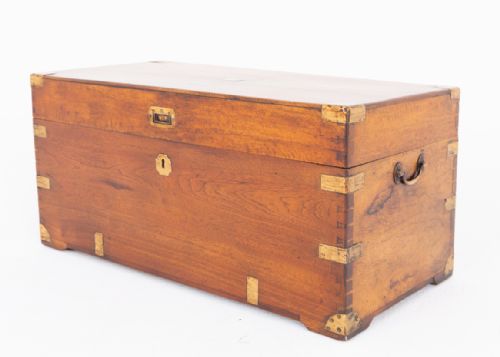


19th Century Travel Trunk
These heavy duty pieces made for moving belongings across land and sea form the core of any 19th century travel trunk collection.
19th Century Travel Trunk
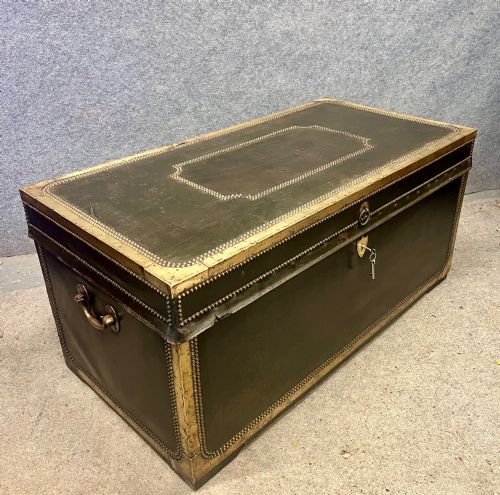
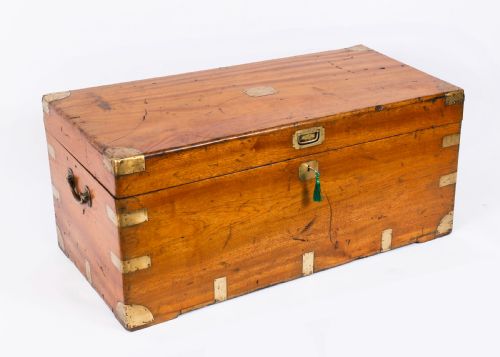
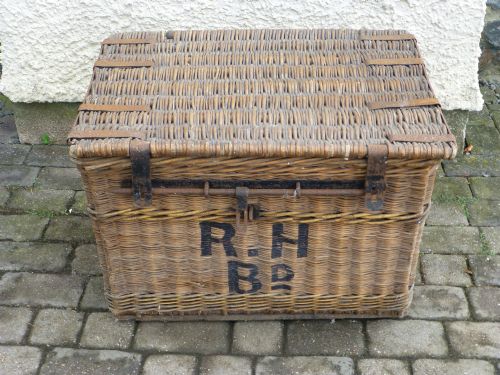
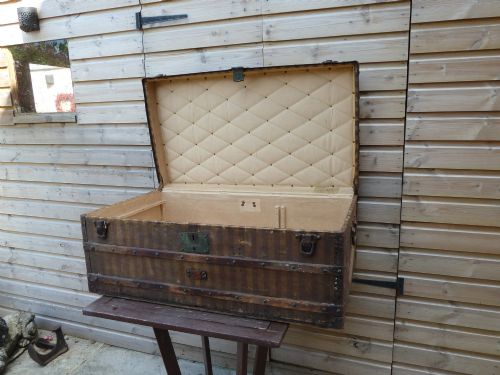
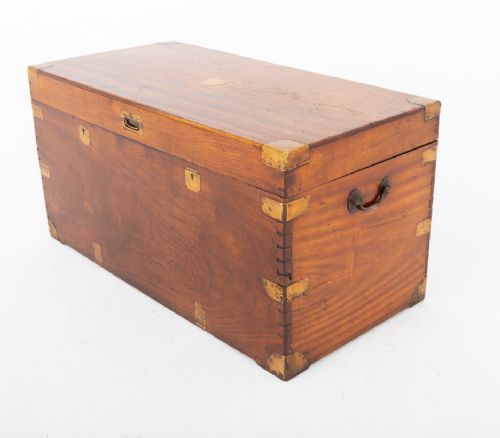
A 19th century travel trunk encompasses robust luggage built for journeys by coach, ship and rail during the Georgian and Victorian eras. Buyers encounter various forms, from brass-bound military chests made of camphor wood to domestic pine and leather travelling cases.
The selection ranges from utilitarian storage boxes used by officers on campaign to luxury French luggage and China Trade pieces. Camphor wood variants predominate, prized historically for keeping contents safe from insects during tropical voyages.
Beyond standard chests, the records show specialised containers including hat boxes, silver chests and folding campaign cases. These objects reflect the strict requirements of nineteenth-century mobility and social standing.
Materials and construction
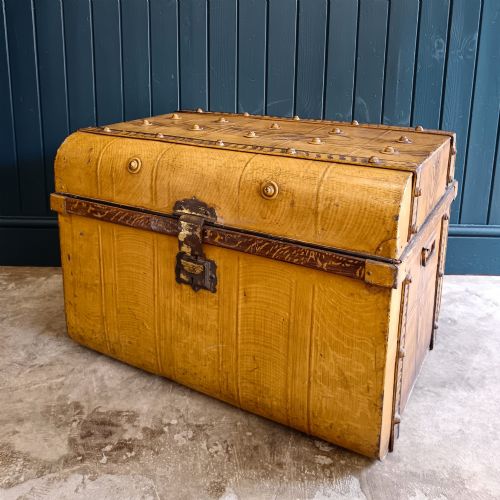
Carpenters built these trunks using sturdy timbers such as oak, teak, pine and aromatic camphor wood, frequently selecting them for durability and resistance to warping. Outer surfaces were often wrapped in leather, canvas or painted hide to withstand rough handling.
Protection came from heavy metal reinforcement, utilising iron, brass bands, corner braces and studded details to secure the structural joints. Makers integrated recessed brass drop handles and locks to facilitate transport and ensure security on long journeys.
Several surviving trunks still bear faint ink inscriptions and faded shipping labels from long-forgotten global voyages.
Evaluating craftsmanship and survival
Quality rests in the integrity of the original framing, the precision of the metal mounts and the retention of fitted internal compartments. Superior pieces display thoughtful joinery that accommodates wood movement alongside robust hardware designed for genuine service.
The degree of original surface survival distinguishes everyday utilitarian examples from those made by notable makers or destined for elite military officers. Evidence of continuous use adds character, while later alterations alter the historical weight of the piece.
Samuel Pratt·Drew & Sons·Elkington·Innovation·Louis Vuitton
The 19th Century Travel Trunk Glossary
- Campaign trunk
- A portable chest constructed for military officers on active service, featuring recessed brass handles and corner brackets to prevent snagging during transport.
- Camphor wood
- An aromatic timber native to Asia, frequently utilised for colonial and China Trade chests because its natural scent repels moths and insects.
- Coaching trunk
- A low, flat-topped luggage chest designed to fit on the roof or boot of a stagecoach during the early nineteenth century.
- Steamer trunk
- A lower-profile luggage case introduced later in the Victorian period to fit into the restricted cabin heights of ocean liners.
- Hide
- The natural skin of a large animal, dressed and used as a tough exterior covering on travelling trunks before synthetic materials existed.
19th Century Travel Trunk: Frequently Asked Questions
What is a campaign trunk?
A campaign trunk is a specialised storage chest built for military officers on the move. These pieces were designed to withstand harsh transport conditions while keeping uniforms and equipment orderly.
They typically feature flush brass handles, reinforced corners and durable timbers like camphor wood or teak. Their modular nature allowed officers to pack efficiently for campaigns across distant territories.
Why use camphor wood?
Camphor wood was chosen for trunks travelling to tropical climates because of its strong natural aroma. This scent acts as a natural deterrent against moths, silverfish and other destructive insects.
In addition to protecting textiles, the wood is resilient and handles humidity well. These practical qualities made it a primary material for colonial officers and merchants operating in Asia.
How do I date a trunk?
Dating a travel trunk involves looking at the construction techniques, hardware style and materials used. Early pieces from the Regency and early nineteenth century often feature hand-cut dovetails and simpler iron mounts.
Victorian and later examples frequently display machine-made components, brass bound edges and maker stamps. Interior linings and paper labels can also narrow down the manufacturing decade.
How can I use one at home?
Nineteenth-century travel trunks function well as living room coffee tables, end-of-bed blanket boxes or hallway storage solutions. Their sturdy flat tops provide practical surface space while the interiors conceal clutter.
Placing them in a modern interior adds texture and historical contrast. Allowing adequate ventilation ensures that older woods and leathers remain stable in domestic environments.