

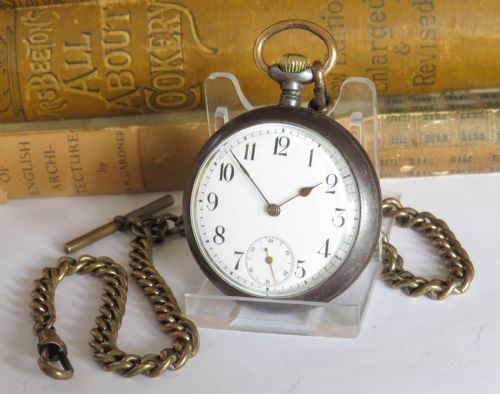
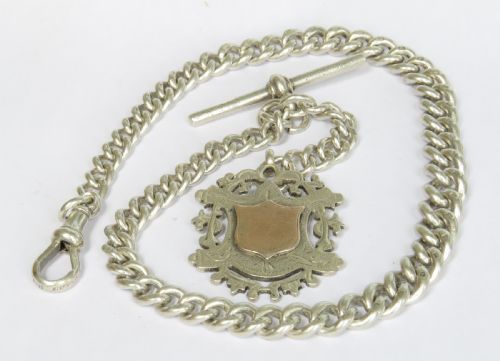
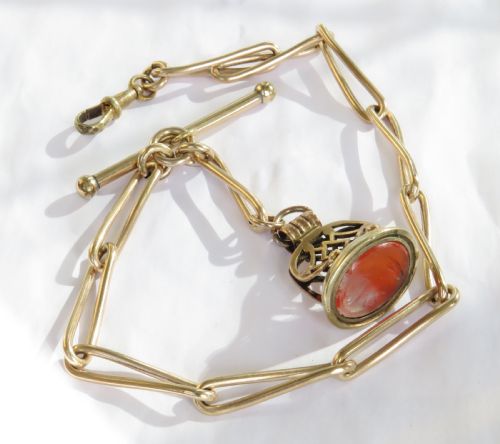
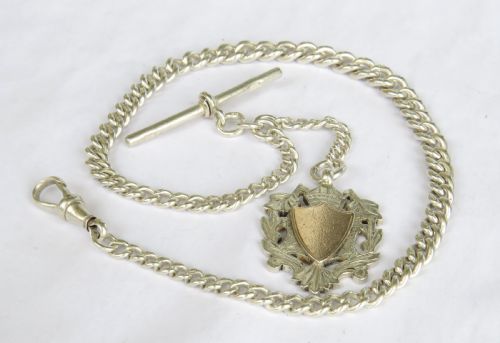
Mens Chain
These pieces for a mens antique chain offer solid links and functional fobs from the nineteenth and twentieth centuries.
Mens Chain
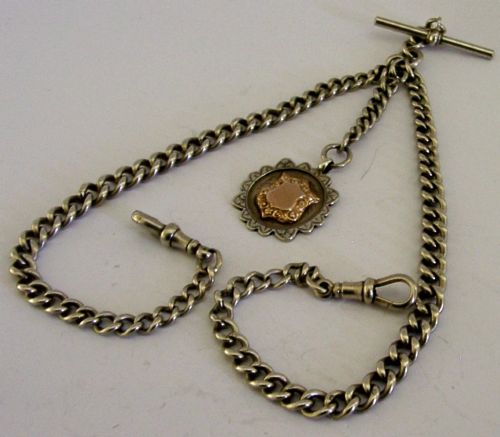
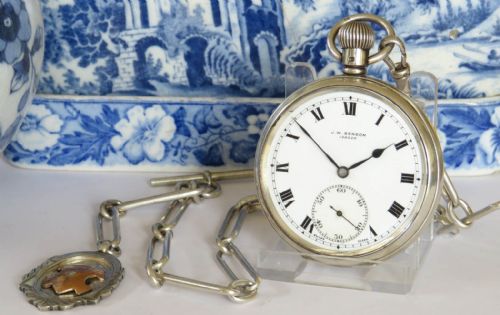
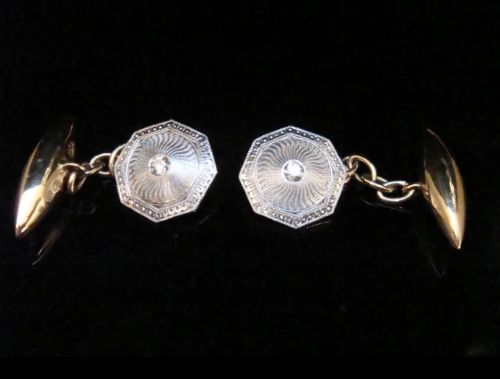
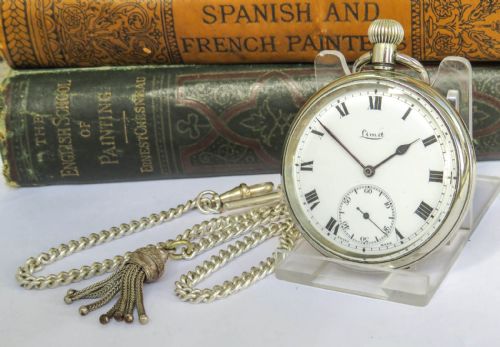
When searching for a mens antique chain, you encounter functional pocket watch accessories alongside wrist-worn link bracelets and necklaces created from older components. The inventory comprises diverse formats including single and double albert chains designed to secure timepieces to waistcoat buttonholes.
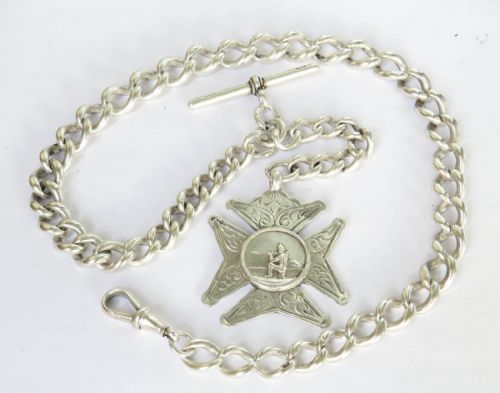
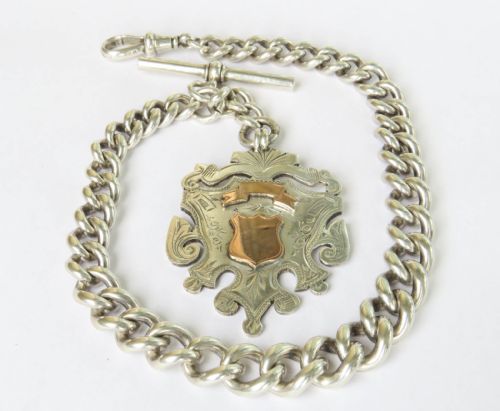
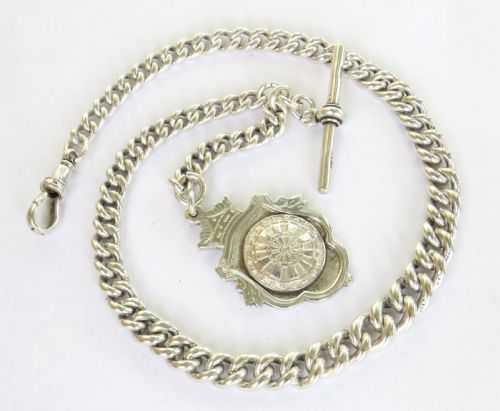
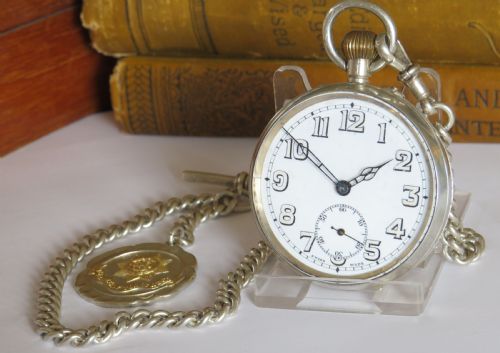
Most examples originate from the Victorian and Edwardian eras, extending through the 1920s and 1930s into mid-century vintage variations. These items frequently incorporate decorative fobs, such as military emblems, sporting medals or darts trophies, attached to the primary link structure.
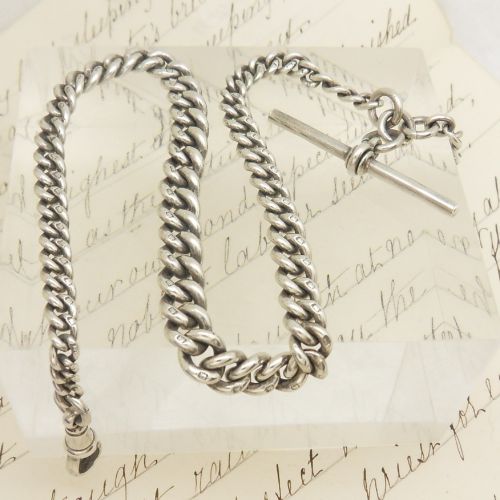
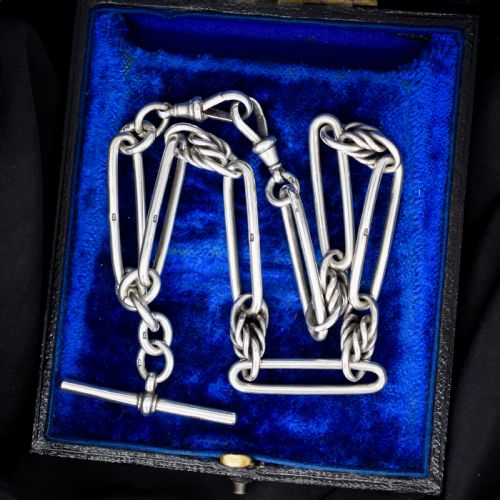
Makers and assay offices stamped specific hallmarks onto many silver and gold specimens, allowing collectors to verify exact locations and production years. Formats range from traditional curb and belcher links to trombone and fetter patterns.
Materials and construction
Metals form the core of these items, spanning sterling silver and solid yellow or rose gold alongside rolled gold, brass, steel, nickel and enamel detailing. Smiths and silversmiths linked individual metal loops by hand or machine, attaching swivel clasps and dog clips to secure timepieces.
Component parts often display cast or engraved fobs soldered or linked directly to the main chain strand. Surface decoration includes patterned links, enamel shields and hallmarks stamped directly into the precious metal.
Mens Chain Retail Price Guide 2026
Typical asking prices for mens chain among the pieces listed under this phrase on Sellingantiques today, from the lower quarter to the upper quarter. They describe what is for sale here now, not the wider market.
Listings feature sterling silver, rolled gold and yellow or rose gold spanning the Victorian era through the 1930s.
Markers of quality
Quality depends upon the weight of the metal and the integrity of the individual links, where heavier solid silver or gold examples demonstrate greater durability than lighter or plated alternatives. The presence of clear hallmarks and matching maker marks indicates superior provenance.
The retention of original swivel clasps, dog clips and matching fobs elevates the completeness of the piece. Finer specimens exhibit tight, secure jump rings and crisp engraving on any attached medals.
The Mens Chain Glossary
- Albert chain
- A pocket watch chain named after Prince Albert, designed to pass through a waistcoat buttonhole and secure a timepiece.
- Dog clip
- A spring-loaded snap hook attached to the end of a watch chain for fastening to a pocket watch.
- Belcher link
- A type of chain link featuring broad, uniform links that are often wider than they are thick.
- Trombone link
- A distinctive link design alternating long rectangular bars with smaller circular rings.
- Fob
- A small ornament or medallion attached to a watch chain, frequently displaying sports or military motifs.
Mens Chain: Frequently Asked Questions
How do you wear a pocket watch chain?
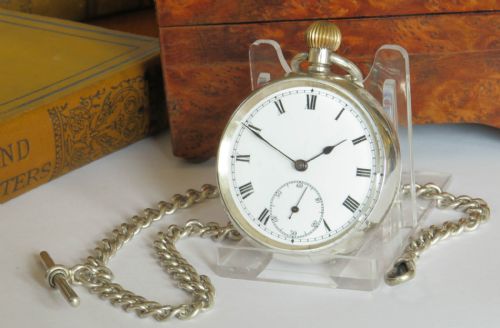
A mens antique chain typically fastens through a central buttonhole of a waistcoat, allowing the watch to rest securely in the pocket while the fob hangs visibly outside.
Double albert variations pass through the buttonhole with a watch secured in each lower pocket or a fob suspended from the centre.
What is an albert chain?
An albert chain is a specific style of watch chain popular during the Victorian and Edwardian periods for securing pocket watches.
These pieces often feature a T-bar at one end to anchor the chain through a garment eyelet or buttonhole.
How are different periods identified?
Periods are identified through hallmarks, assay office letters, and the specific linkage styles characteristic of Victorian, Edwardian or Art Deco design.
Makers often stamped metal purity and date letters directly onto individual links or dog clips.
Can watch chains be worn as necklaces?
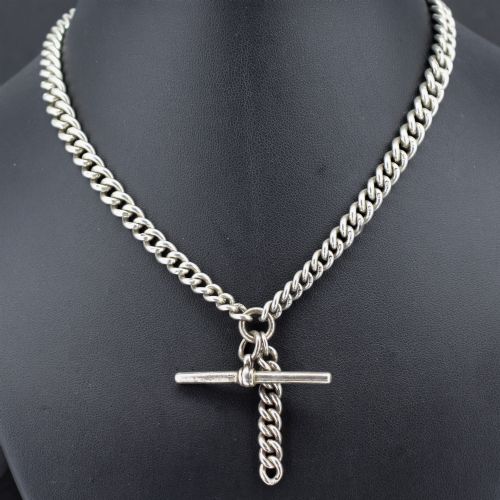
Many longer watch chains and albert configurations adapt easily for wear around the neck as silver or gold necklaces.
Owners frequently utilise the existing dog clips and swivel attachments to secure the ends together at variable lengths.