


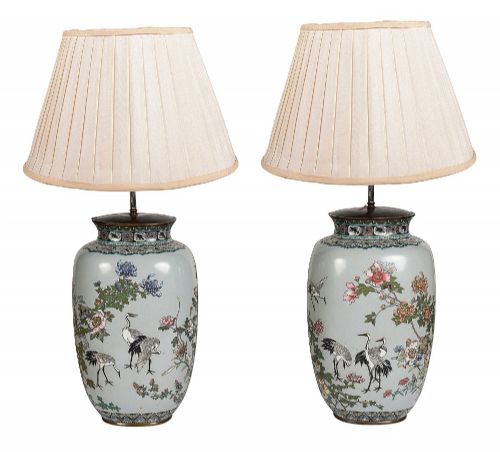

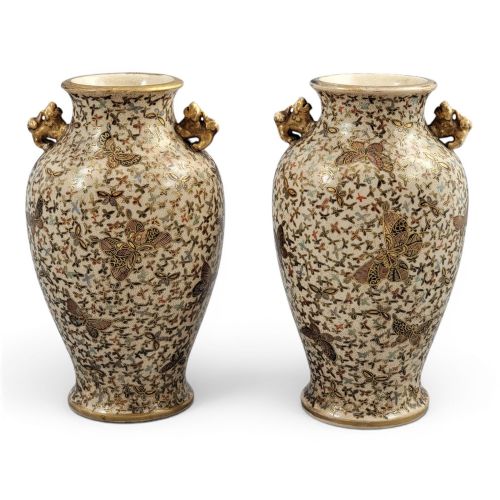
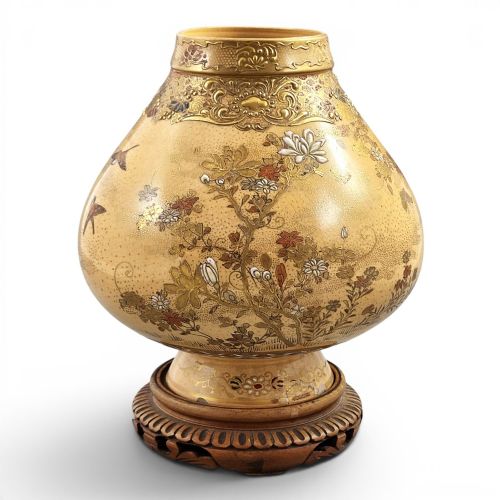


Meiji Period Enamel Vases
Meiji period enamel vases combine rigorous metalwork and delicate surface decoration, offering collectors a striking record of late nineteenth and early twentieth century Japanese craftsmanship.
Meiji Period Enamel Vases
Meiji period enamel vases include cloisonné, champlevé, and Satsuma earthenware vessels produced during the late nineteenth and early twentieth centuries. These works span domestic decorative objects and large sculptural forms intended for international exhibition.
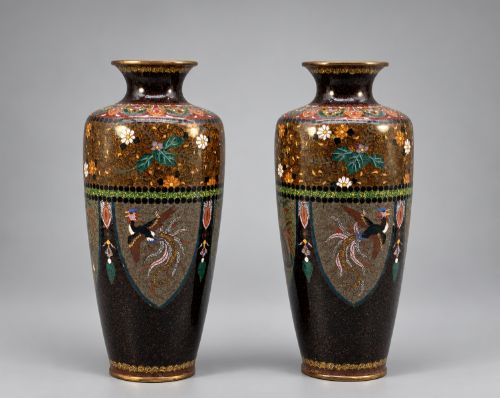
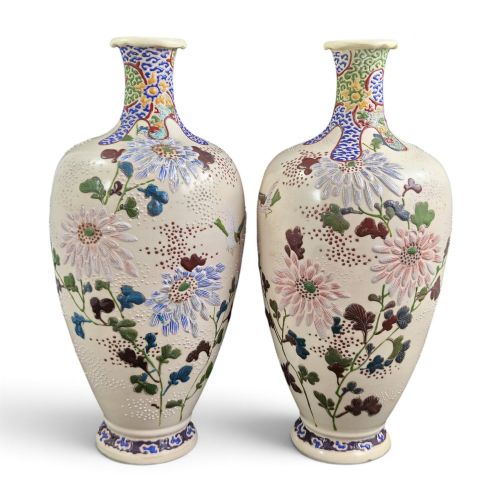
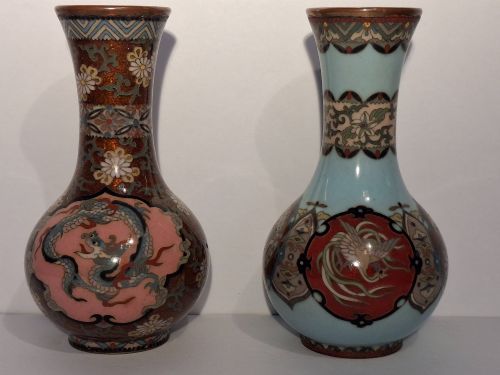
Buyers frequently encounter pairs of copper or bronze vessels decorated with wirework cloisonné or heavy champlevé enamel. Earthenware examples featuring painted cobalt grounds and gilt moriage figures also appear regularly across the selection.
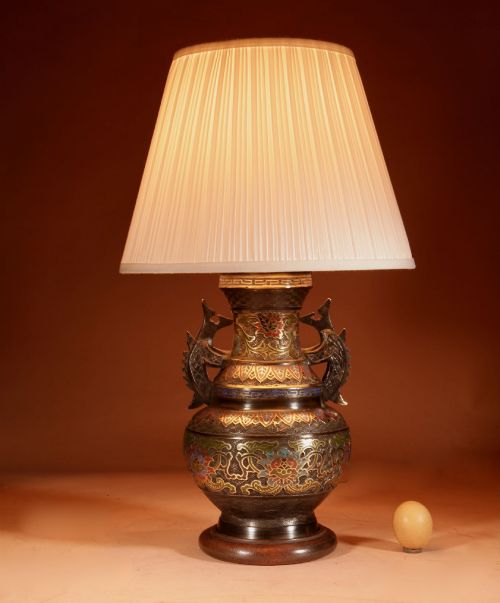
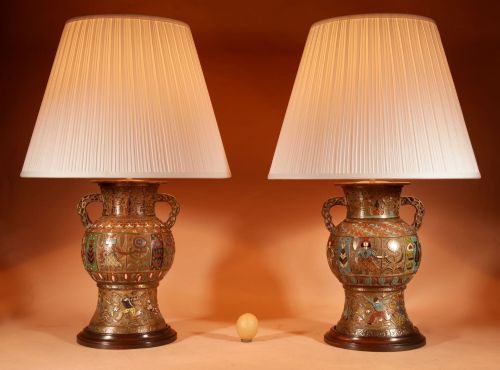
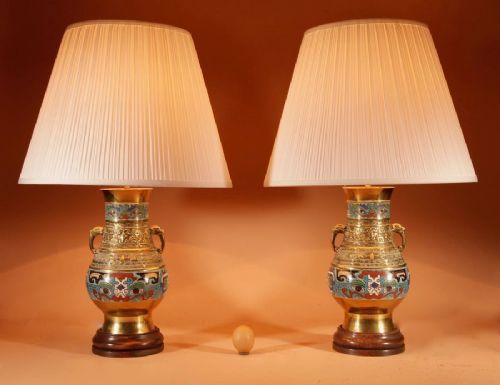
The objects take the form of traditional tall vases, heavy jardinieres, and converted table lamps that retain their original metal mounts. Origins range from Kyoto workshops to regional production centres such as Kobe.
How they were made
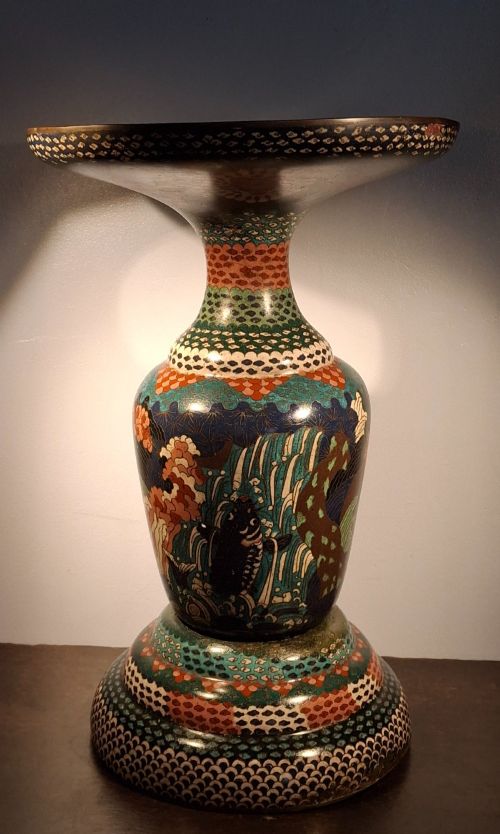
Artisans constructed metal vessels from copper, bronze, brass, or silver wire, soldering thin metal strips onto the surface to form intricate cellular compartments. These cells were packed with vitreous enamel pastes before undergoing multiple firings in a kiln.
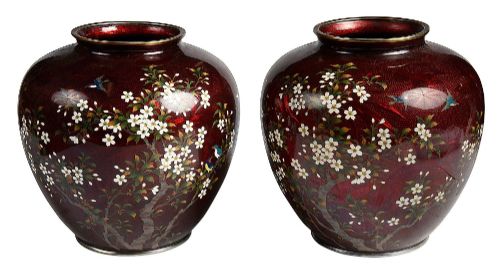
Earthenware pieces utilised refined clay bodies painted by hand with mineral pigments, gold leaf, and raised slip known as moriage. Certain cloisonné works employed translucent red ginbari grounds over textured foil backings to create depth.
Meiji Period Enamel Vases Retail Price Guide 2026
Typical asking prices for meiji period enamel vases among the pieces listed under this phrase on Sellingantiques today, from the lower quarter to the upper quarter. They describe what is for sale here now, not the wider market.
What varies in quality
Quality depends upon the precision of the wirework and the control demonstrated during the enamel firing process. Finer vessels display microscopically thin silver wires and flawless glass surfaces free from pitting or clouding.
The distinction between standard production and masterwork output rests in the density of the hand-painted detail and the crispness of maker signatures. Pieces bearing marks from renowned workshops command attention for their sculptural ambition.
Ando Jubei·Kinkozan Workshop·Makuzu Kozan II·Takahara Komajiro
The Meiji Period Enamel Vases Glossary
- Cloisonne
- Enamelling technique where thin metal wires are soldered to a metal body to create cells filled with coloured paste. These wires remain visible on the finished surface as part of the design.
- Champleve
- Enamelling method in which troughs or cavities are gouged directly into a thick metal base to hold the enamel. The exposed metal partitions separate the coloured areas.
- Moriage
- Japanese ceramic technique utilising raised slip painting to create heavily textured, three-dimensional decorative motifs. This technique frequently appears alongside gilding on earthenware vessels.
- Ginbari
- Japanese foil-backed enamelling method involving embossed patterns beneath translucent enamel layers. This technique creates a shimmering, patterned background known as basse-taille.
- Satsuma
- Japanese earthenware pottery featuring a crackle-glaze ivory body decorated with polychrome enamels and gold. Production centres included Kyoto under prominent families and independent workshops.
Meiji Period Enamel Vases: Frequently Asked Questions
How do I identify a genuine Meiji period vase?
Examine the base metal, weight, and surface technique to determine age and origin. Genuine pieces often display fine wirework, artist signatures, or workshop stamps beneath the glaze.
Look closely at the construction methods, such as the neatness of the soldered wire cells or the presence of traditional marks. Comparing these details against documented examples helps confirm the period.
Were these vases made for export?
Many fine metalwork and Satsuma vessels were produced specifically for international trade and world exhibitions during the late nineteenth century. Japanese artisans tailored their output to satisfy Western demand for elaborate decorative art.
Export pieces frequently incorporated traditional motifs alongside larger scales suitable for European and American drawing rooms. Signed works often indicate items created for high-end international markets.
How should I display enamel vases at home?
Position these vessels away from direct sunlight to protect delicate enamels, gold leaf, and painted earthenware surfaces from fading. Stable shelving with adequate support is essential for heavy bronze and ceramic forms.
Keep pieces clear of temperature extremes and high humidity to preserve the integrity of the metal and glaze. Regular dusting with a soft, dry cloth maintains the surface finish.