
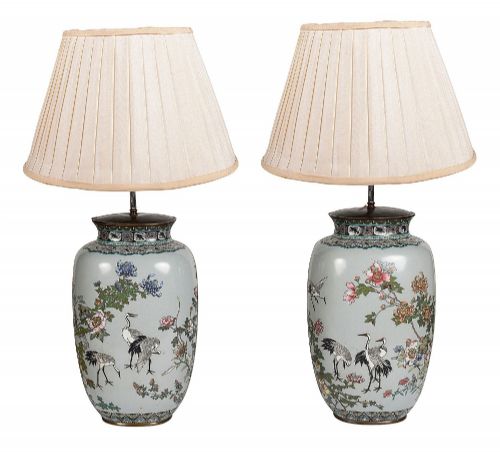
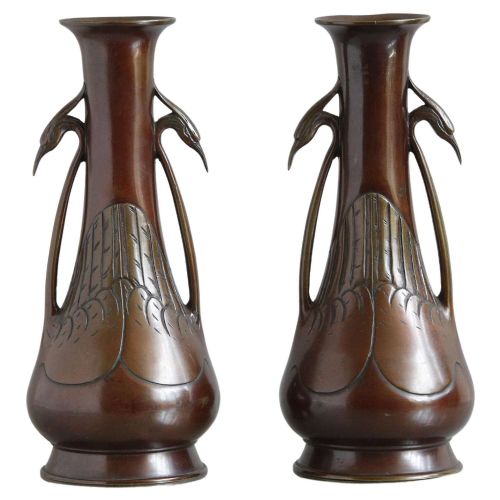


Meiji Period Crane Vase
These meiji period crane vases and related works bring the meticulous metalwork and ceramics of late nineteenth and early twentieth century Japan into your home.
Meiji Period Crane Vase
When you search for a meiji period crane vase, you encounter a selection of vessels and decorative containers spanning the late nineteenth and early twentieth centuries. The items appearing here include cloisonne enamel vases, bronze and mixed metal vessels, stoneware jardinieres, and porcelain lidded pieces.
The most common forms you are likely to meet on this page are bronze and cloisonne enamel vases, often presented in pairs, alongside stoneware jardinieres and brush pots. These objects originate from the Meiji period and subsequent decades up to the nineteen-twenties, reflecting the diverse output of Japanese decorative arts.
Makers represented in these listings include Makuzu Kozan II and Fukagawa, bringing distinct ceramic traditions to the selection. Whether rendered in blue and white porcelain, Imari wares, or patinated bronze with egret handle decoration, each piece embodies the craftsmanship of its era.
How they were made
The bronze and mixed metal vessels utilise traditional casting and inlay techniques, combining copper, brass, and other metals to create contrasting surface textures. Artisans applied patination and metalwork details such as egret handle decoration directly to the bronze bodies.
Cloisonne enamel pieces rely on fine wire soldered to a metal base to form compartments, which were then filled with coloured enamel pastes and fired multiple times. Stoneware and porcelain items demonstrate throwing and glazing methods, encompassing blue and white decoration as well as Imari palettes.
Materials documented across the selection include enamel, bronze, porcelain, brass, fabric, stoneware, silver, and copper.
What varies in quality
The distinction between standard and superior examples rests upon the precision of the metal inlay, the crispness of the cloisonne wirework, and the refinement of the ceramic glaze. Higher quality works exhibit tighter control over complex mixed metal elements and more balanced compositions in their surface motifs.
Bronze and brass pieces show variation in the depth of patination and the definition applied to sculptural details like handles and mounts. Similarly, stoneware and porcelain vessels are judged by the clarity of the painting and the stability of the fired body.
Makuzu Kozan II·Fukagawa
The Meiji Period Crane Vase Glossary
- Cloisonne
- Enamelling technique where metal wire creates cells on a vase surface that receive coloured paste before firing. This method allows for intricate pictorial designs.
- Imari
- Japanese porcelain decorated in underglaze blue and overglaze iron red, gold, and other colours. It originated in Arita and was widely exported during the Meiji period.
- Mixed metal
- Artistic combination of bronze, brass, copper, and silver within a single piece to create tonal contrast. Japanese metalworkers excelled in this multi-alloy approach.
- Jardiniere
- Large decorative pot or vase designed to hold plants or floral arrangements. They appear in stoneware among these listings.
Meiji Period Crane Vase: Frequently Asked Questions
What materials are used?
The items utilise bronze, brass, copper, cloisonne enamel, stoneware, porcelain, and silver. Fabric also appears in specific lamp conversions.
These materials reflect the diverse manufacturing practices of Japanese workshops during the late nineteenth and early twentieth centuries.
How do I identify the period?
Objects date from the nineteenth century through to the nineteen-twenties, encompassing the Meiji period and immediate subsequent years. Stylistic markers include mixed metal inlay and specific maker attributions.
Examination of the patination, glaze types, and construction methods helps distinguish pieces from different decades within this span.
How should I display them?
Vases and brush pots suit side tables, mantelpieces, and cabinets where their surface detail and metal patination remain visible. Larger jardinieres serve as floor-standing or pedestal planters.
Positioning them away from direct heat sources protects enamel and mixed metal surfaces from unnecessary strain.
Are pairs common?
Several listings feature matched pairs of cloisonne enamel and bronze vases, alongside blue and white porcelain sets. These pairs were typically created together to adorn symmetrical interior spaces.
Single vessels also appear, such as individual brush pots and lidded porcelain pieces.