


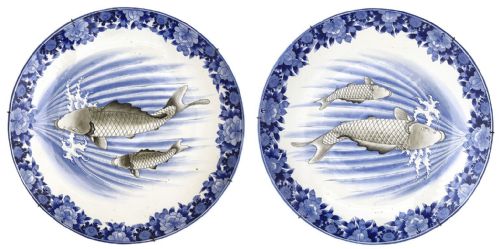

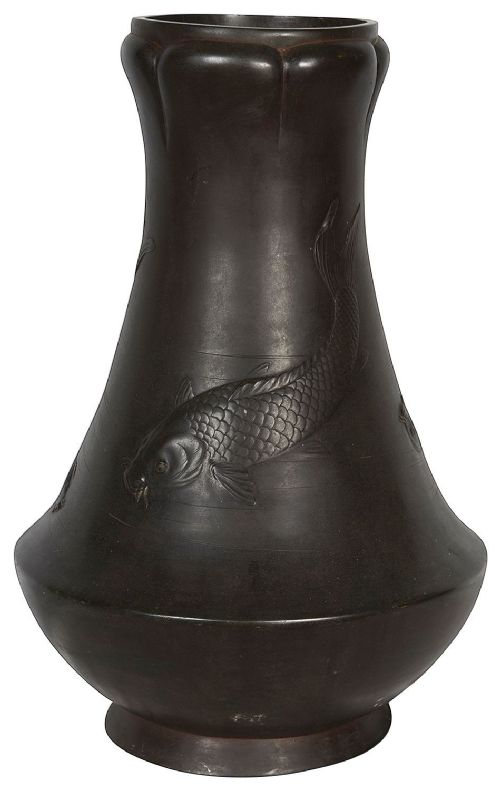

Meiji Period Carp
These meiji period carp pieces bring together centuries of Japanese metalwork, lacquer and ceramic tradition into striking sculptures, vases and dishes.
Meiji Period Carp
Meiji period carp examples span vases, trays, sculptures and decorative chargers created during the late nineteenth century. You are most likely to encounter ceramic dishes and chargers featuring cobalt blue underglaze, alongside larger bronze and cloisonne enamel vessels.
The objects reflect Japanese artistic transitions from the Edo period into the Meiji era, capturing the powerful form of the koi in porcelain, metal and lacquer. Artisans utilised traditional techniques to render scales, fins and water motifs upon plates, bowls and freestanding okimono.
Many of these works originate from kilns in Arita, while others emerge from specialised metalwork and lacquer workshops. The designs range from subtle blue and white depictions on porcelain to complex multicolored enamel and bronze sculptures.
Materials and construction
Makers shaped these pieces using porcelain, bronze, copper and wood, applying surface decorations of lacquer, enamel and mother-of-pearl. Ceramic forms rely on cobalt blue underglaze and traditional Imari palettes fired in high-temperature kilns.
Metalwork pieces incorporate intricate cloisonne enamel wirework or cast bronze finishes to delineate the contours of the fish. Lacquer layers applied over black paint build rich textures and deep sheens on panels and vessels.
Several heavy ceramic roof ornaments shaped like mythical shachikoko creatures sneak into the selection alongside the swimming carp.
Quality and craftsmanship
Excellence in these works lies in the precision of the detailing, particularly in the rendering of scales and movement in the carp. Superior examples demonstrate rigorous control in cloisonne wire placement, lacquer depth or porcelain firing clarity.
The distinction between standard decorative wares and masterworks rests on the hand of the maker and the complexity of the composition. Finer pieces maintain crisp definitions in relief and a harmonious balance between the subject and the ground.
Haruyama Shunzan·Fuku Mark·Hichozan Shinpo·Nishikawa Suketsugu·Fukugawa
The Meiji Period Carp Glossary
- Okimono
- A Japanese standalone decorative sculpture designed for display on a shelf or in a tokonoma alcove. These carved or cast figures often depict animals and natural subjects.
- Imari
- A type of Japanese porcelain decorated in underglaze blue, iron red, and gold, originating from the kilns around Arita. The style became widely exported during the late nineteenth century.
- Cloisonne
- A metalwork technique where fine wires are soldered to a base to form compartments, which are then filled with coloured enamel pastes and fired. This method creates intricate patterns across vases and trays.
- Charger
- A large decorative plate intended for display rather than dining use. These substantial pieces provide a wide surface for detailed depictions of carp and aquatic scenes.
- Arita
- A Japanese town renowned for its long history of porcelain production. Pieces from these kilns frequently feature cobalt blue underglaze designs.
Meiji Period Carp: Frequently Asked Questions
What is a carp okimono?
A carp okimono is a decorative sculpture carved from wood or cast in metal, intended purely for display within a room rather than practical use.
These pieces showcase the artisan's ability to capture the natural movement and musculature of the fish through detailed carving or metalwork.
How do I identify Imari porcelain?
Imari porcelain is traditionally recognised by its distinctive palette combining cobalt blue underglaze with iron red and gold highlights.
These wares were produced in the Arita region and frequently depict floral motifs alongside swimming carp.
Where were these pieces made?
These works were produced across Japan during the Meiji era, with many ceramics originating from the historic kilns of Arita.
Metalwork and lacquer pieces often came from specialised urban workshops in regions known for traditional metal casting and finishing.
How should I display a charger?
Chargers are large decorative plates that were traditionally shown on stands or hung on walls rather than used at the dining table.
Their generous surface area allowed artisans to paint expansive scenes of carp swimming among waves.